Textile Fragment
Unknown
probably 15th–16th century · Cotton; plain weave, stamp resist dyed · Islamic Art
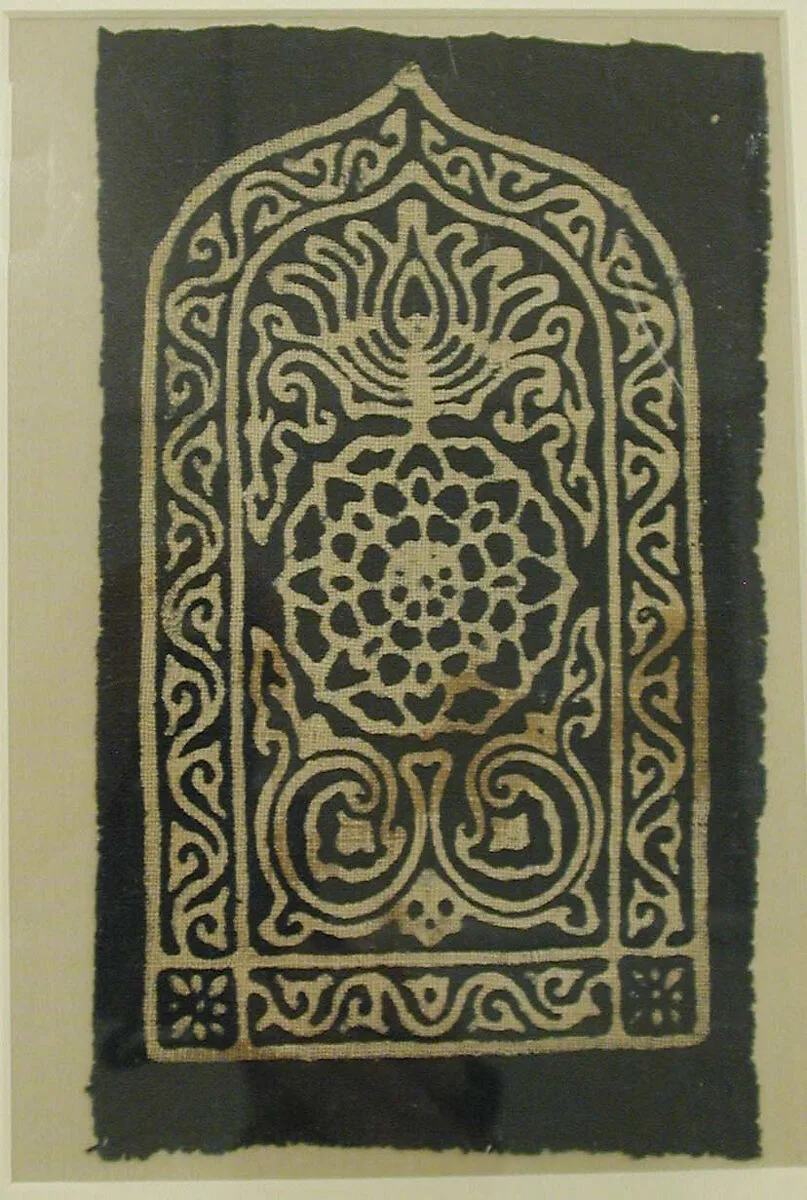
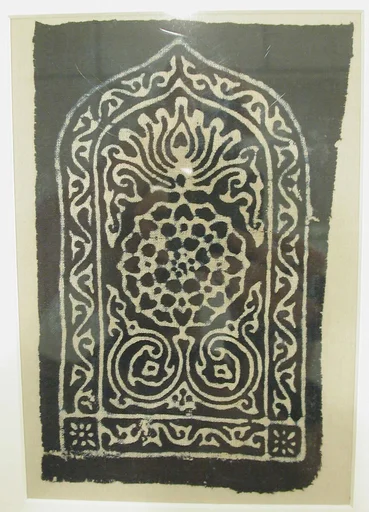
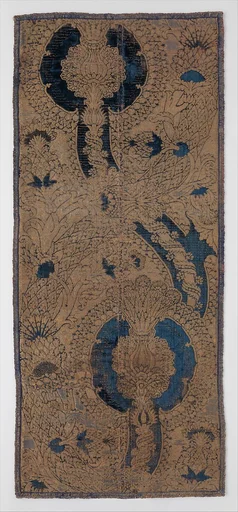
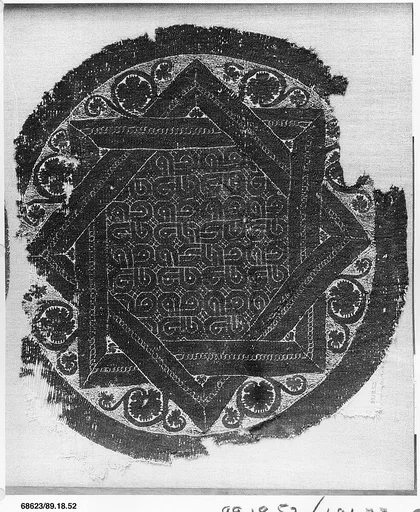
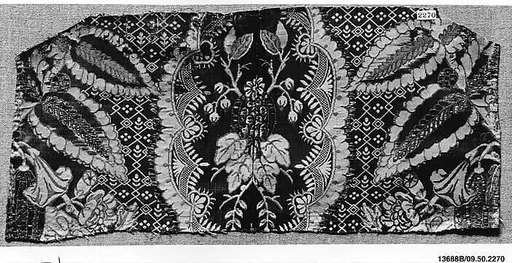
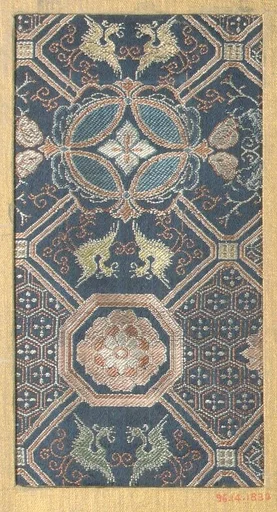
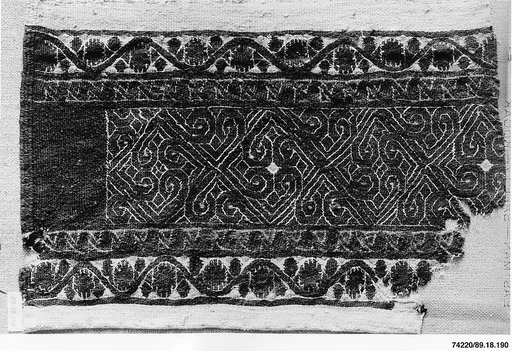
This textile, produced in the fifteenth or sixteenth century under the Gujarat Sultanate, was made with the traditional dyeing technique of kalamkari. A wax resist was applied to this white cotton cloth, which was then dipped into a bath of indigo dye. A lotus-like flower and a sixteen-sided rosette form the design, which resembles that of a jali screen.
- Artist
- Unknown
- Date
- probably 15th–16th century
- Medium
- Cotton; plain weave, stamp resist dyed
- Department
- Islamic Art
- Credit line
- Gift of Nelly, Violet and Elie Abemayor, in memory of Michel Abemayor, 1978