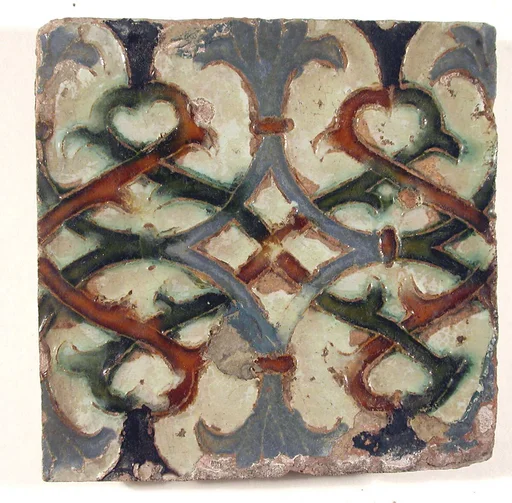
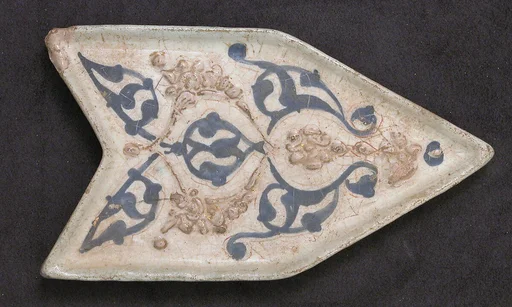
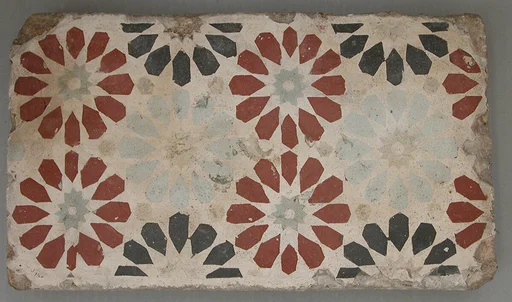
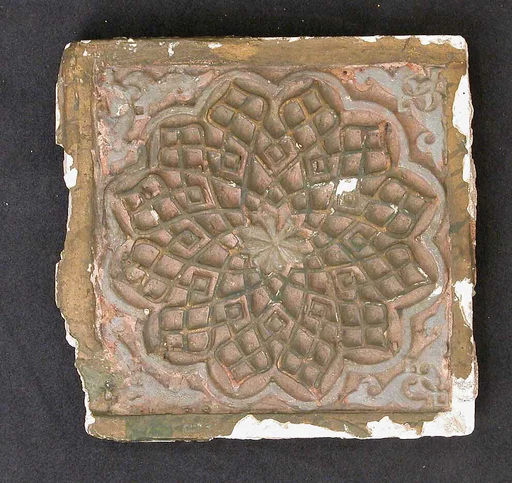
Tile Decorated with Entrelacs Pattern Based on Octagons
Unknown
second half 14th century · Stonepaste; carved and glazed in turquoise and aubergine · Islamic Art
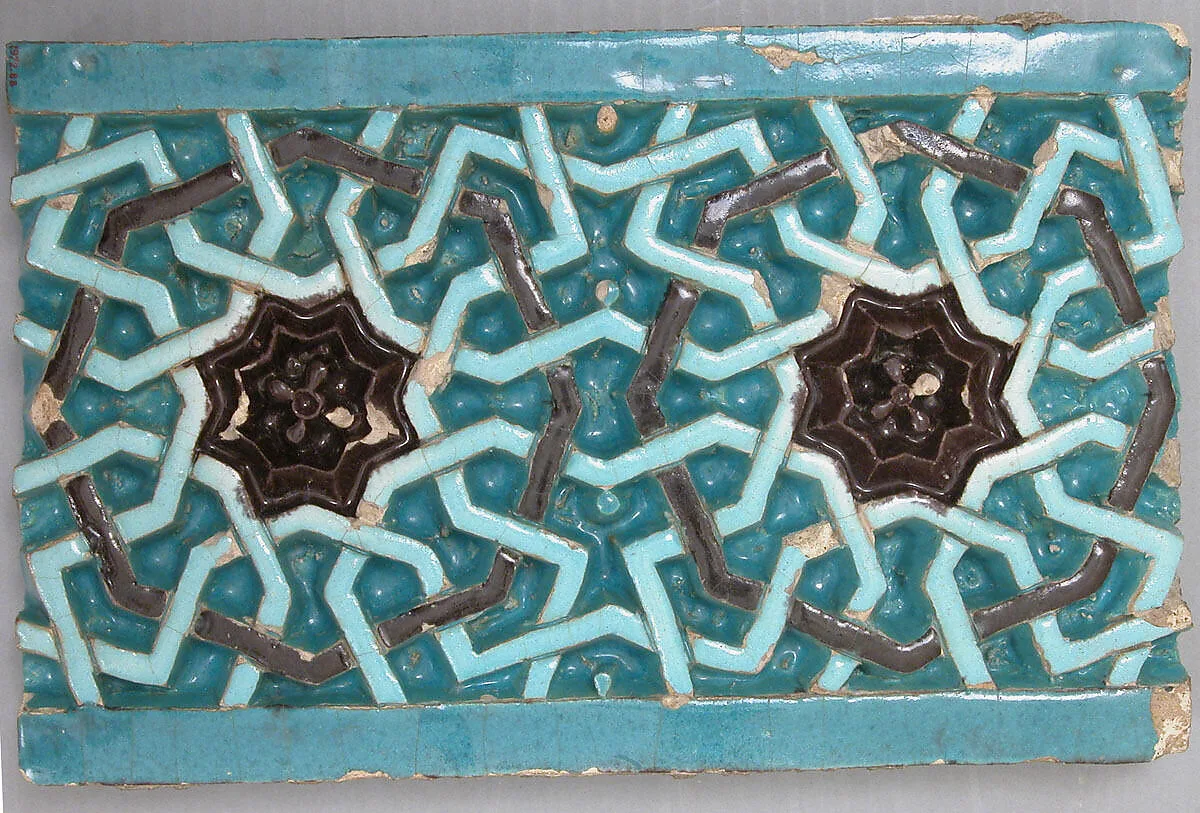
This tile was probably part of a frieze that once decorated the mausoleum of Buyan Quli Khan in Bukhara; he died in 1358. Tiles with deeply carved geometric designs glazed in one or more colors are typical of buildings in Bukhara and Samarqand of the second half of the fourteenth century. A simplified pattern can be read by focusing on the large dark-colored octagon motifs: repeated twice, they each contain an eight-pointed star with a four-petaled rosette in the center. The interlaced design in turquoise, however, is at the heart of this spirited and succesful architectural decorative element, which is based on half-octagons with two open sides. The intricacy of the pattern seems intentionally to defy a proper geometric interpretation, allowing the eye to wonder and the observer to wonder if a metaphysical explanation should be sought instead.
- Artist
- Unknown
- Date
- second half 14th century
- Medium
- Stonepaste; carved and glazed in turquoise and aubergine
- Department
- Islamic Art
- Credit line
- Purchase, Walter D. Binger Gift, 1972