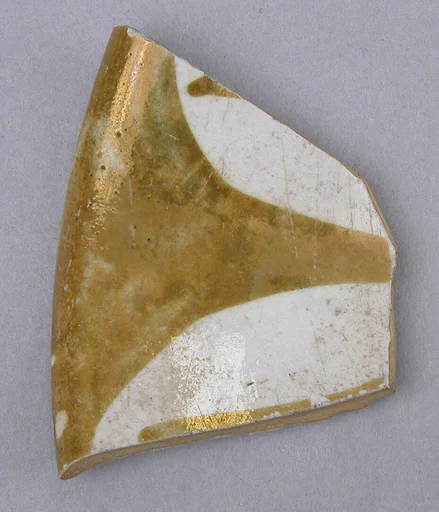
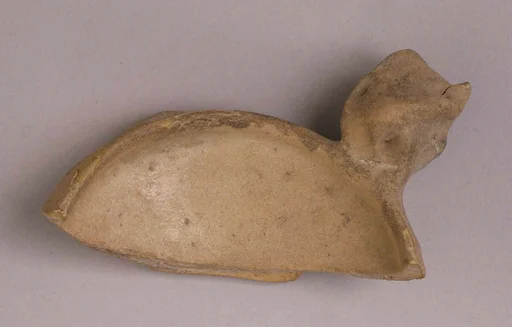
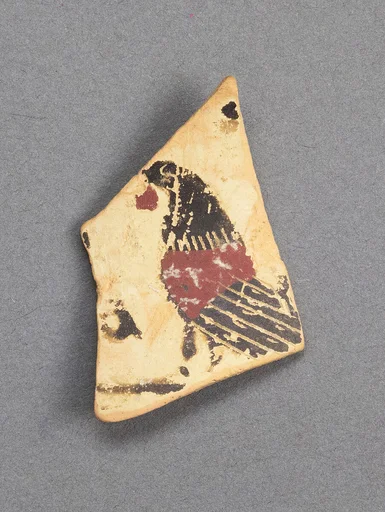
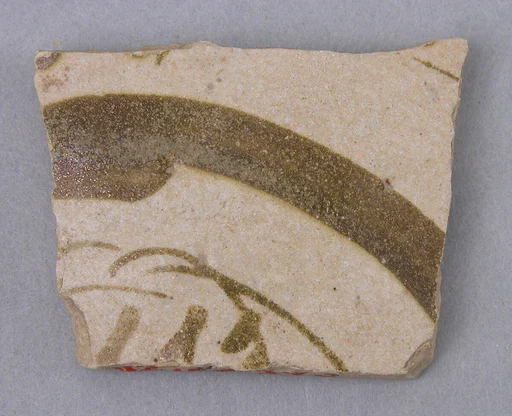
Fragment of a Luster Bird
Unknown
10th century · Earthenware; luster-painted on opaque white glaze · Islamic Art
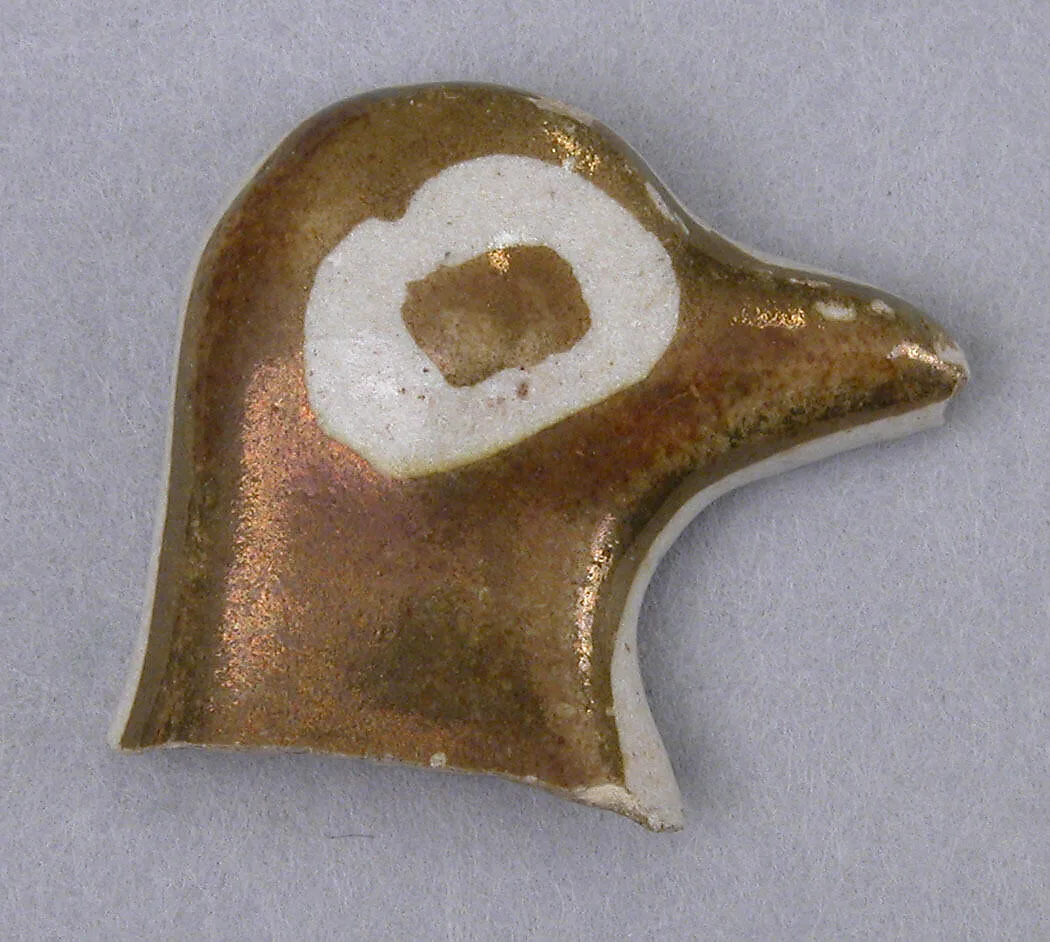
The original use of this rare object – a bird in profile painted on both sides – is unknown. Vessels painted with the same technique, luster, are more common and are distinctive of ninth and tenth - century Iraqi productions. They responded to the desire for both luxurious and wonder-inducing objects and open a window into the cosmopolitan sophistication of Abbasid material culture. The sheen of the luster-painted surface (achieved with metallic pigments) would have inevitably changed according to the intensity and direction of the light source while holding and moving the objects, creating an unpredictable and varied experience for the beholder. Such shifts of color and iridescence, termed abū qalamūn in contemporary Arabic sources, respond to expectations of wonderment (‘ajab) encountered in written sources describing the experience of encountering natural or human-made marvels. The technical and stylistic variations of luster ceramics were also greatly appreciated by European and North American collectors in the early twentieth century.
- Artist
- Unknown
- Date
- 10th century
- Medium
- Earthenware; luster-painted on opaque white glaze
- Department
- Islamic Art
- Credit line
- Gift of Michel E. Abemayor, 1971