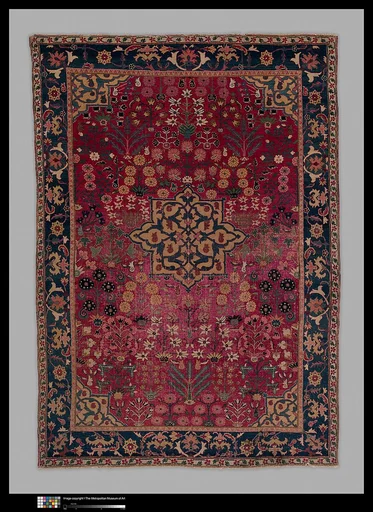
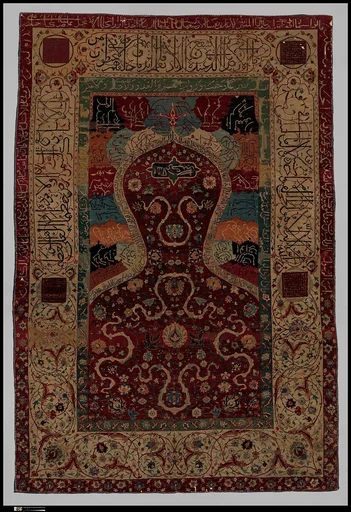
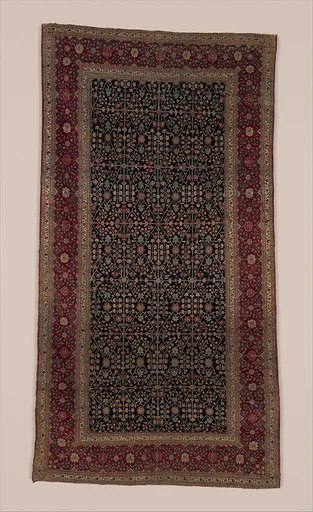
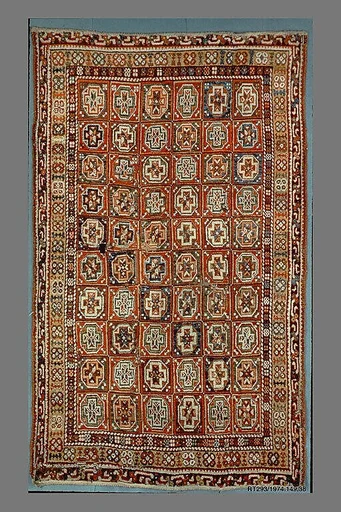
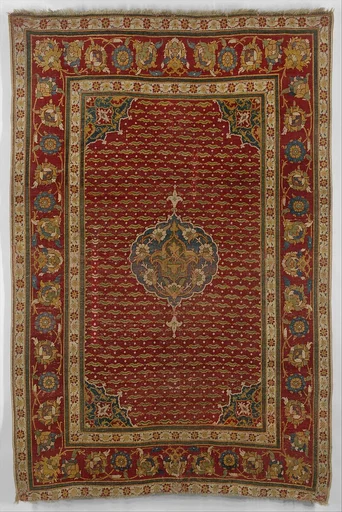
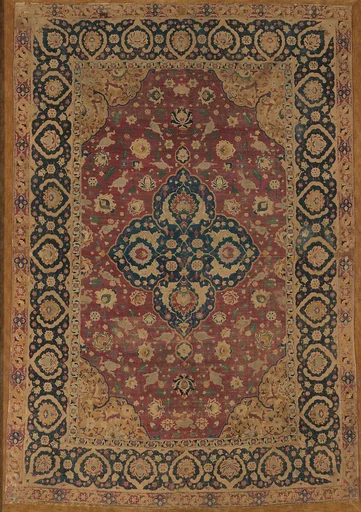
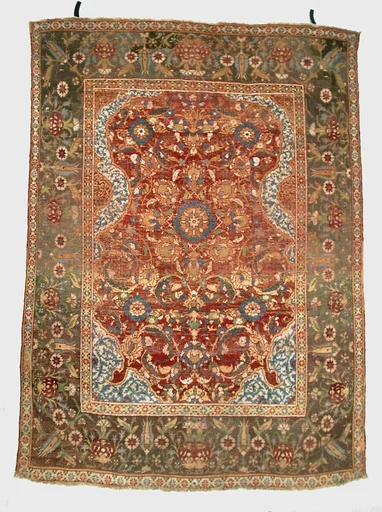
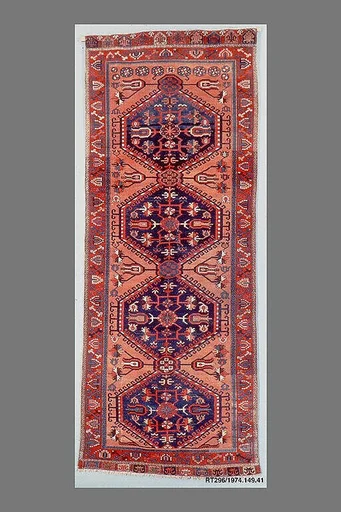
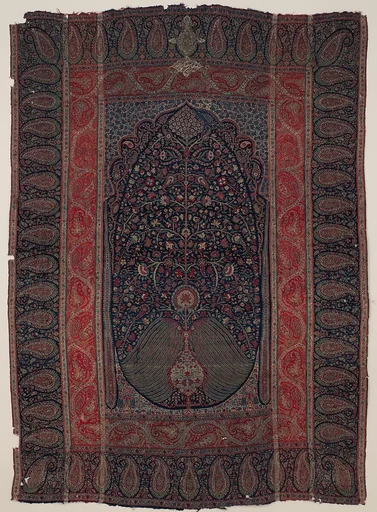
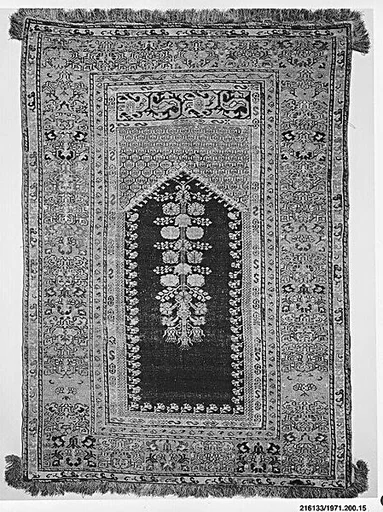
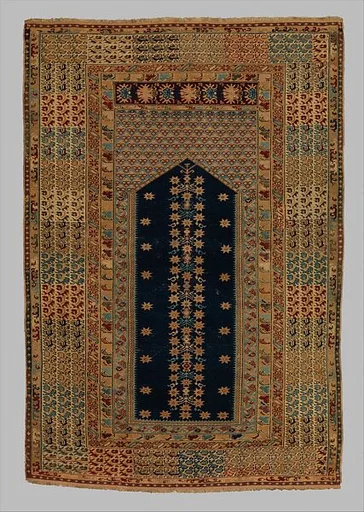
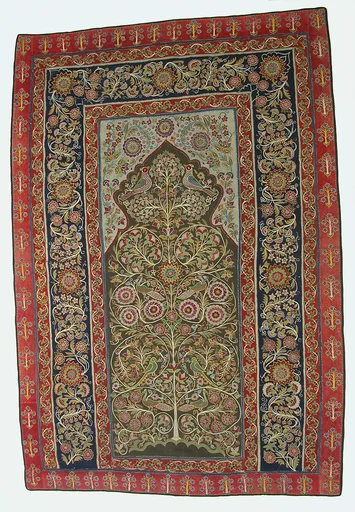
Pashmina Carpet with Gateway-and-Millefleur Pattern
Unknown
second half 18th century · Cotton (warp and weft), pashmina wool (pile); asymmetrically knotted pile · Islamic Art
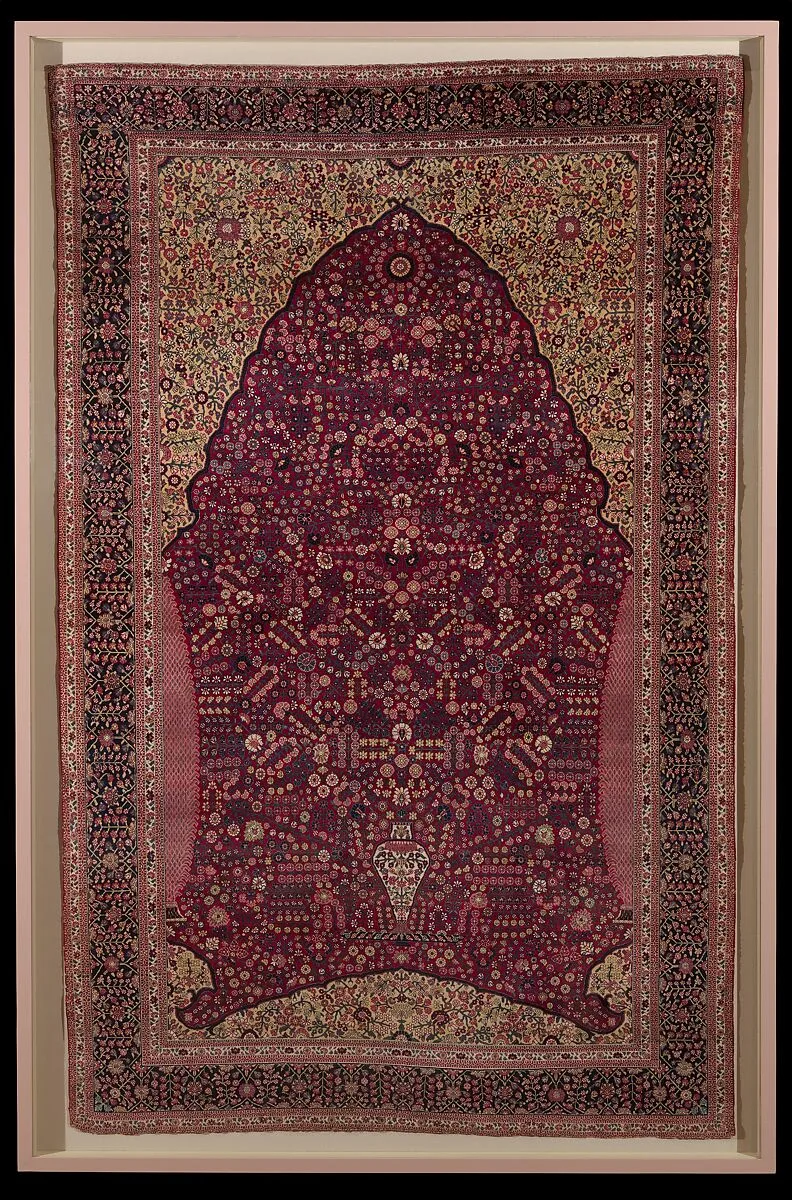
The area of northern India and eastern Pakistan was an important region for carpet weaving during the late seventeenth and eighteenth centuries. Millefleur carpets and some later flower-style pieces were manufactured there. They were usually made with fine knots and expensive pashmina wool. The type shown here was designed as a pair of cypress trees on either side under an arch, symbolizing the gateway to a flower-filled paradise. This example is distinguished by its geometric treatment of the millefleur pattern and a central vase from which the motifs grow.
- Artist
- Unknown
- Date
- second half 18th century
- Medium
- Cotton (warp and weft), pashmina wool (pile); asymmetrically knotted pile
- Department
- Islamic Art
- Credit line
- Gift of Joseph V. McMullan, 1970