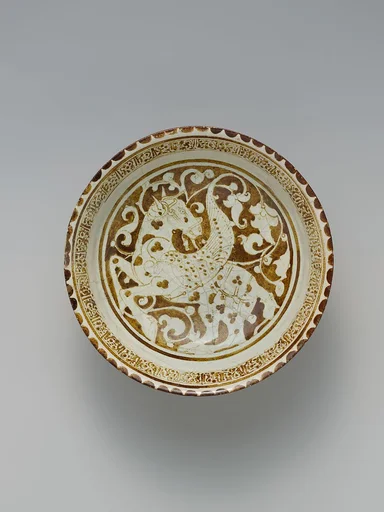
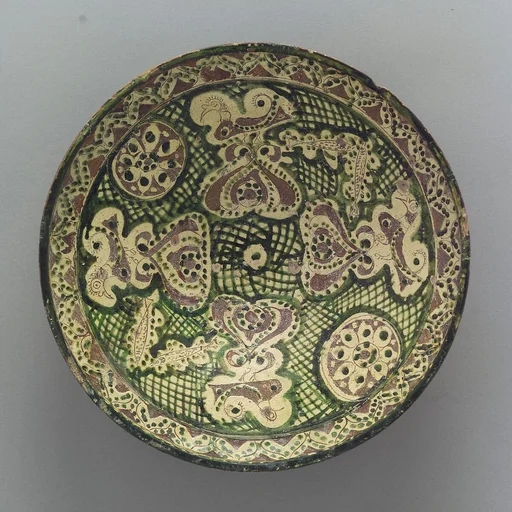
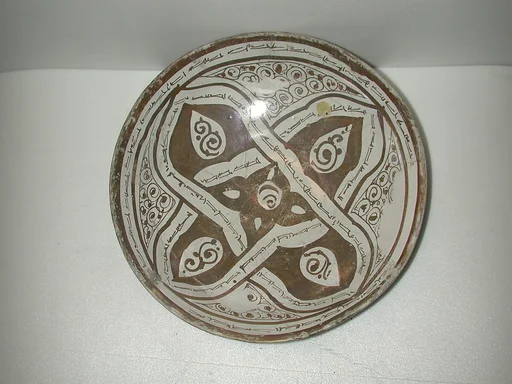
Bowl with Two Facing Peacocks
Unknown
second–third quarter 10th century · Earthenware; luster-painted on opaque white glaze · Islamic Art
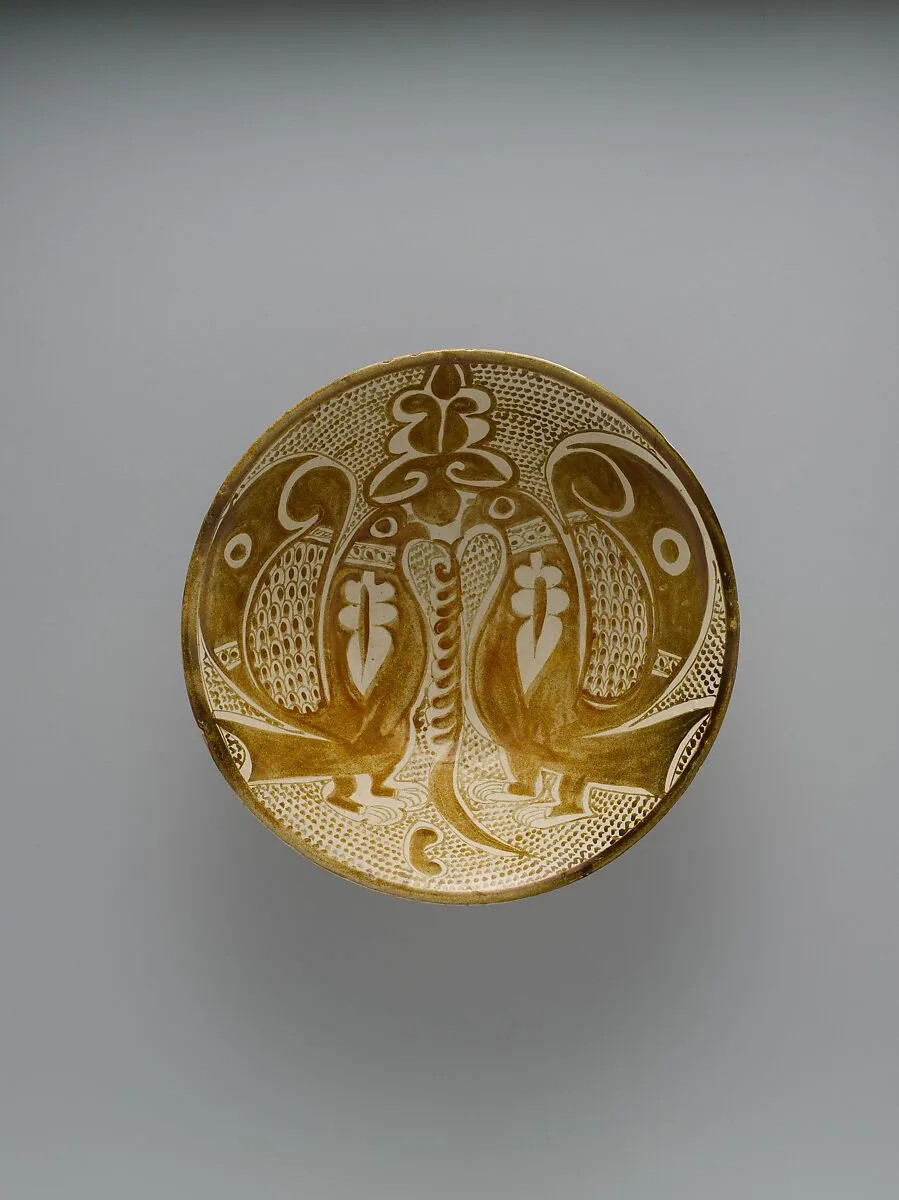
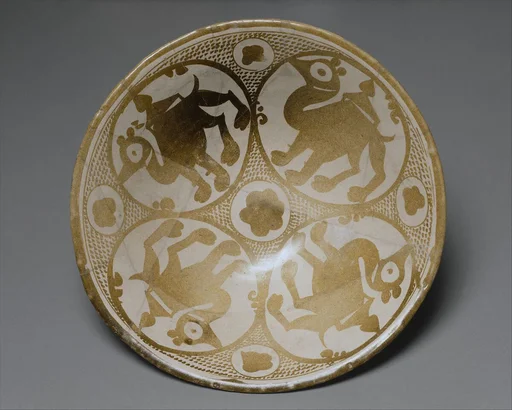
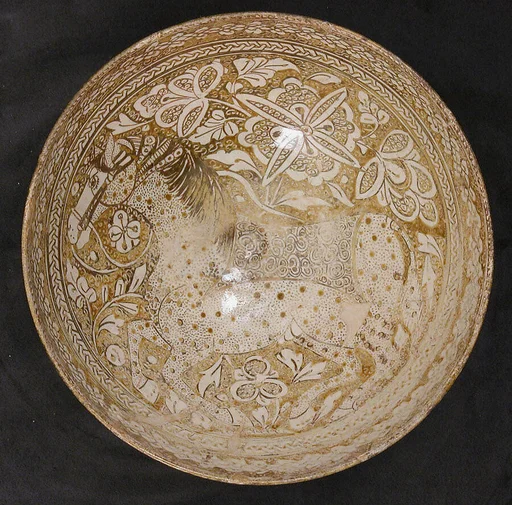
Birds were a particularly popular subject in the Abbasid period, as artists in many media transformed the creatures’ beaks and wings into increasingly abstracted designs. The symmetrical pattern of two peacocks facing each other finds iconographic precedents in examples dating from the late antique and Byzantine periods, where it often carried paradisiacal connotations. The exterior is painted with a simple pattern of circles and lines. The underside of the foot is glazed and bears an Arabic inscription. Monochrome luster examples such as this were characteristic of the "second phase" of Abbasid lusterware, which developed in centers in Iraq in the tenth century.
- Artist
- Unknown
- Date
- second–third quarter 10th century
- Medium
- Earthenware; luster-painted on opaque white glaze
- Department
- Islamic Art
- Credit line
- Fletcher Fund, 1964