Loom Width with Serrated Leaf Design
Unknown
ca. 1600–1625 · Silk, metal wrapped thread; lampas (kemha) · Islamic Art
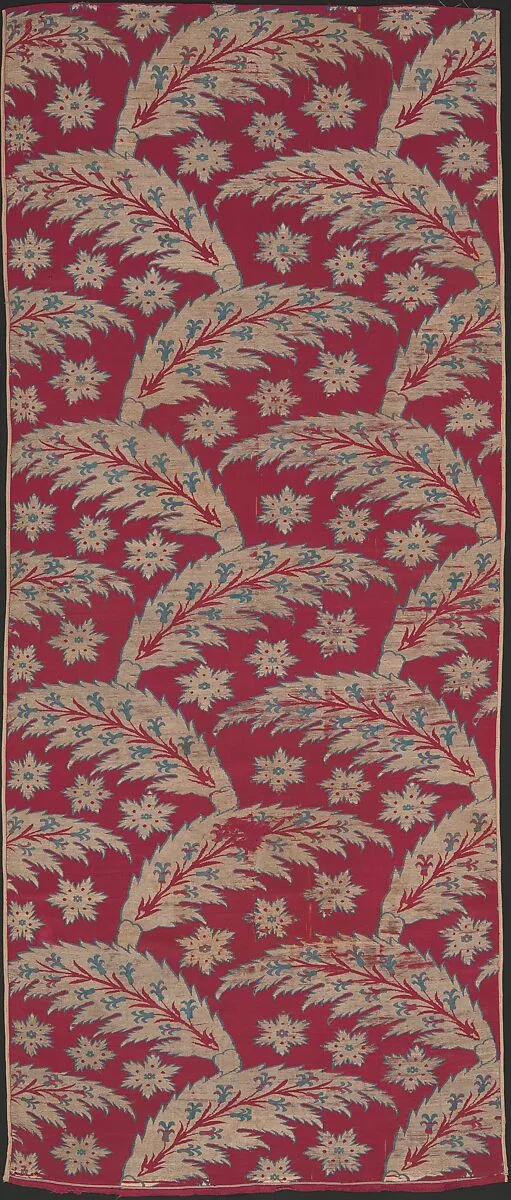
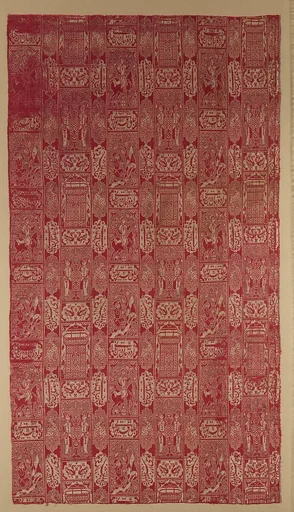
This lampas-woven fragment features large-scale leaves executed in the saz style, named after the feathery saz leaf. Popularized throughout Ottoman arts by the Iranian émigré and court painter, Shah Qulu, during the reign of Süleyman the Magnificent (1520–66), the saz style found its way from the reed pen of the painters at the royal nakkaşhane (workshop) into contemporary textile design. In this case, this new artistic aesthetic is characterized by central motifs with serrated edges outlined in a contrasting color. The lampas (kemha) weaving technique incorporates contrasting weave structures with two warps in different colors, creating solid areas of color on the surface of the cloth by floating the unincorporated warp threads in the back.
- Artist
- Unknown
- Date
- ca. 1600–1625
- Medium
- Silk, metal wrapped thread; lampas (kemha)
- Department
- Islamic Art
- Credit line
- Purchase, Joseph Pulitzer Bequest, 1952