Textile Fragment
Unknown
16th century · Silk, metal wrapped thread; lampas (kemha) · Islamic Art
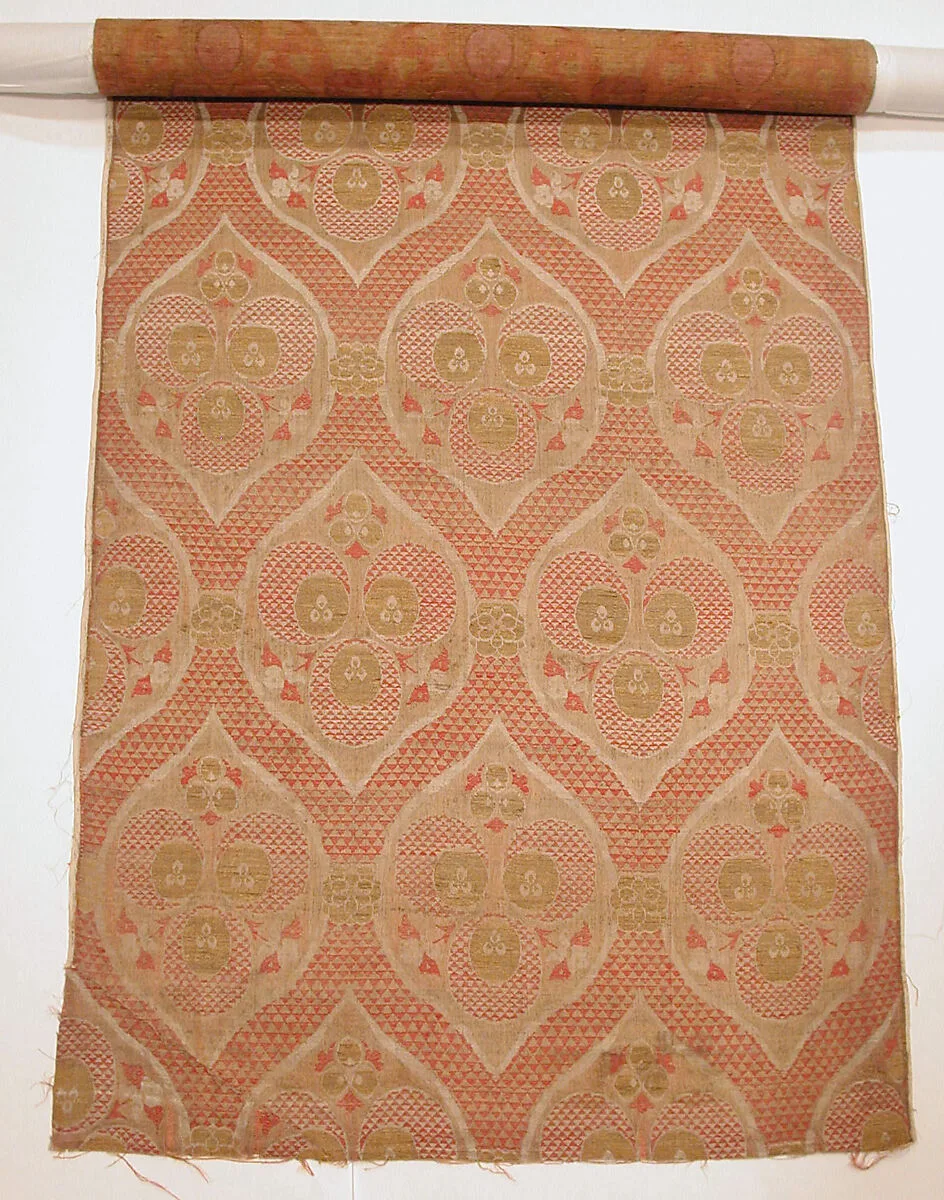
This long, rectangular silk fragment features two distinct designs popular in Ottoman art—the ogival pattern and the chintamani motif. Though seen across a wide range of media in Ottoman Turkey, these patterns were especially popular in textile weaving. In this example, the chintamani is repeated in two different sizes as a grouping of three pearl, or closed-crescent, motifs. The chintamani was considered an auspicious symbol, bringing good luck to its wearer. The symbol also became associated with virility and power because of its resemblance to leopard spots and tiger stripes.
- Artist
- Unknown
- Date
- 16th century
- Medium
- Silk, metal wrapped thread; lampas (kemha)
- Department
- Islamic Art
- Credit line
- Rogers Fund, 1944