Luster Star-Shaped Tile
Unknown
dated A.H. 608/1211–12 CE · Stonepaste; luster-painted on opaque glaze with inglaze painting · Islamic Art
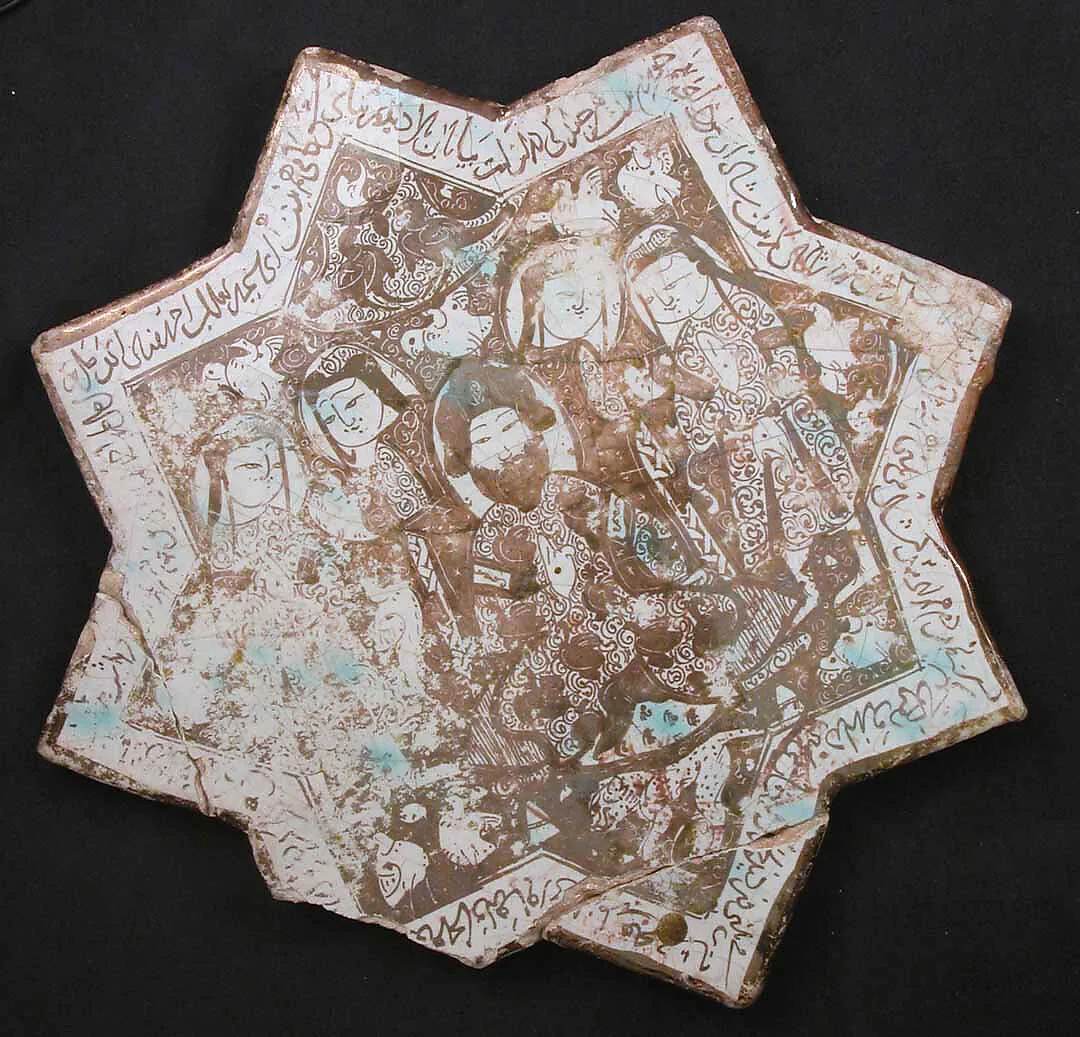
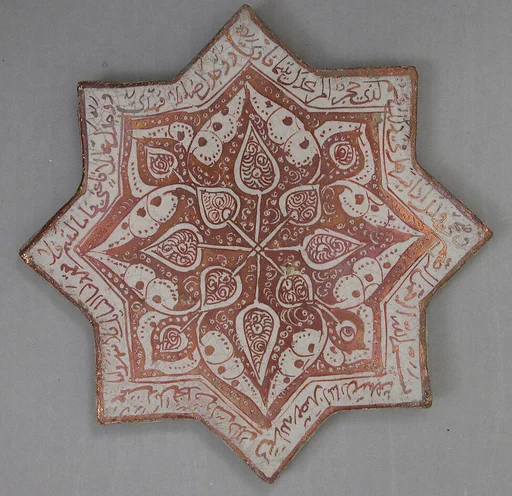
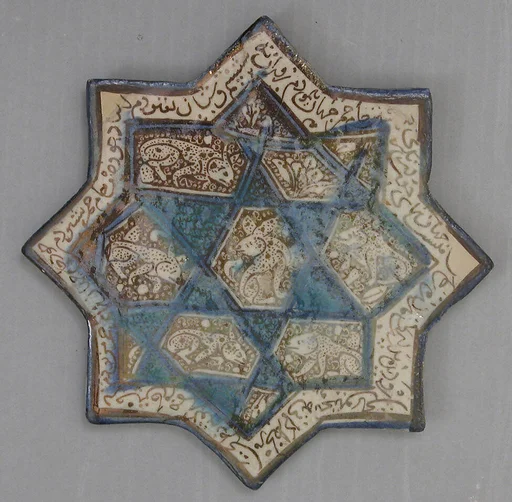
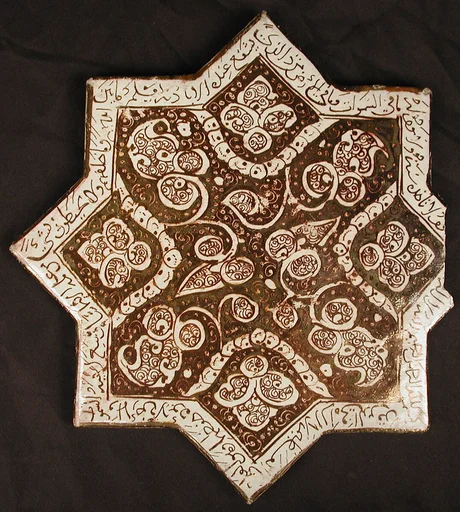
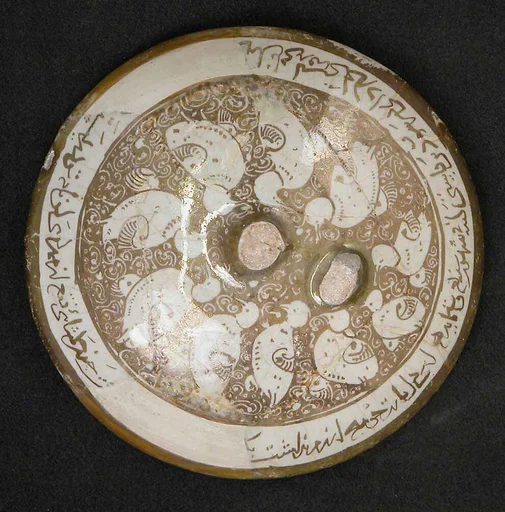
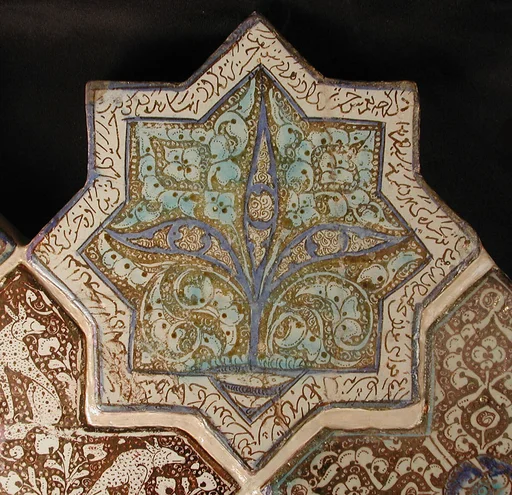
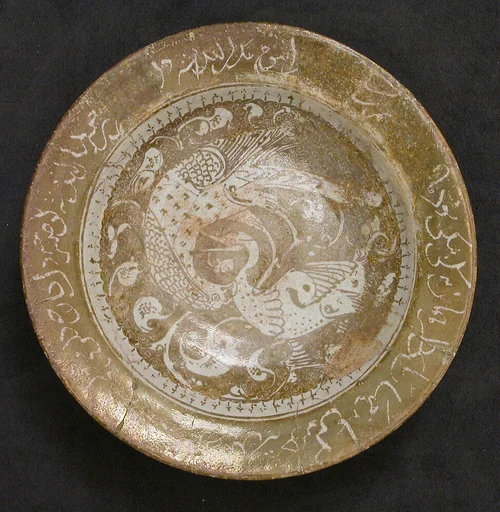
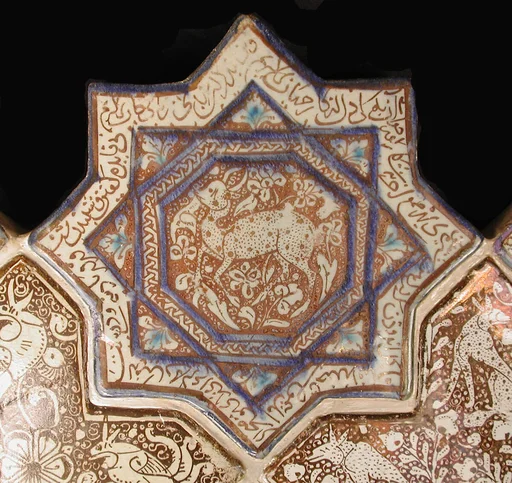
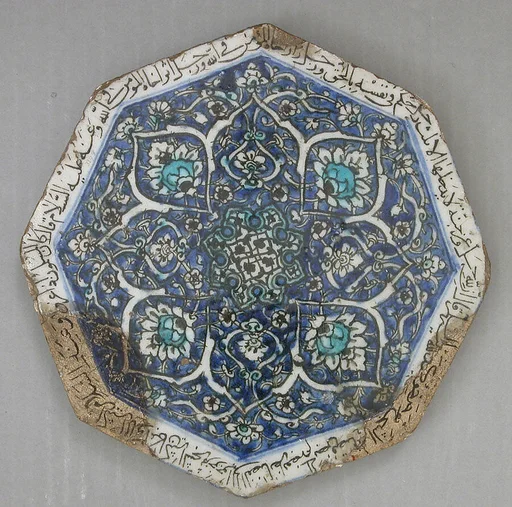
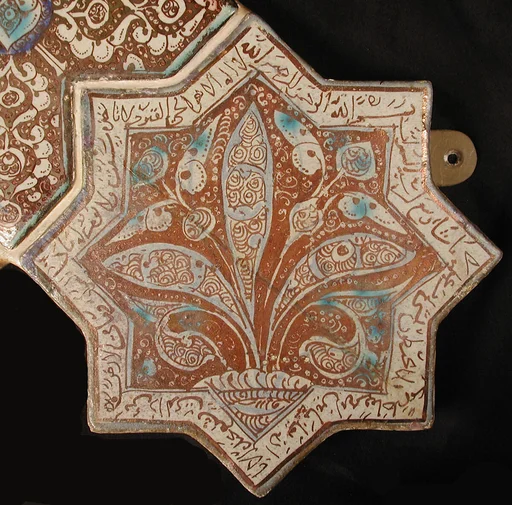
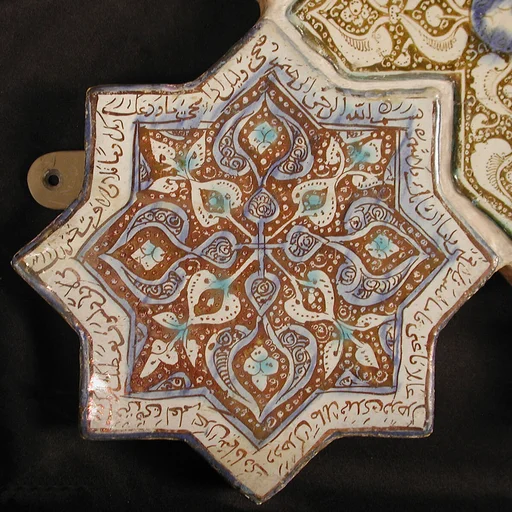
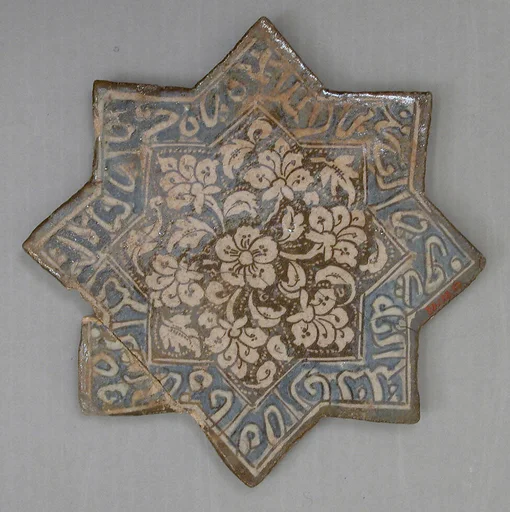
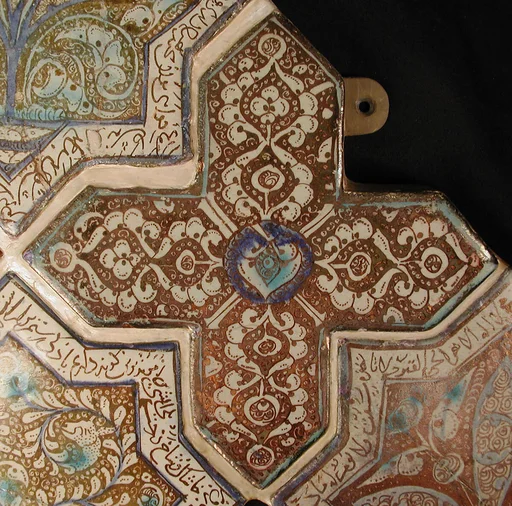
Although the technology is believed to have originated in Iraq in the early ninth century and first spread westward to Egypt and Syria, lusterware became a dominant type of ceramic production in medieval Iran, possibly having spread from Egypt to Iran in the early 12th century by artisans migrating to set up workshops. Within Iran the town of Kashan was the finest and most prolific producer of lusterware. One aspect that sets Iranian lusterwares apart from their western Islamic counterparts is the remarkable frequency with which these pieces were accompanied by signatures and dates of manufacture. On the tile presented here, a depiction of a sultan surrounded by members of the court is framed by three quatrains of Persian poetry and dated to the year A.H. 608 (A.D. 1211–12). The leopard and birds may imply that the scene is set outdoors
- Artist
- Unknown
- Date
- dated A.H. 608/1211–12 CE
- Medium
- Stonepaste; luster-painted on opaque glaze with inglaze painting
- Department
- Islamic Art
- Credit line
- H.O. Havemeyer Collection, Gift of Horace Havemeyer, 1940