Spindle Whorl
Unknown
9th–10th century · Bone; incised and inlaid with paint · Islamic Art
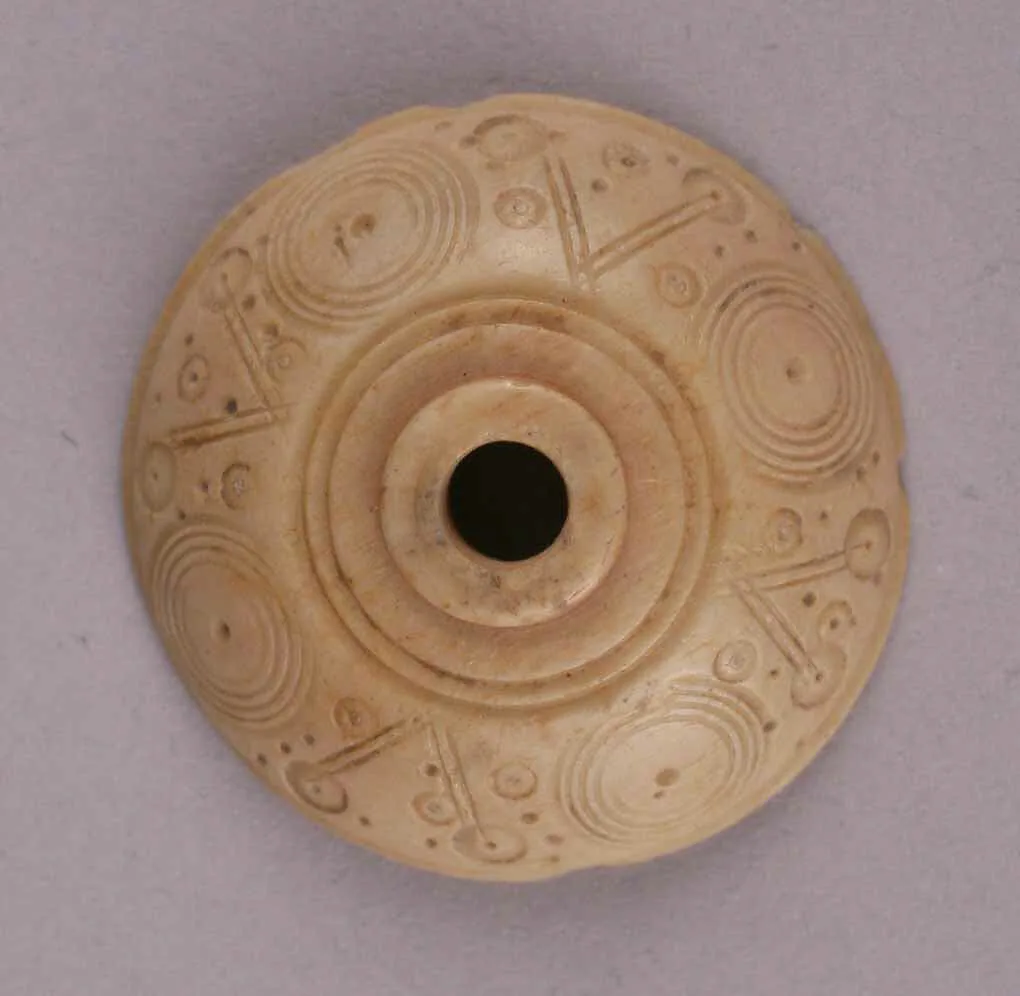
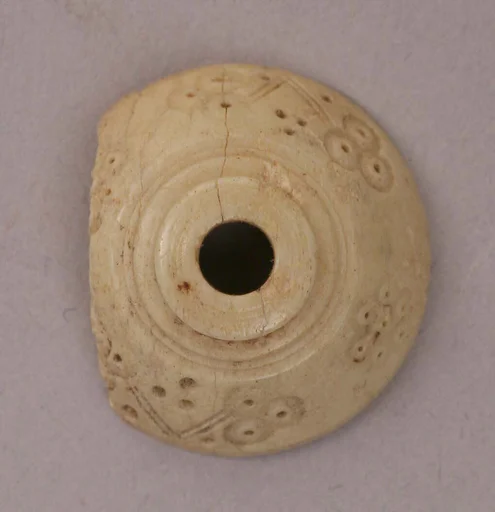
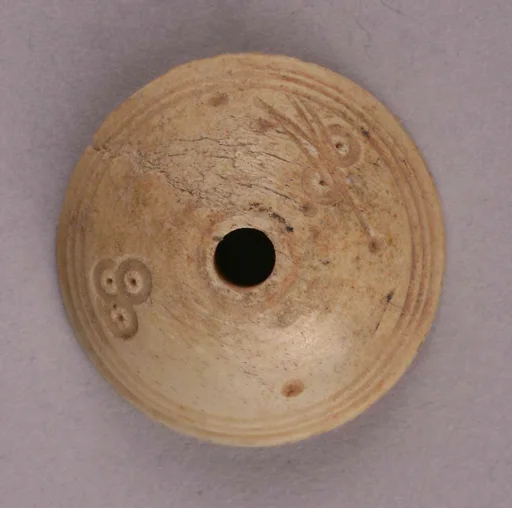
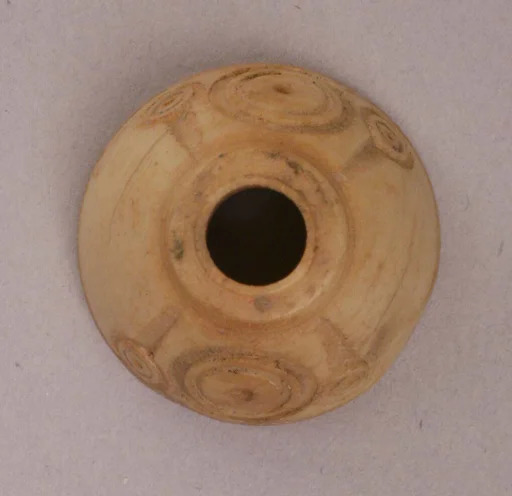
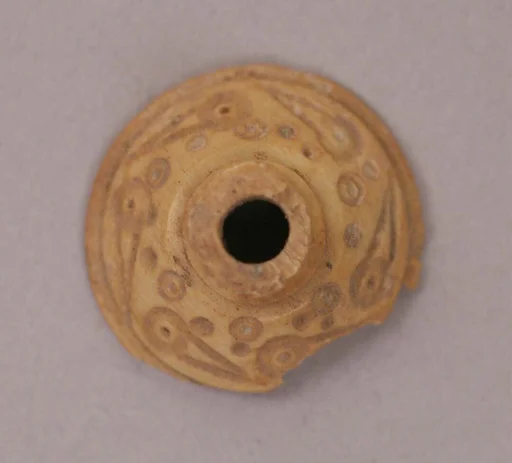
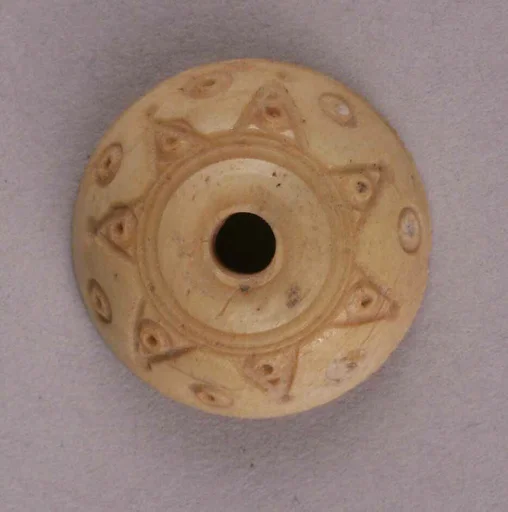
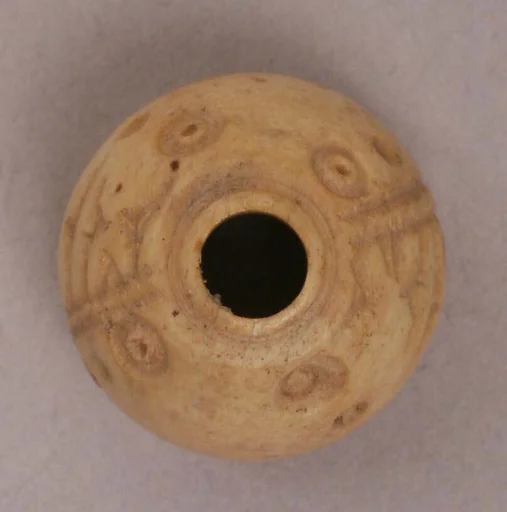
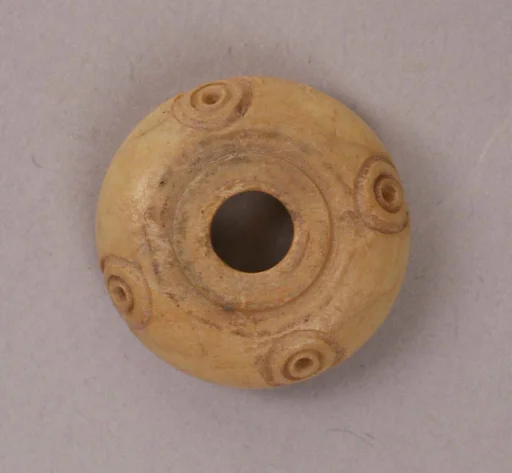
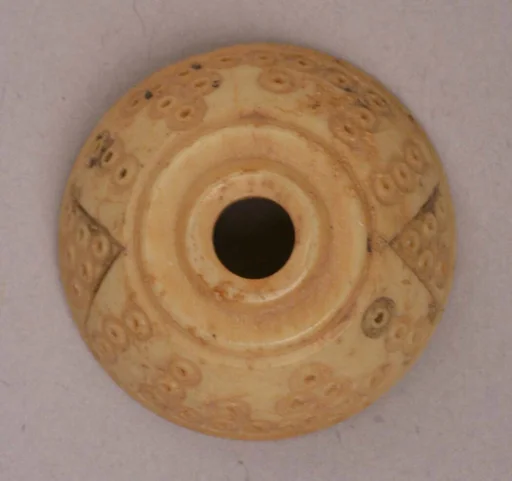
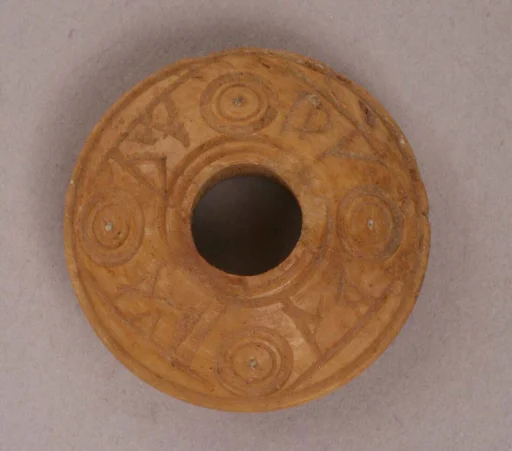
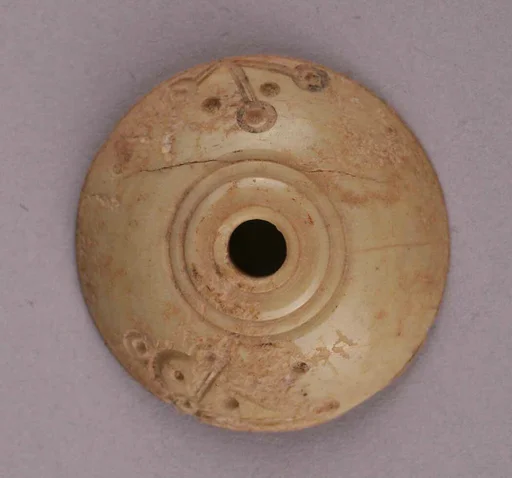
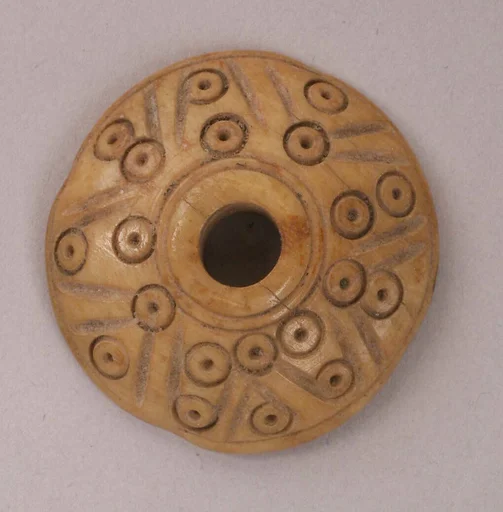
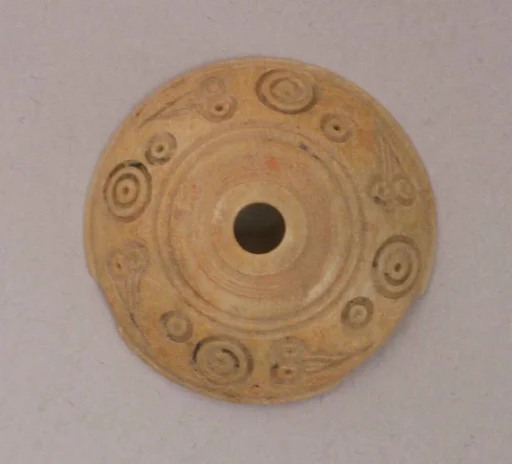
Spindle whorls aided in the making of thread by maintaining the momentum of the spindle. This spindle whorl was excavated during the Metropolitan Museum’s excavations in Nishapur, in eastern Iran. Its raised collar is encircled by two incised lines. A band, comprised of alternating dot-in-circles and angles ending in dot-in-circles, extends around the main body. An incised circle forms a border around the base. The dots were once filled with colored paste, but it has since faded. Hundreds of spindle whorls were excavated at Nishapur, providing further evidence that the city possessed a thriving textile industry. Their incised designs exhibit a wide variety of motifs ranging from geometric forms to zoomorphic figures.
- Artist
- Unknown
- Date
- 9th–10th century
- Medium
- Bone; incised and inlaid with paint
- Department
- Islamic Art
- Credit line
- Rogers Fund, 1940