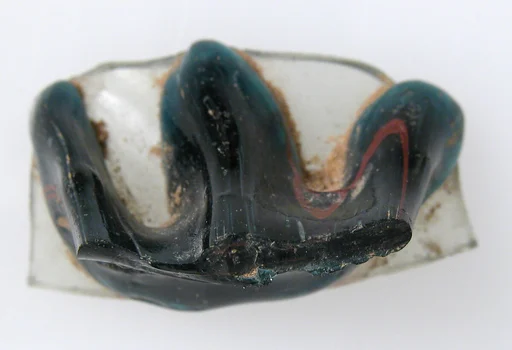
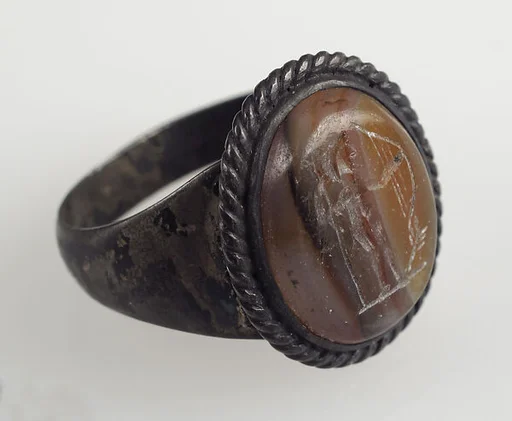
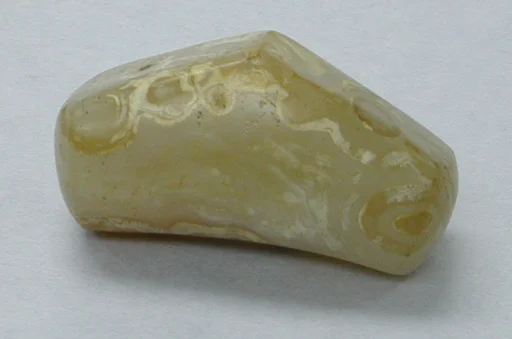
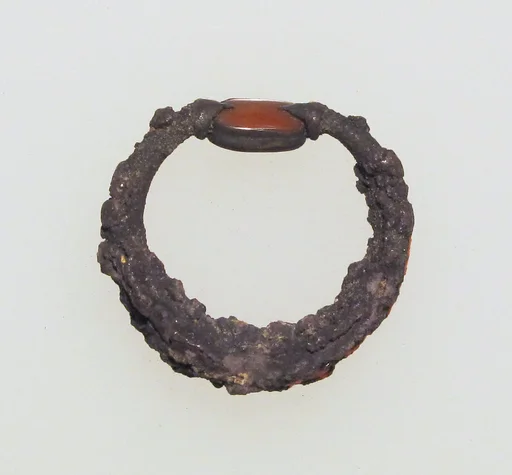
Ring
Unknown
9th–11th century · Silver; set with carnelian · Islamic Art
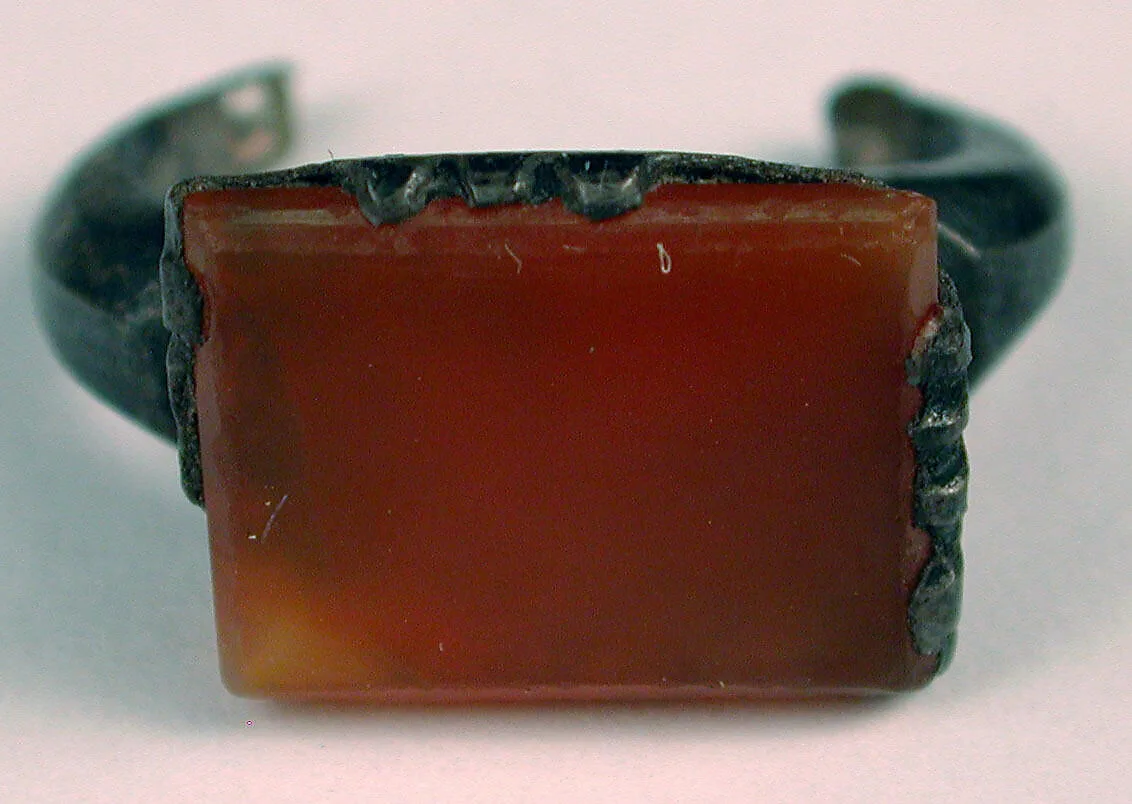
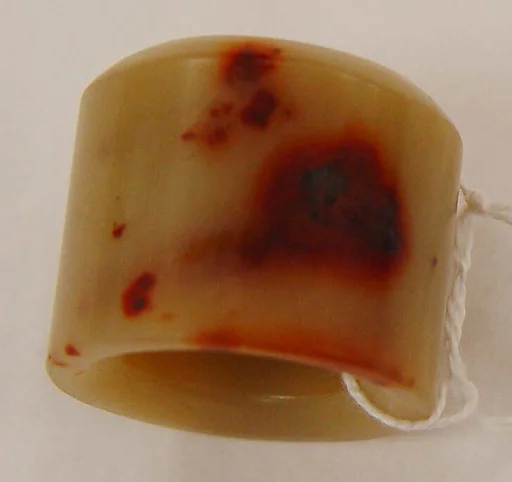
In medieval Iran, carnelian is popularly found in jewelry owing largely to qualities such as its availability, toughness, and resistance to abrasion. According to al-Biruni, an eleventh-century polymath who wrote an important treatise on gemstones, carnelian was meant to provide courage in battle and cease hemorrhaging on the body. Excavated at Nishapur, this striking ring, therefore would have served as a talisman for its wearer.
- Artist
- Unknown
- Date
- 9th–11th century
- Medium
- Silver; set with carnelian
- Department
- Islamic Art
- Credit line
- Rogers Fund, 1940