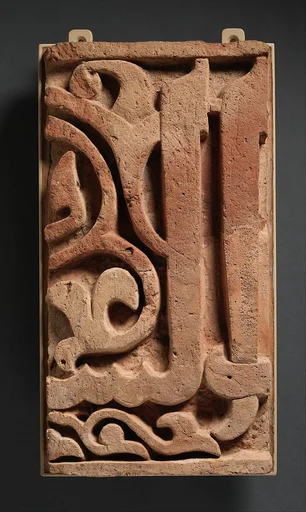
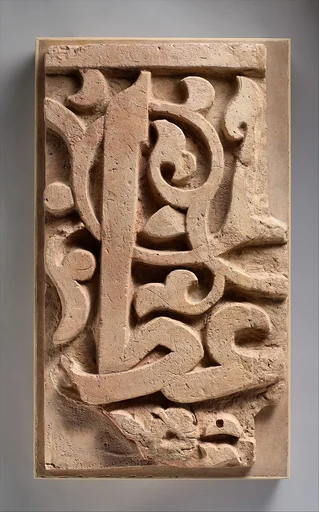
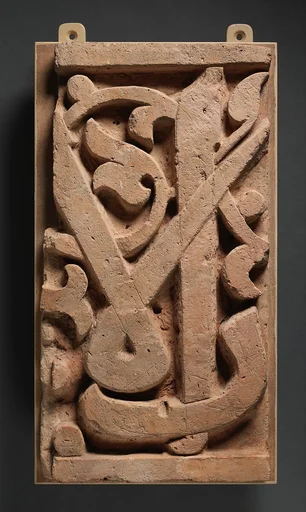
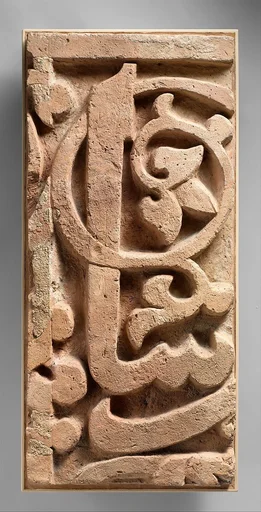
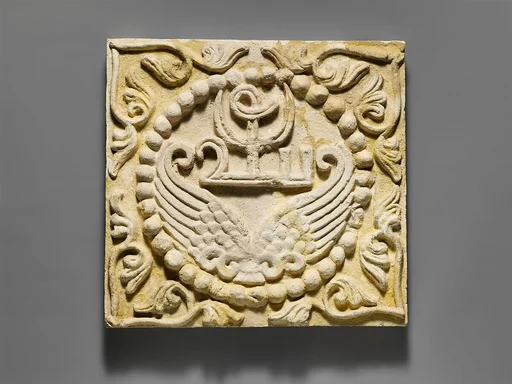
Panel from a Mosque Frieze Bearing the Name of a Sultan
Unknown
11th century · Terracotta; carved, painted · Islamic Art
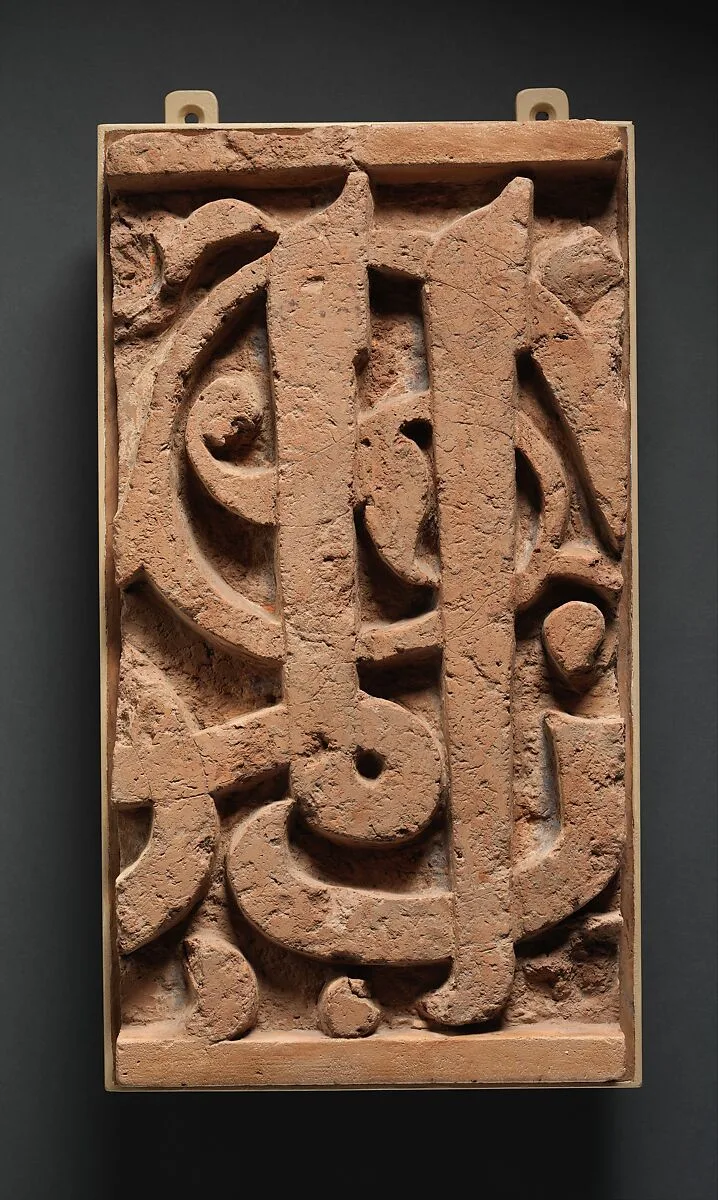
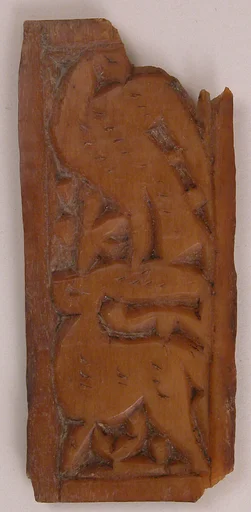
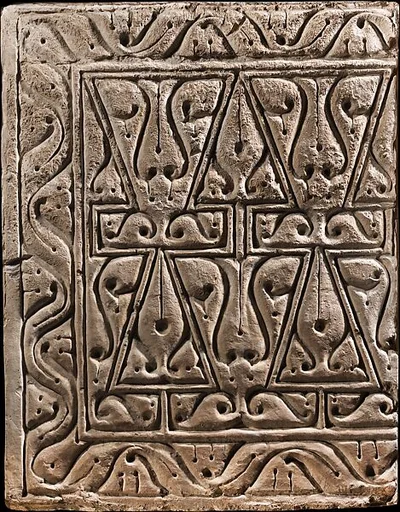
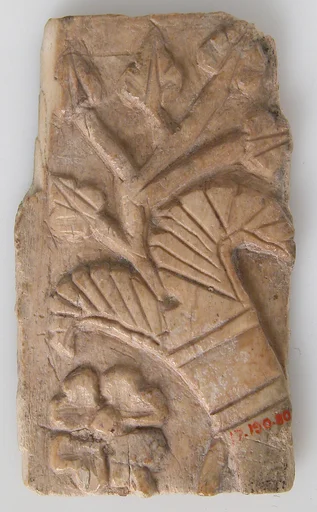
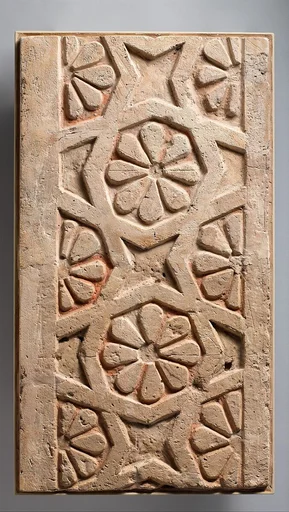
This panel and the other five in the Met’s collection (39.40.58, .60–62, .64) were excavated near a mosque that served a dense residential neighborhood in medieval Nishapur. Together with other panels now in Iran, they are believed to have framed the entrance portal of the prayer hall. The frieze was originally painted in red and lapis blue on a white ground. It included the word "al-sultan", a title that first occurred in monumental epigraphy in the eleventh century with Seljuq and Ghaznavid rulers.This inscription originally bore the titles of the Seljuq Sultan Malik Shah (r. 1073–92). In this period Nishapur was a thriving center of religious and intellectual life that prospered due to its position on the trade route to Central Asia, natural resources such as turquoise and alabaster, the cultivation of cotton, and the production of both silk and cotton textiles.
- Artist
- Unknown
- Date
- 11th century
- Medium
- Terracotta; carved, painted
- Department
- Islamic Art
- Credit line
- Rogers Fund, 1939