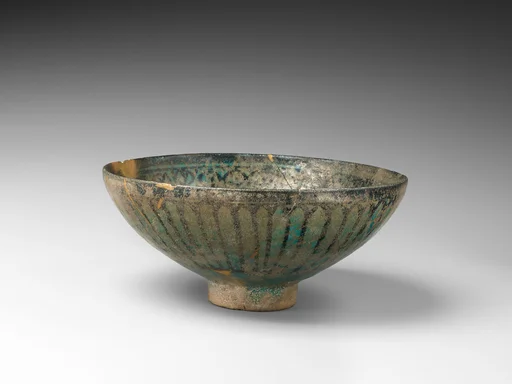
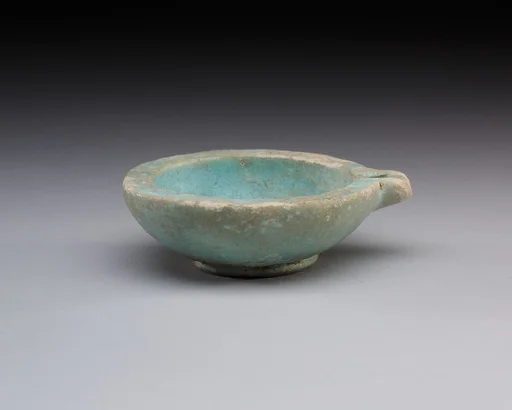
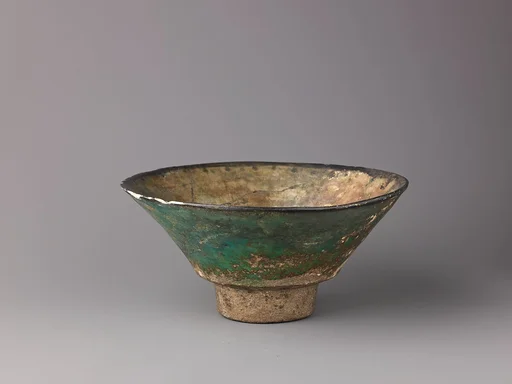
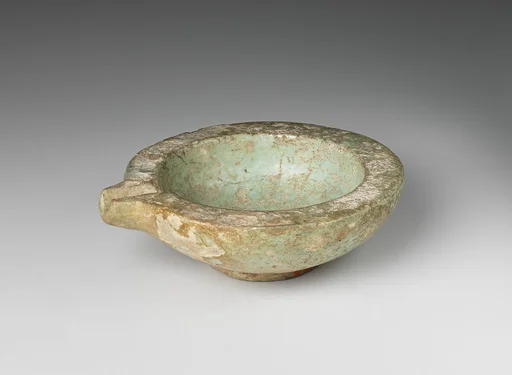
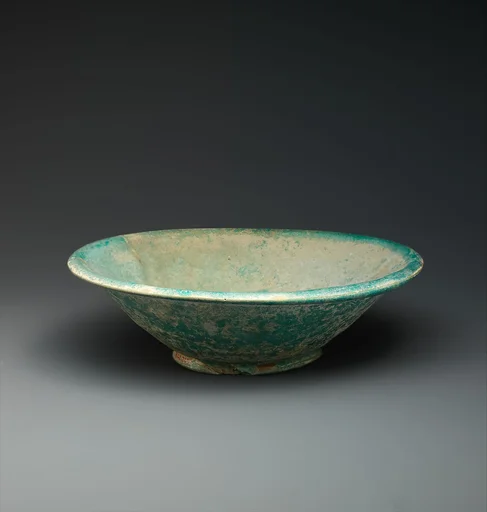
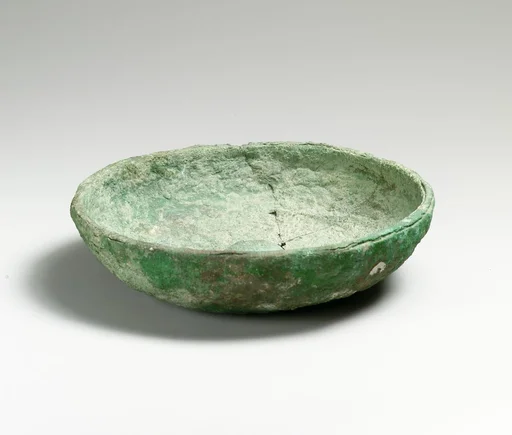
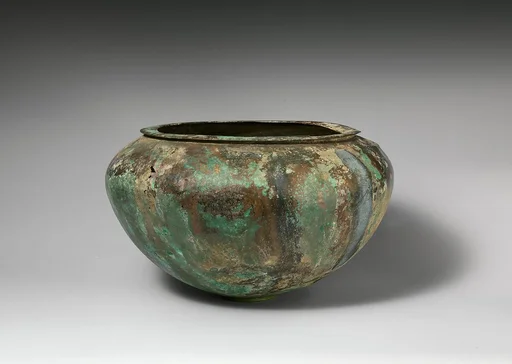
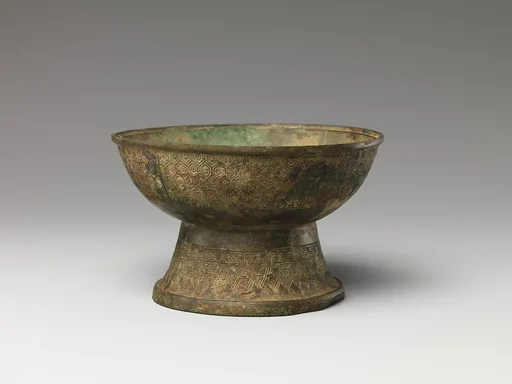
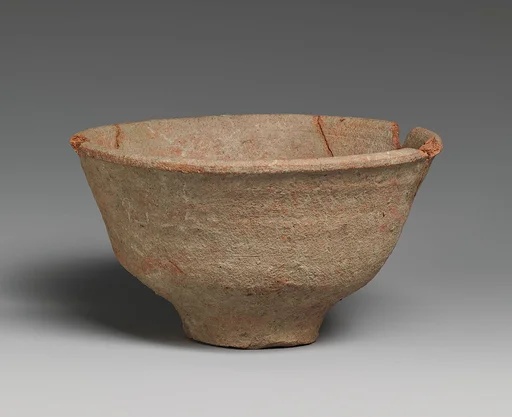
Bowl
Unknown
11th century · Earthenware; turquoise opacified glaze · Islamic Art
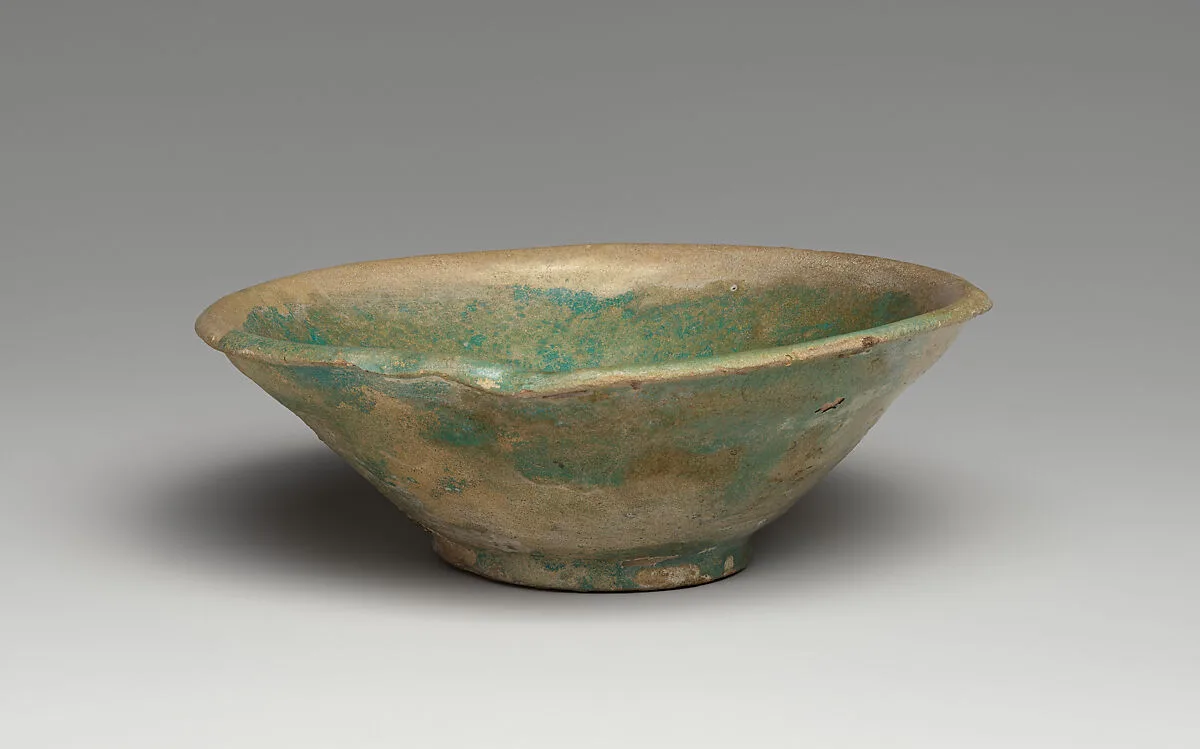
This bowl was excavated at the site of Village Tepe in Nishapur in 1937. It was subsequently acquired by the Museum through a division of finds with the Iranian government at the time. Similar objects, earthenware with an opaque turquoise glaze, were also excavated in Central Iran, particularly in Isfahan and Istakhr. They appear to represent a visual continuity of vessels made of stonepaste, a new ceramic technology that emerged in the second half of the 11th century. However, such objects are largely unknown and often ignored in the art historical literature from medieval Iran. Further investigations will elucidate whether this ware was made in imitation of stonepaste, perhaps by craftsmen with no knowledge of the medium, or if it is an example of a preexisting type of production whose repertoire of shapes was later adopted by stonepaste manufacturers.
- Artist
- Unknown
- Date
- 11th century
- Medium
- Earthenware; turquoise opacified glaze
- Department
- Islamic Art
- Credit line
- Rogers Fund, 1938