Fragment with Excised Motif
Unknown
7th–9th century · Earthenware; incised, excised, molded and glazed · Islamic Art
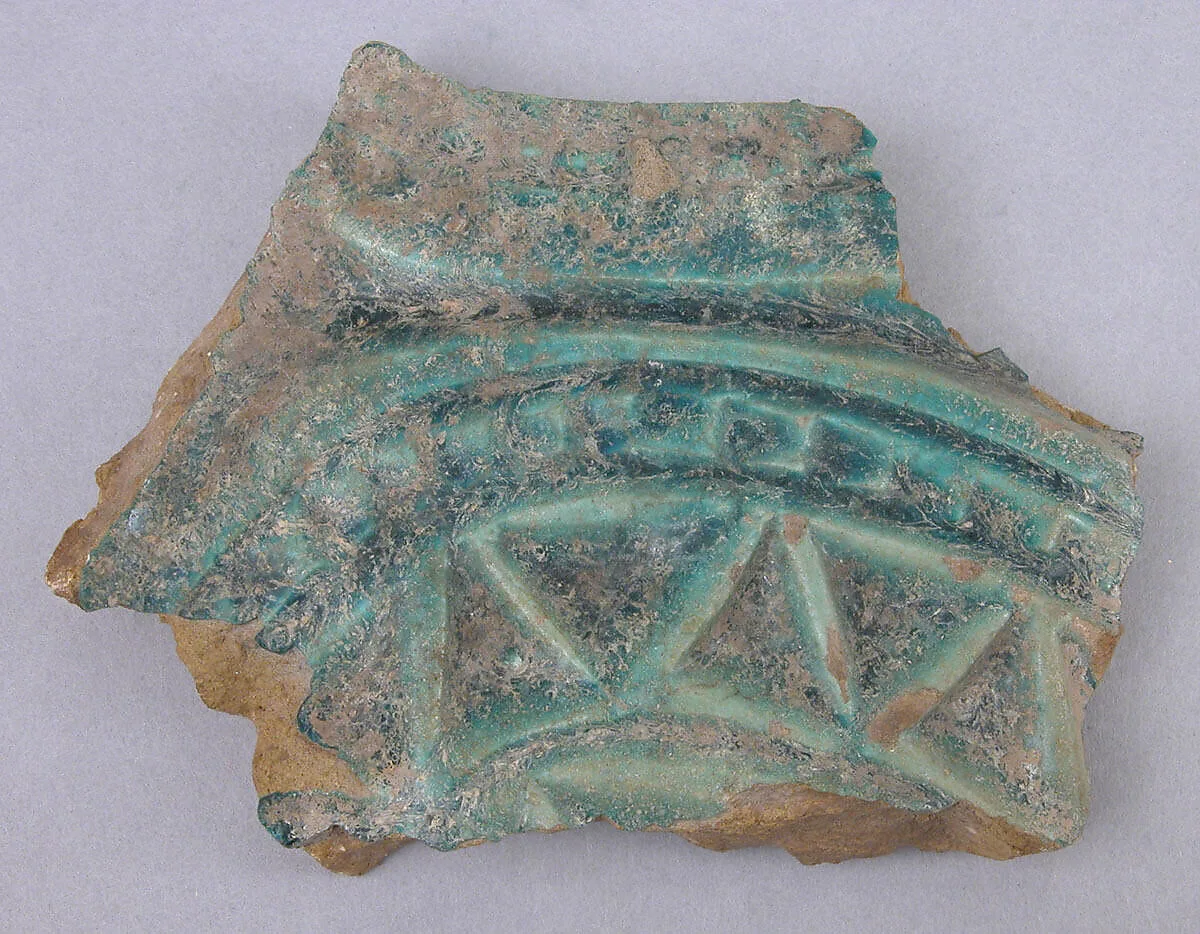
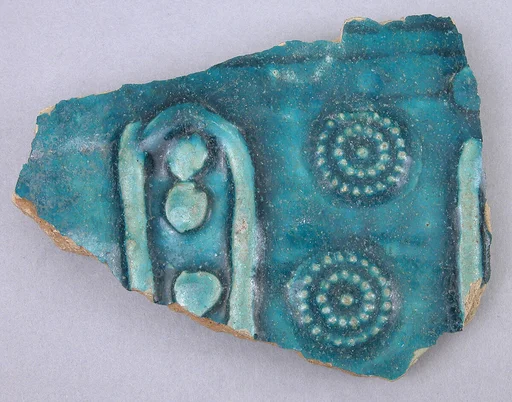
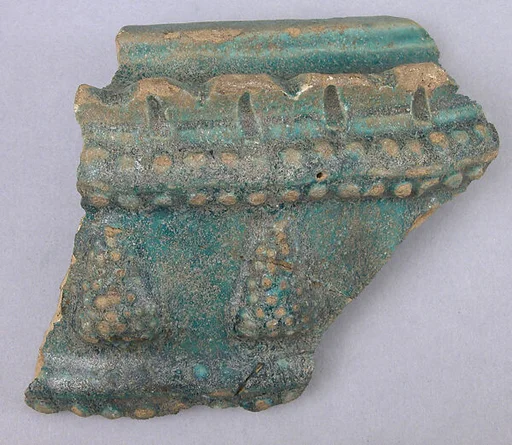
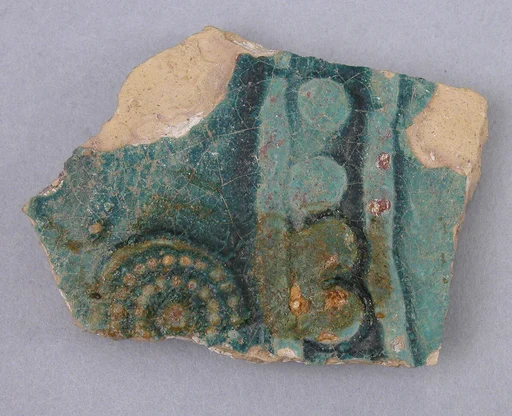
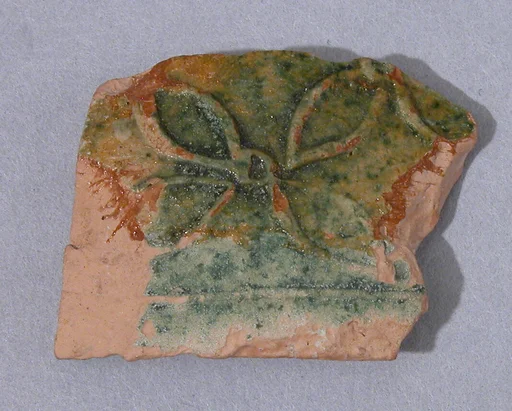
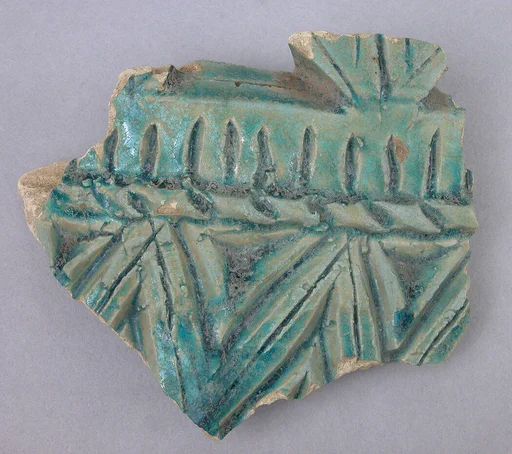
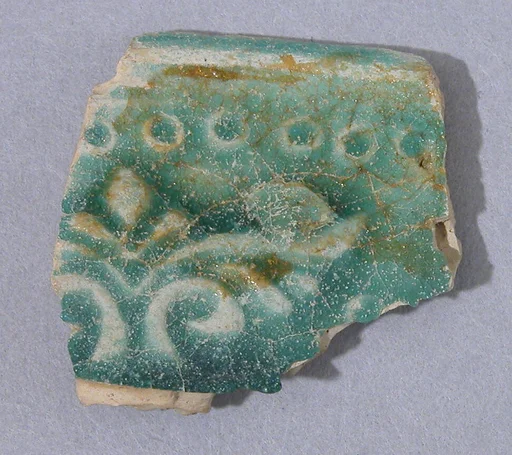
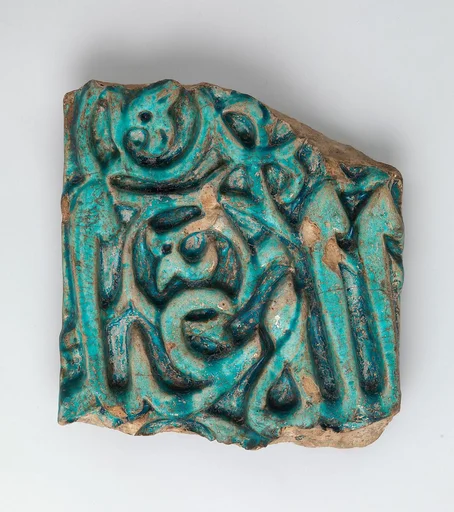
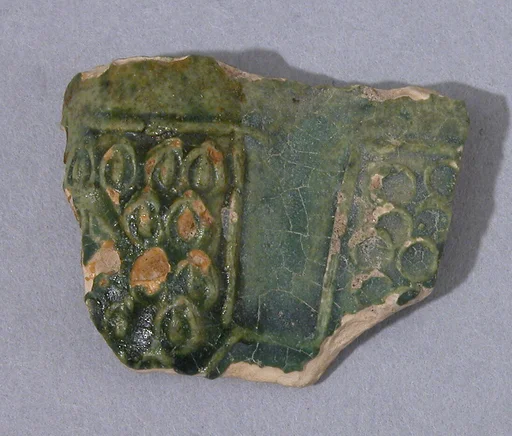
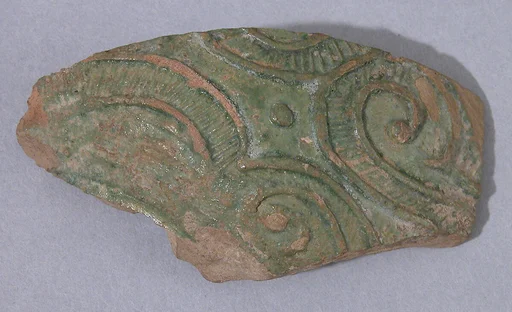
This ceramic fragment was excavated in Ctesiphon, the Sasanian metropolis and administrative capital conquered by Arab Muslim armies in 637. The city was known in Arabic as al-Mada’in, or "the cities", for its extended area. Arab historians indulge in describing al-Mada’in/Ctesiphon’s grand monuments, which obsessed Muslim rulers and may have acquired a symbolic meaning related to its imperial past. This was the case of the Taq-i Kisra, an impressively-sized ivan (a vaulted hall with one side open) partially dismantled to reuse its bricks in caliphal buildings in the new capital Baghdad. Finds like this fragment attest to the patterns of continuity and change in material culture between the late Sasanian and the early Islamic period. This fragment shows deeply excised triangles framed by a beaded band. Both motifs are found on late antique and Sasanian period ceramics, but the green glaze here suggests a later period. The beaded band is a versatile and enduring motif, found on a variety of mediums such as textiles and metalwork, as well as architectural decoration in stucco, wood, and stone. Its use on Byzantine textiles, traded throughout the Mediterranean, may explain its appearance in medieval South Italian art.
- Artist
- Unknown
- Date
- 7th–9th century
- Medium
- Earthenware; incised, excised, molded and glazed
- Department
- Islamic Art
- Credit line
- Rogers Fund, 1932