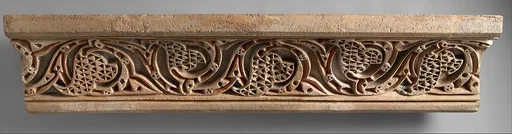
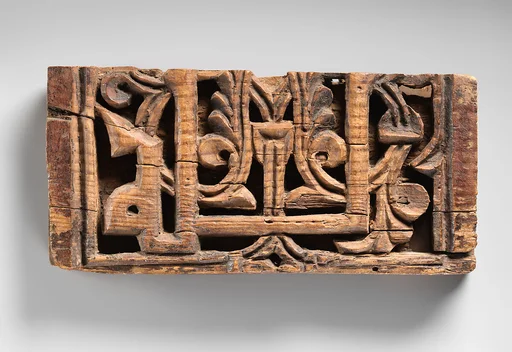
Panel Carved in the "Beveled Style" with Remains of Later Polychromy
Unknown
last quarter 10th century · Wood (black pine); carved, painted, and gilded · Islamic Art
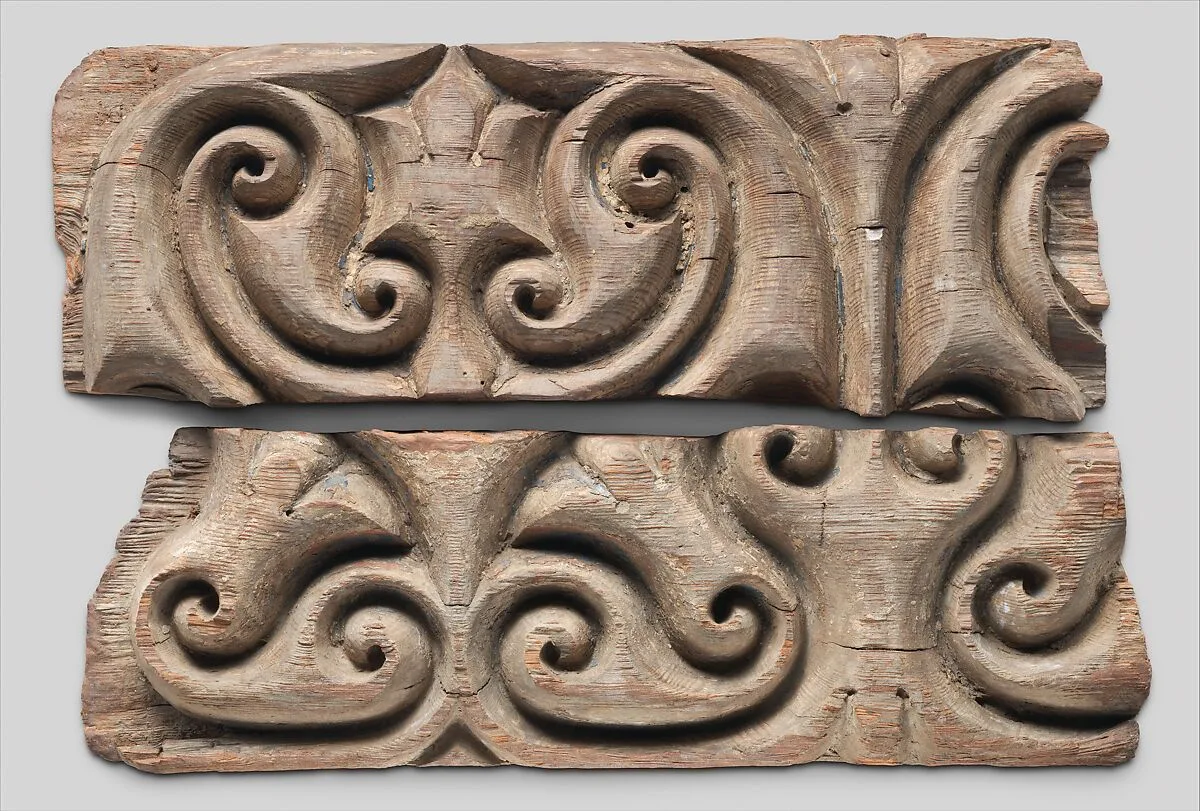
The increasing mobility of artisans and objects in the ninth and tenth centuries led to the adoption of new styles and techniques across a vast geography. This Egyptian frieze is an example of the so-called "beveled" style, a modern term indicating a distinctively slanted relief, an absence of negative space, and repeated patterns of vegetal forms. The style is first located in ninth century Iraq, at Samarra, and soon thereafter also in Egypt, reflecting the cosmopolitanism of the culture and visual language of this time and space. This frieze is comparable to a beam in the mosque of al-Hakim in Cairo (990–1013). It was altered at a later date and vibrantly colored: the gilded and red-outlined motifs would have offered a stunning contrast to the deep-blue background. Analyses of the paints identified gold leaf, lapis blue, indigo, and vermillion red.
- Artist
- Unknown
- Date
- last quarter 10th century
- Medium
- Wood (black pine); carved, painted, and gilded
- Department
- Islamic Art
- Credit line
- Rogers Fund, 1932