Textile Fragment
Unknown
13th–14th century · Cotton, plain weave; block-printed, resist-dyed · Islamic Art
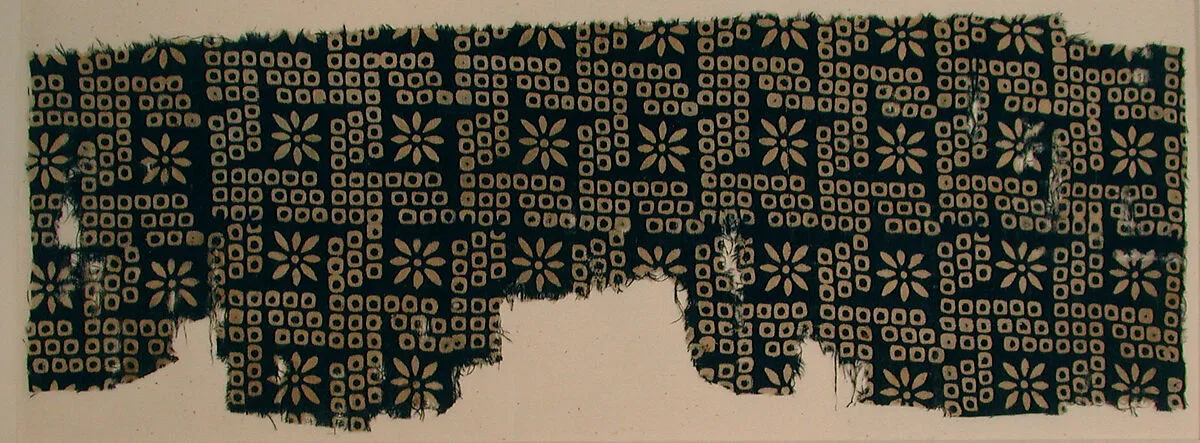
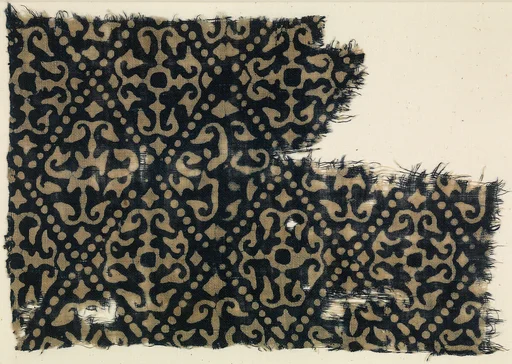
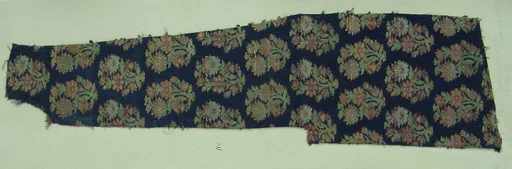
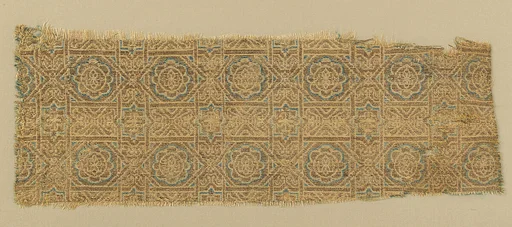
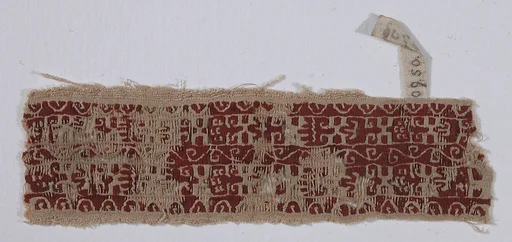
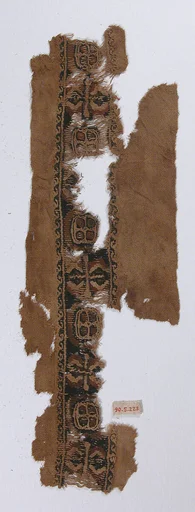
Dated to either the thirteenth or fourteenth century, this plain-woven, block-printed, cotton textile fragment was once part of a much larger piece. This fragment exhibits the unique characteristics of technique and decoration associated with textile production in Western India, in the province of Gujarat, during the Middle Ages. The fragment’s bold design is rendered using a single block to create a grid pattern with smaller squares centered with rosette designs with dotted interiors on a dark blue monochromatic background. The design of this fragment is stylistically reminiscent of decorative motifs found in Jain architecture and painted manuscripts produced in Gujarat. The vibrancy of the blue dye points to Western India, which at the time was a popular production center for richly dyed and block-printed textiles. Throughout the centuries, there was an international demand for such fabrics. Found near the site of Fustat, Egypt, these textiles have been preserved largely due to the arid and dry climate of the region. This fragment serves as evidence of the Red Sea maritime trade and travel relations between both these areas and highlights their transregional and cross-cultural connections during medieval times.
- Artist
- Unknown
- Date
- 13th–14th century
- Medium
- Cotton, plain weave; block-printed, resist-dyed
- Department
- Islamic Art
- Credit line
- Purchase, V. Everit Macy Gift, 1930