Textile Fragment
Unknown
13th–14th century · Cotton, plain weave; block-printed, mordant dyed · Islamic Art
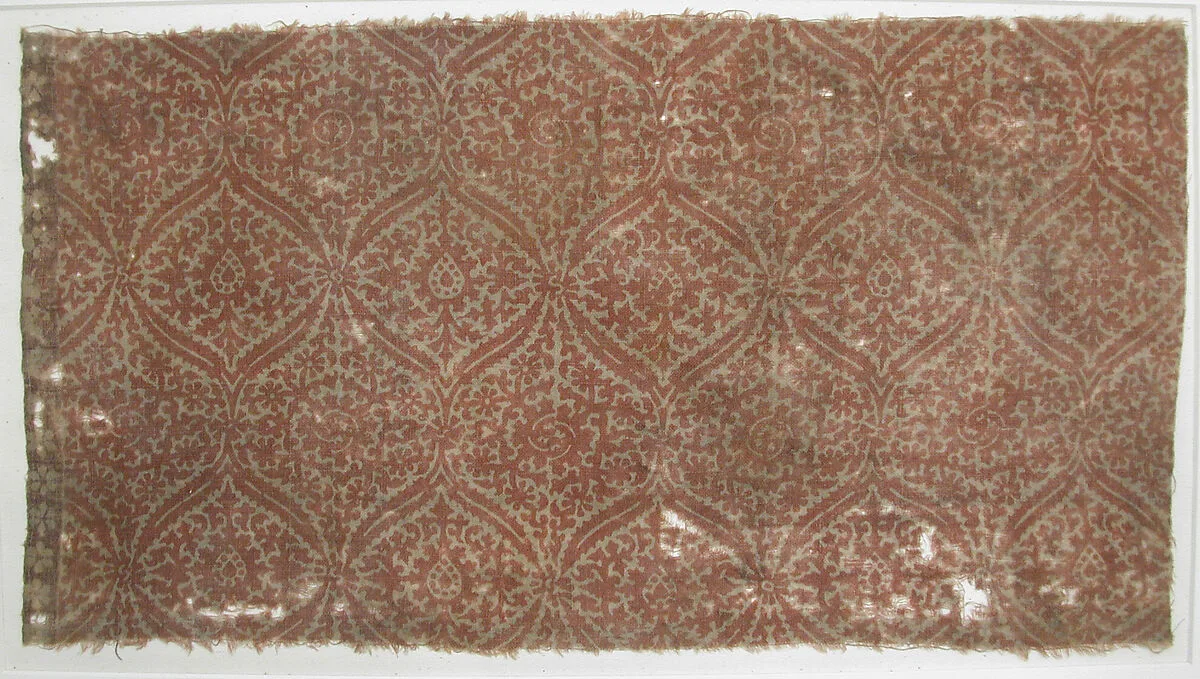
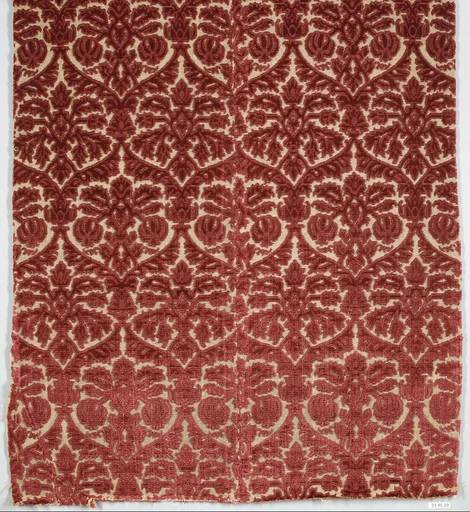
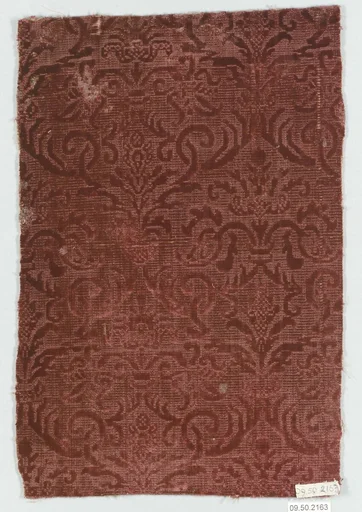
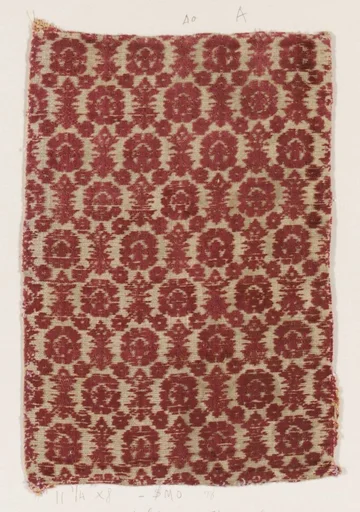
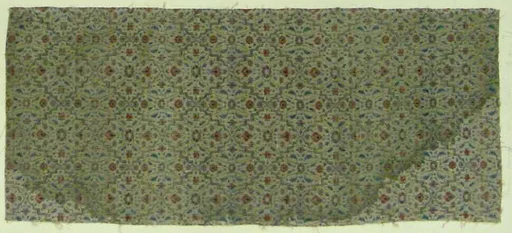
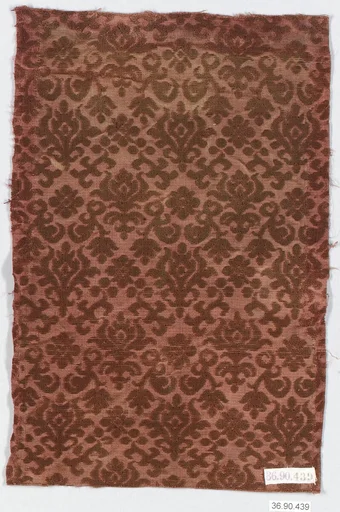
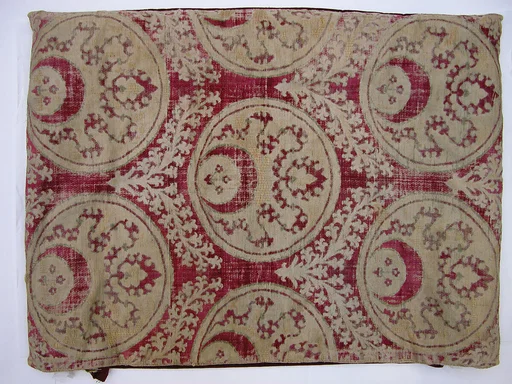
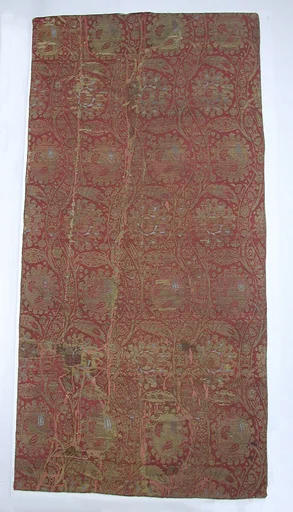
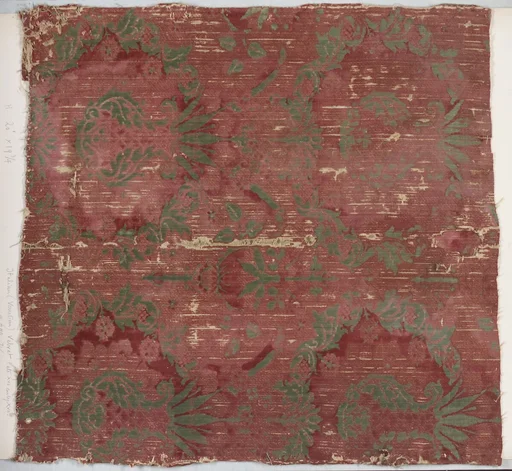
Dated to either the thirteenth or fourteenth century, this plain-woven cotton fragment once belonged to a larger textile. This densely decorated fragment emulates common methods of ornamentation and technique used in the province of Gujarat during the Middle Ages. Its border is decorated with a repeated stylized floral motif. The fragment’s larger design consists of small ogival motifs enclosed within intertwined tendrils forming larger medallions that run parallel to each other and repeat vertically. The textile’s ornamentation is associated to Gujarat as the fragment’s decorative program borrows heavily from Jain painted manuscript traditions and architecture commonly found and made in the province. The vibrancy of the red dye comes from the Indian mulberry plant, which was commonly used in dye practices also associated with Gujarat. Found near the site of Fustat, Egypt, these textiles have been preserved largely due to the arid and dry climate of the region. This fragment serves as evidence of the Red Sea maritime trade and travel relations between both these areas and highlights their transregional and cross-cultural connections during medieval times.
- Artist
- Unknown
- Date
- 13th–14th century
- Medium
- Cotton, plain weave; block-printed, mordant dyed
- Department
- Islamic Art
- Credit line
- Purchase, V. Everit Macy Gift, 1930