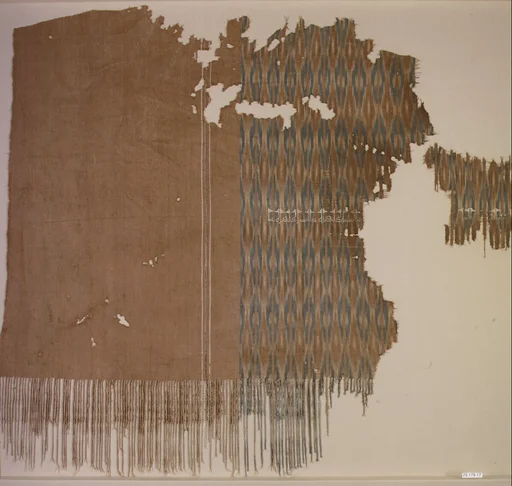
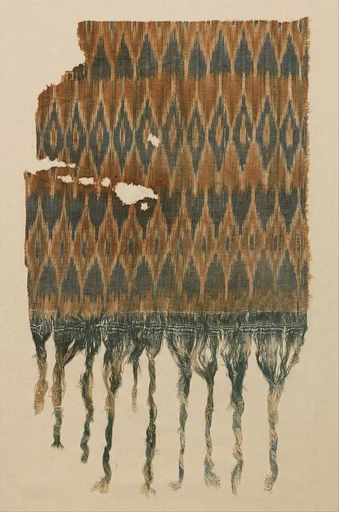
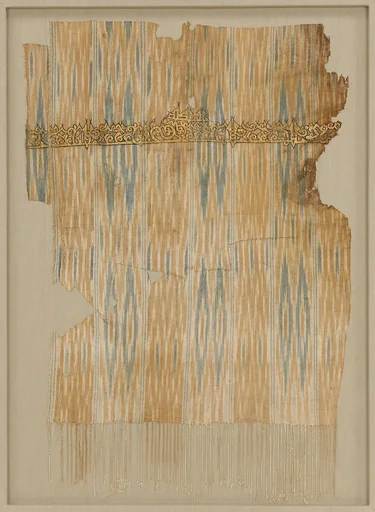
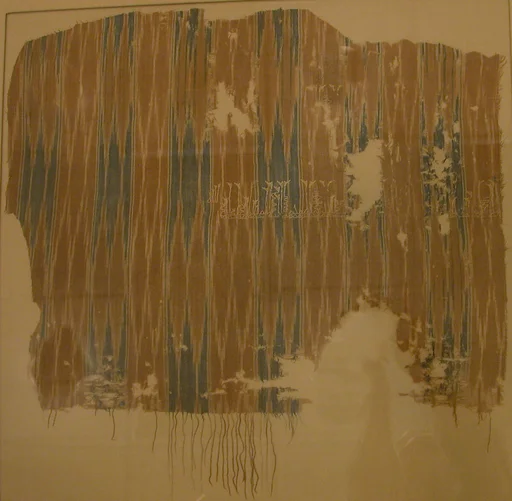
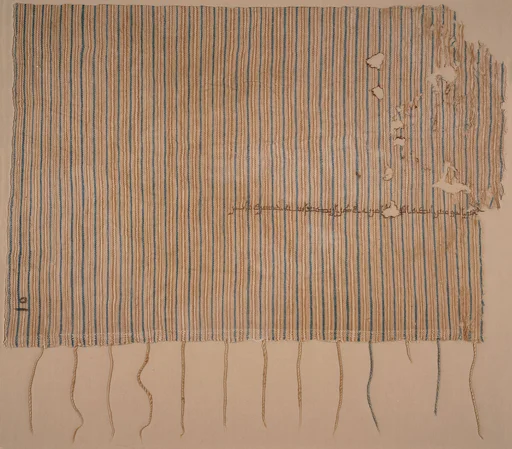
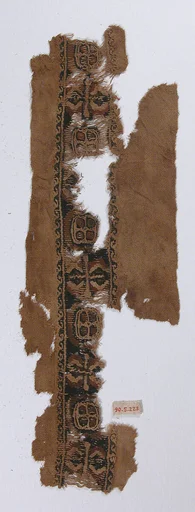
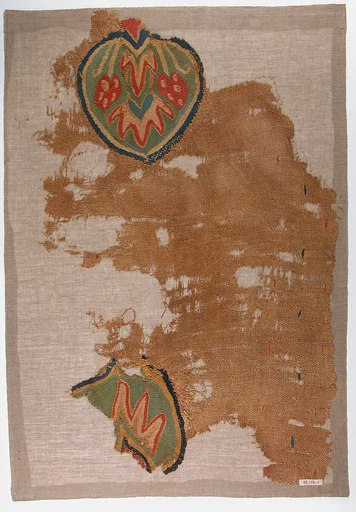
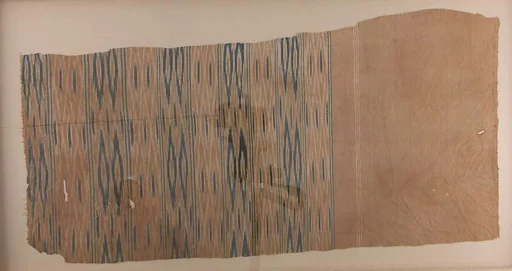
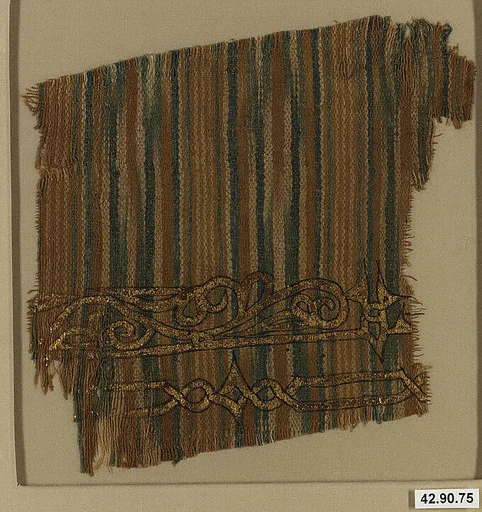
Tiraz Fragment from an Ikat Shawl
Unknown
late 9th–early 10th century · Cotton, ink, gold; plain weave, resist-dyed (ikat), painted · Islamic Art
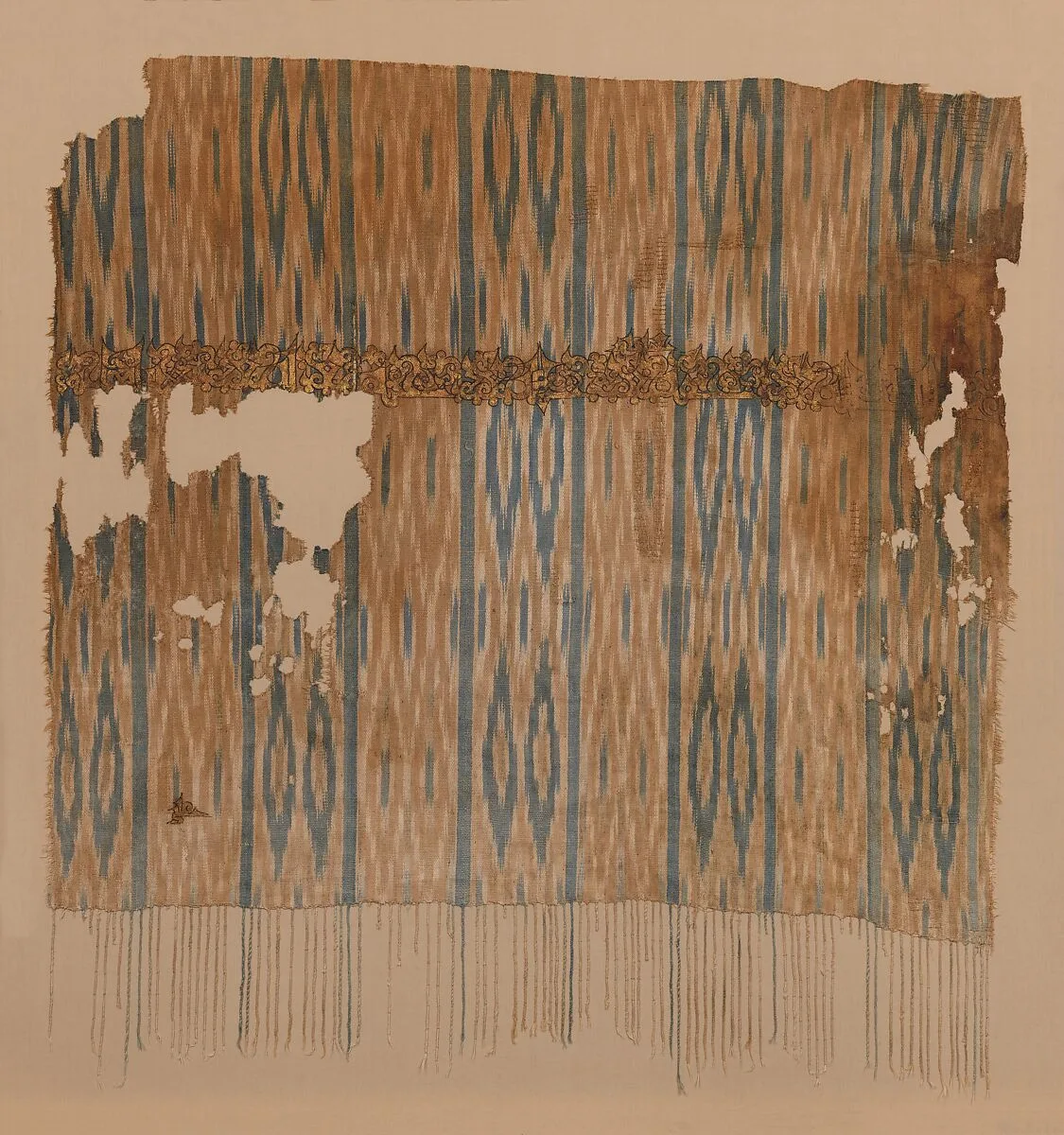
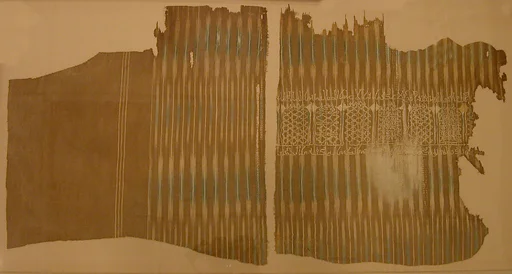
The striped textiles of Yemen were famous throughout the Islamic world. They were made in the resist-dye ikat technique to form patterns of chevrons and diamonds. Inscriptions on Yemeni ikats are often painted, as in this example. The inscription here, in decorative kufic, includes the bismallah and blessings to the owner. Although several textiles of this type contain inscriptions pointing to Yemen as the place of production, very few have caliphal inscriptions. The inscriptions here mention the son of the Abbasid caliph al-Munstasir (r. 861–63), who was a governor of several Arab provinces including Yemen.
- Artist
- Unknown
- Date
- late 9th–early 10th century
- Medium
- Cotton, ink, gold; plain weave, resist-dyed (ikat), painted
- Department
- Islamic Art
- Credit line
- Gift of George D. Pratt, 1929