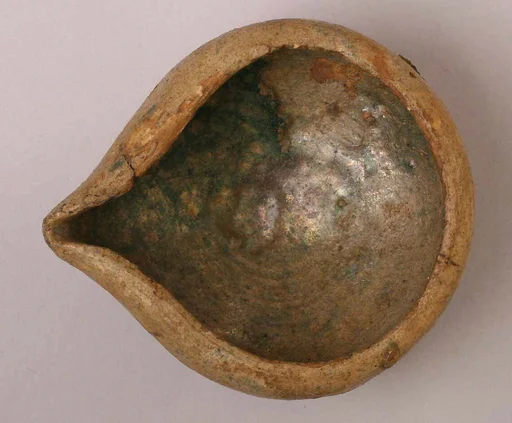
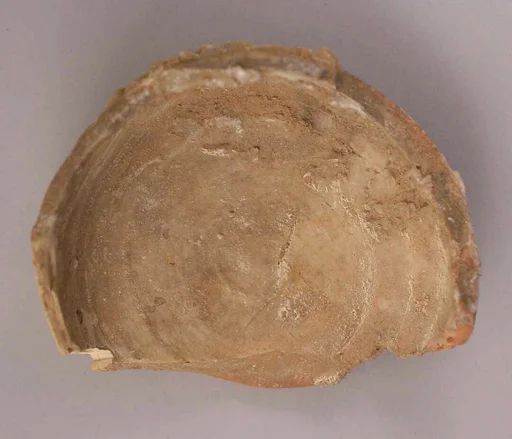
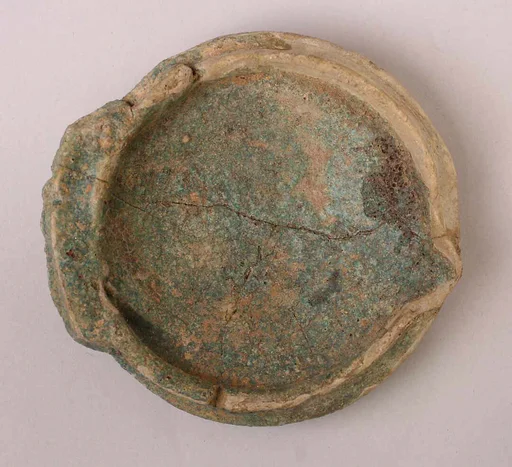
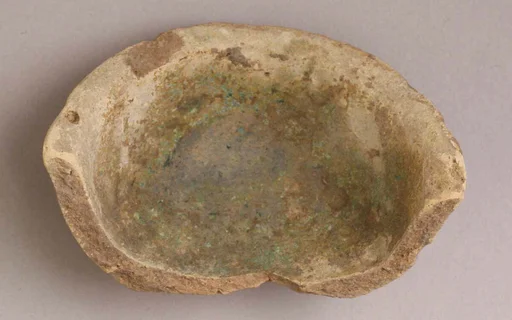
Fragment of a Lamp
Unknown
9th–10th century · Earthenware; glazed · Islamic Art
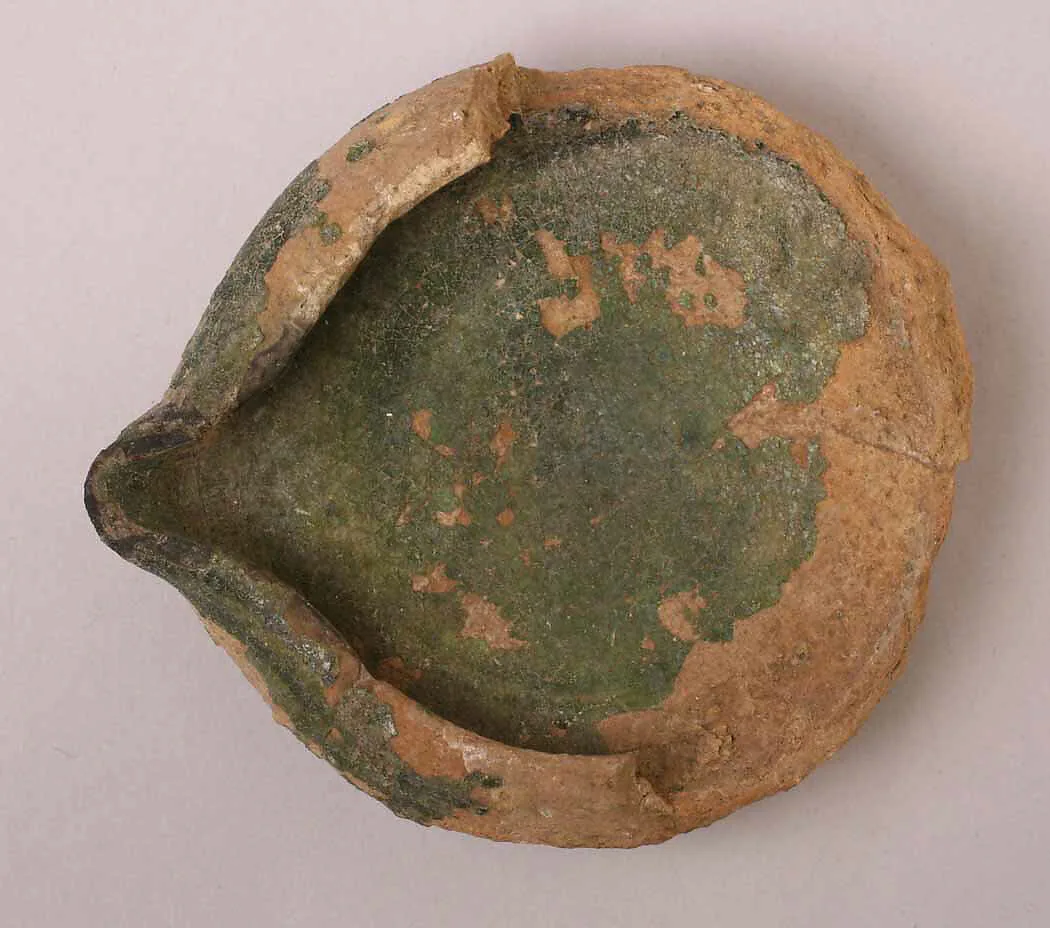
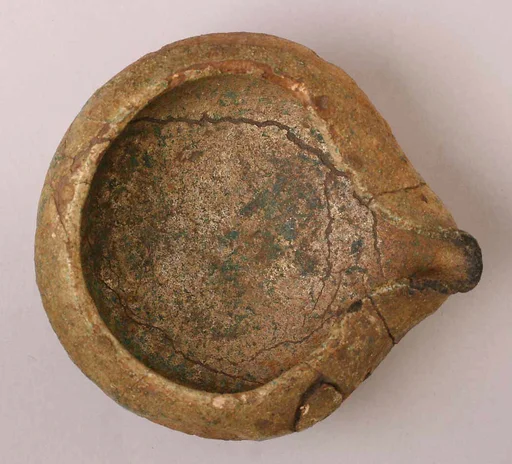
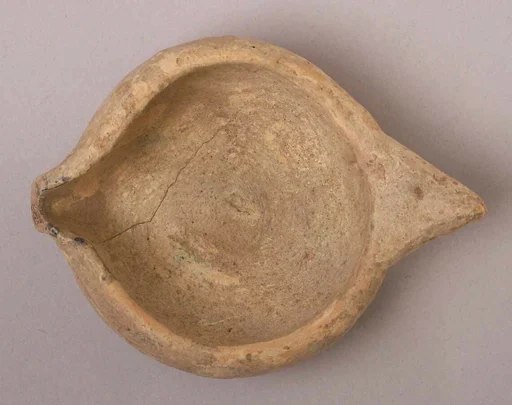
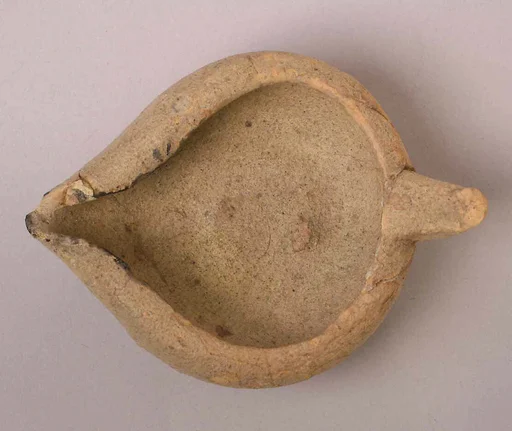
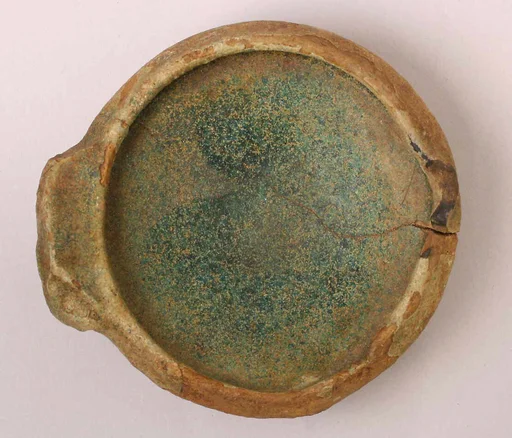
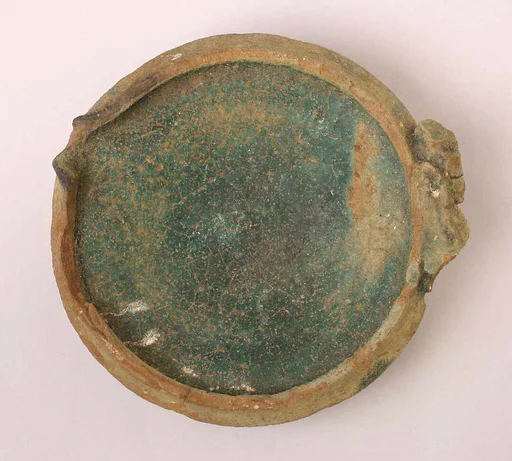
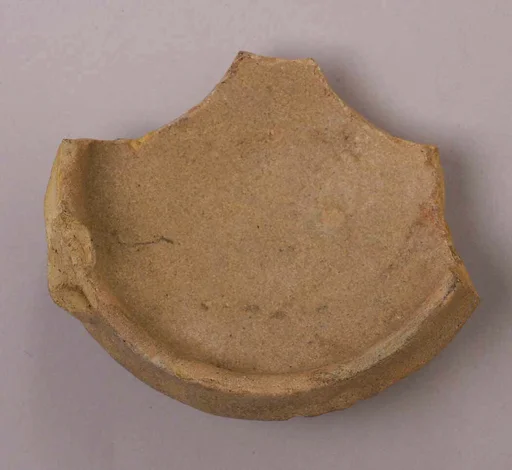
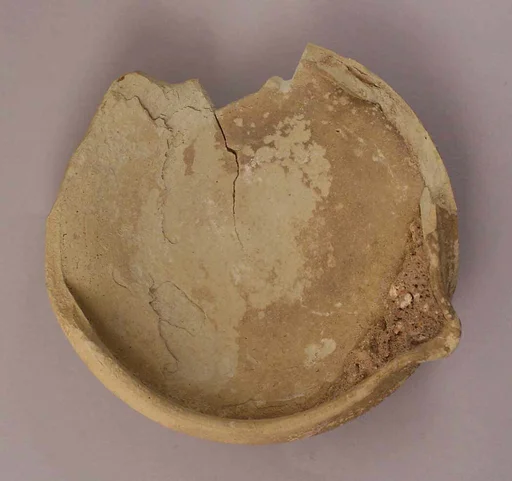
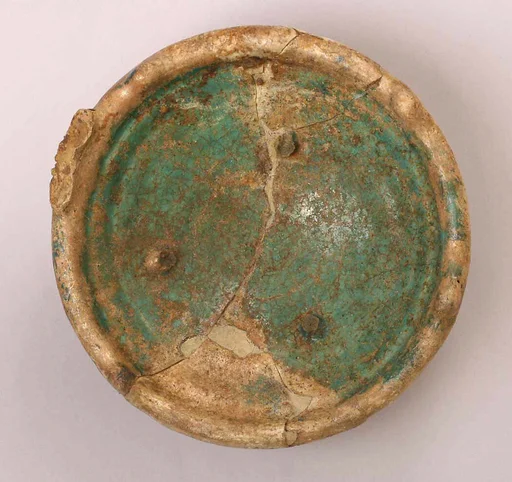
This lamp contains an open reservoir that would have held burning oil and a wick. Soaked in the oil and lighted, the wick would transport the fuel to the flame. Traces of burning are still visible on the lamp’s lip, above the green glaze. Ceramic lamps in this shape were most common in Iran and Iraq in the early Islamic periods. They are either unglazed or, from the ninth/tenth century onwards, glazed in green. By the twelfth century, the lamps’ shape had changed to include a closed reservoir that was often placed on a stem. This object comes from excavations at Samarra, in Iraq, a vast archaeological area that corresponds to the site where the Abbasid caliph al-Muʿtasim founded and moved his capital, from Baghdad, in 836 C.E.
- Artist
- Unknown
- Date
- 9th–10th century
- Medium
- Earthenware; glazed
- Department
- Islamic Art
- Credit line
- Rogers Fund, 1923