"Bellini" Carpet
Unknown
17th century · Wool (warp, weft and pile); symmetrically knotted pile · Islamic Art
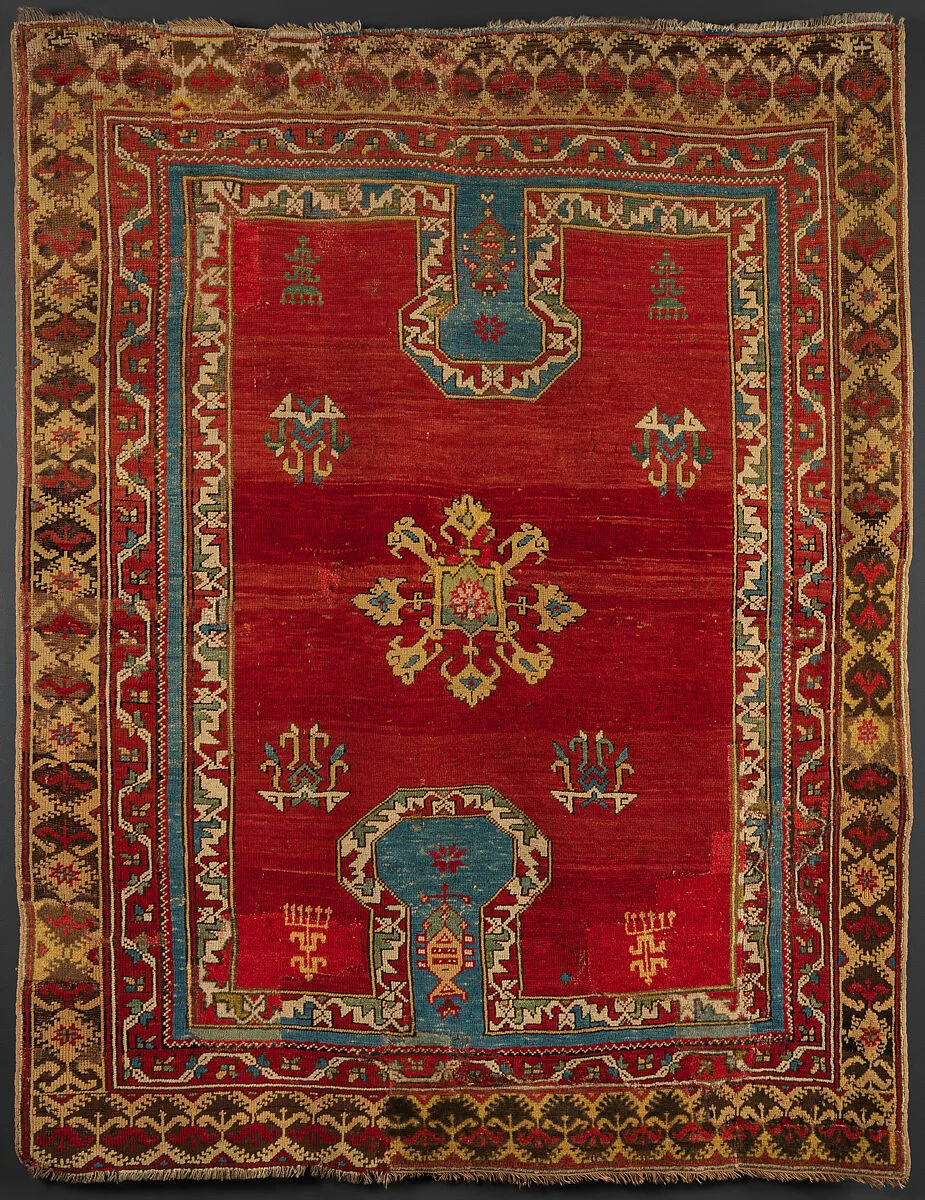
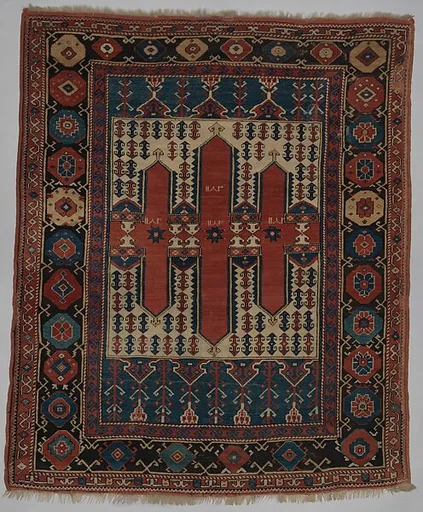
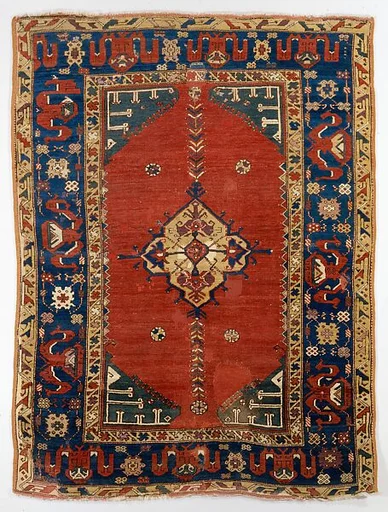
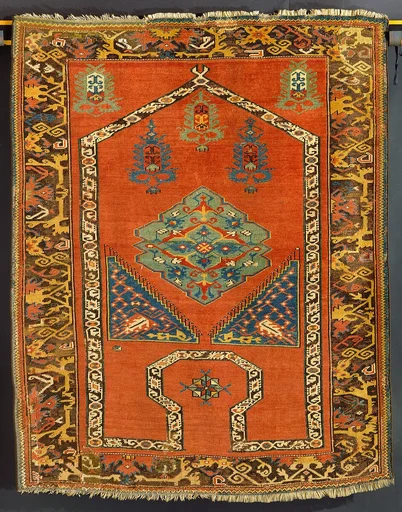
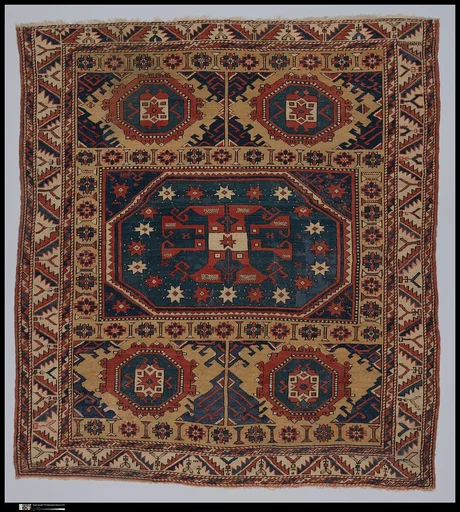
The center of this carpet features a doubling of the distinct octagonal pattern found in some classical "Bellini" rugs (such as no. 22.100.114). The significance of this unusual keyhole-shaped motif is a source of debate. Some scholars interpretet it as a fountain associated with ablutions (ritual cleaning) before prayer or link it to a keyhole design known from depictions of the Ka‘ba. This holy building in Mecca is traditionally shown as a black cubicle with a surrounding colonnade that resembles a keyhole. Others see in it a mihrab, or prayer niche indicating the direction of Mecca. While these interpretations all relate to prayer and symbolize a gateway to paradise, the shape also resembles the horseshoe arch found in the architecture of Islamic Spain and northern Africa.
- Artist
- Unknown
- Date
- 17th century
- Medium
- Wool (warp, weft and pile); symmetrically knotted pile
- Department
- Islamic Art
- Credit line
- The James F. Ballard Collection, Gift of James F. Ballard, 1922