Carpet
Unknown
late 18th–early 19th century · Cotton (warp and weft) silk (pile); asymmetrically knotted pile · Islamic Art
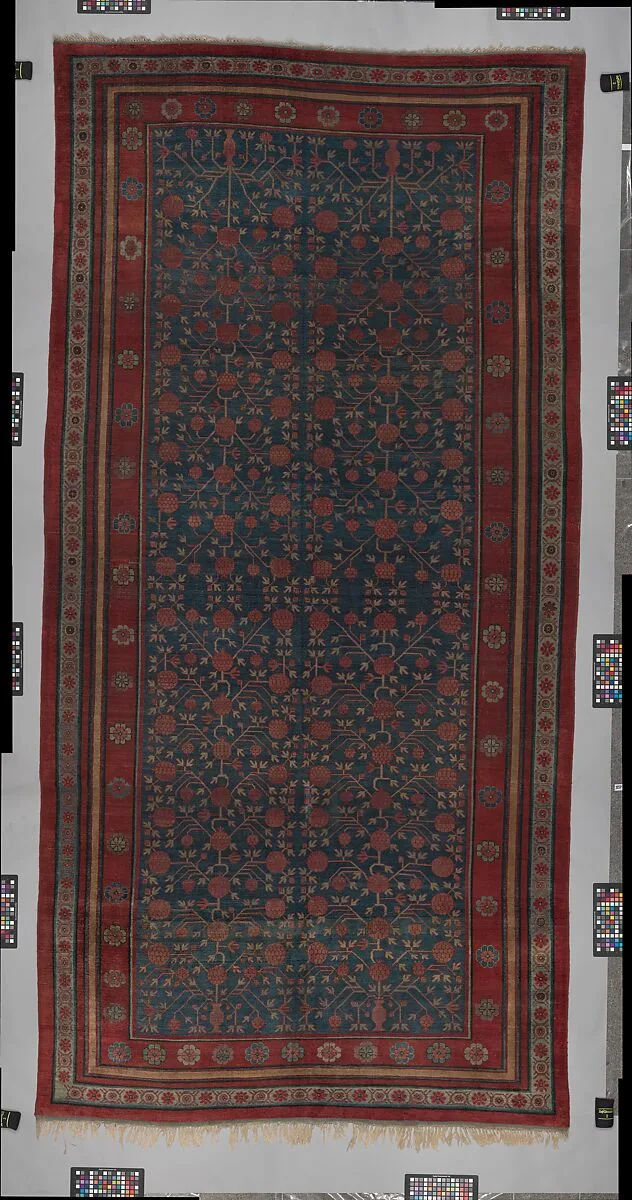
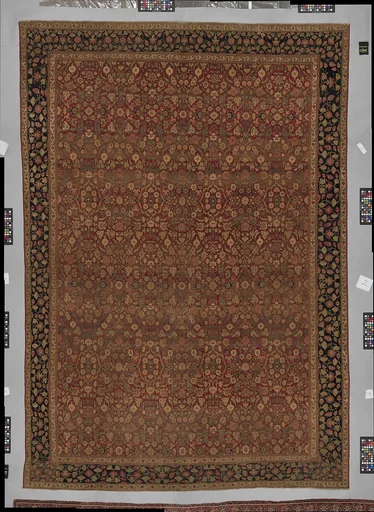
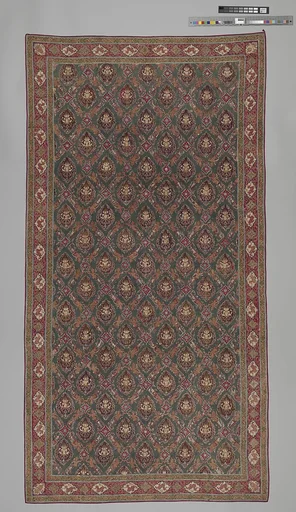
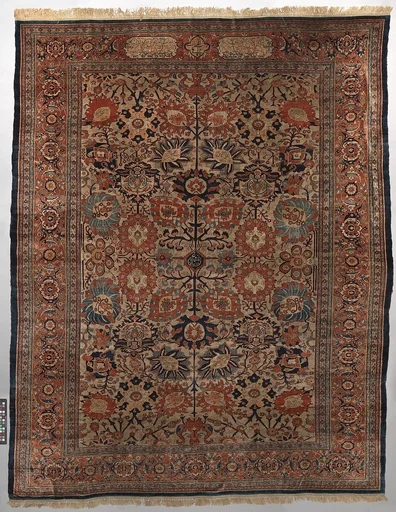
Carpets woven in the former silk road settlements of Kashgar, Yarkand, and Khotan, situated at the western end of the Taklamakan Desert, display a mixture of patterns and styles. Chinese influence can be seen in the palette–with emphasis on deep red, blue, and yellow–and in some patterns, particularly those of the borders. Field patterns typically draw from Iranian or Central Asian Turkic or even Mughal Indian traditions. The knot type is the asymmetrical knot favored in Iran. This rug bears one of the more popular patterns found in these carpets, the vase and pomegranate design, here arranged in four units repeated to fill the large field.
- Artist
- Unknown
- Date
- late 18th–early 19th century
- Medium
- Cotton (warp and weft) silk (pile); asymmetrically knotted pile
- Department
- Islamic Art
- Credit line
- The James F. Ballard Collection, Gift of James F. Ballard, 1922