Tile
Unknown
second half 17th century · Stonepaste; polychrome glaze within black wax resist outlines (cuerda seca technique) · Islamic Art
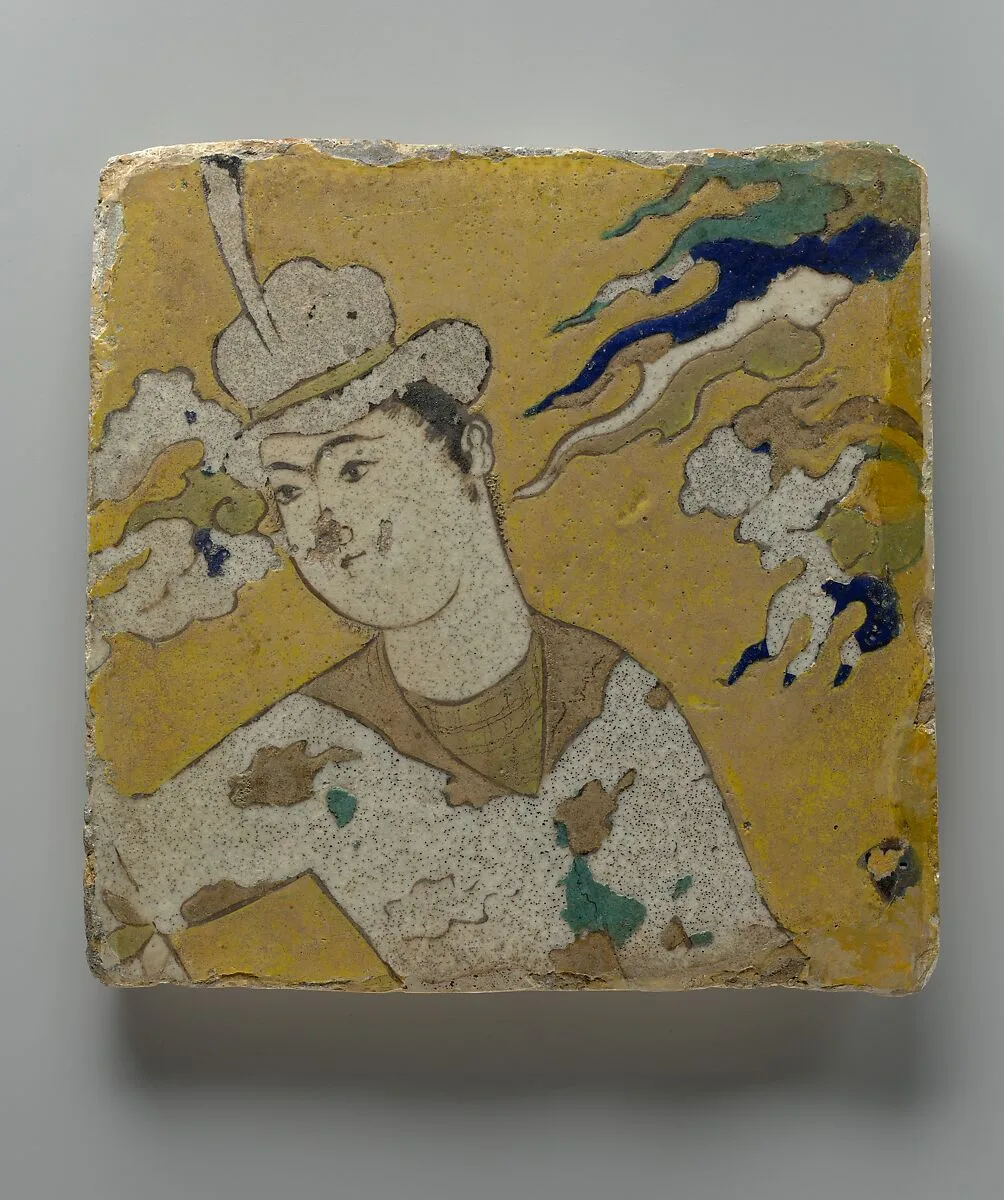
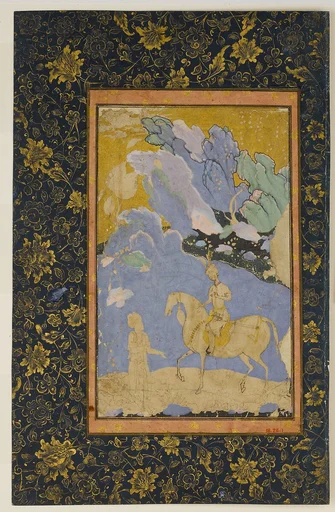
This tile, depicting a male youth with delicate features, would originally have been part of a much larger panel, most likely depicting an outdoor banquet. The rendering of this figure is consistent with contemporary painting, a connection that illustrates the relationship between the royal workshops for bookmaking and those for ceramics. The graceful lines which form the details in the face and hair of this figure are akin to those created by brush or pen by artists working on paper. Rather than wearing a Persian turban, this figure is depicted wearing a European-style hat, highlighting the cosmopolitan nature of 17th century Iran. This tile created using the cuerda seca decorative technique. Literally "dry cord" this process involved applying a wax border between colored glazes in order to prevent them from mixing during the firing process. Cuerda seca replaced mosaics as a more cost effective and faster technique which could include a wide range of vibrant colors.
- Artist
- Unknown
- Date
- second half 17th century
- Medium
- Stonepaste; polychrome glaze within black wax resist outlines (cuerda seca technique)
- Department
- Islamic Art
- Credit line
- The Grinnell Collection, Bequest of William Milne Grinnell, 1920