Fragment of a Mina'i Bowl
Unknown
12th–13th century · Stonepaste; overglaze painted (mina'i) · Islamic Art
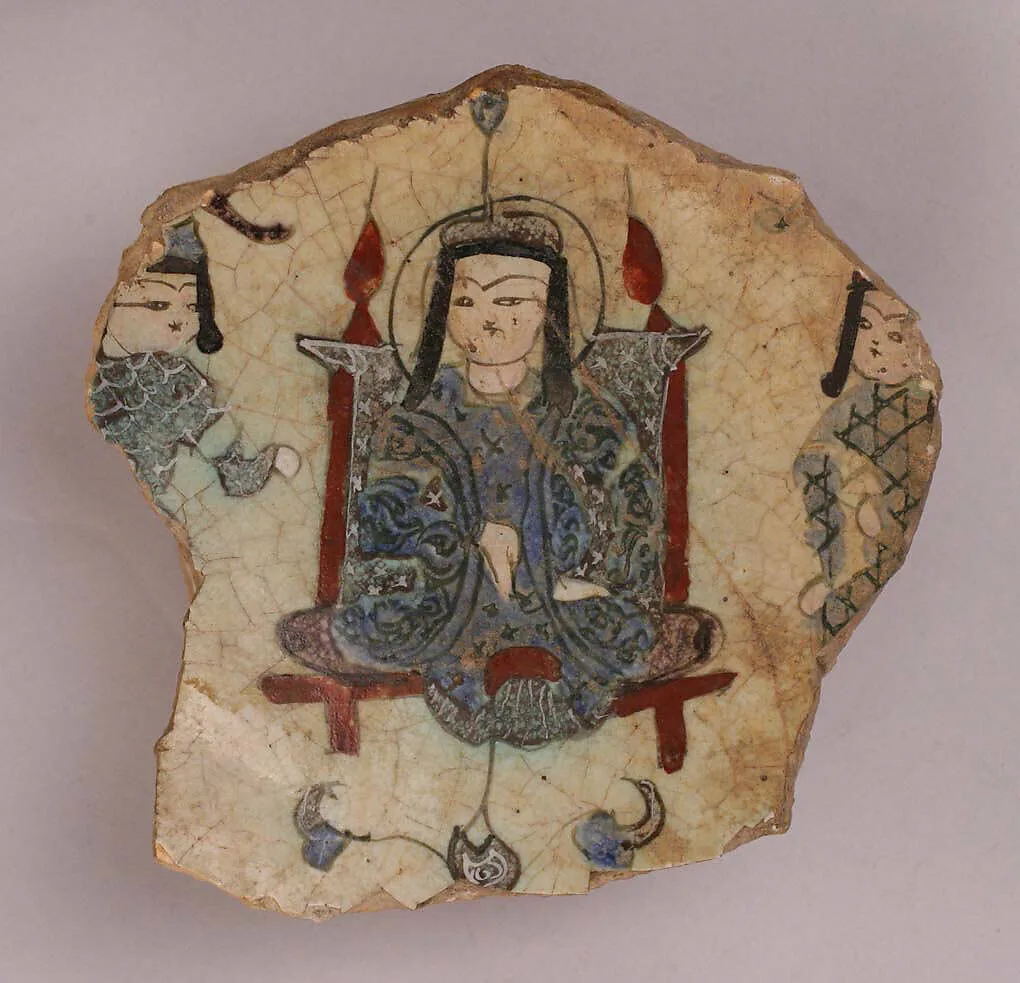
This fragment is overglaze-painted with an enthroned figure surrounded by attendants or companions with typical moon-shaped faces (mahruy) that were favored during this period. The painting technique, now called mina’i but historically referred to as haft rang (seven color), was a distinctive Iranian tradition employed on stonepaste, possibly transposed from glass enameling. Mina’i painted wares, however, share some stylistic features with coeval Syrian stonepaste vessels, including the moon-shaped faces of figures, that exemplify how a common visual language was adapted to and modified by local techniques, traditions, and tastes. The fragment came to the Museum in 1920, together with a large group of objects bequeathed from the collection of the antique dealer William Milne Grinnell.
- Artist
- Unknown
- Date
- 12th–13th century
- Medium
- Stonepaste; overglaze painted (mina'i)
- Department
- Islamic Art
- Credit line
- The Grinnell Collection, Bequest of William Milne Grinnell, 1920