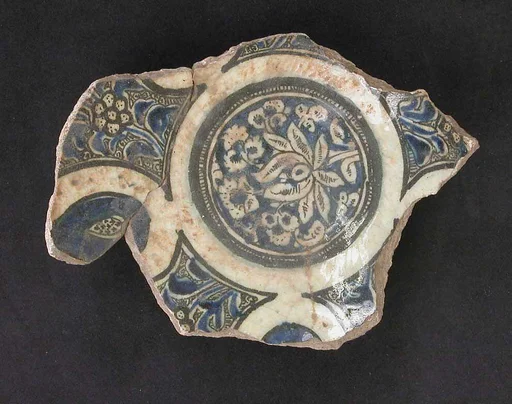
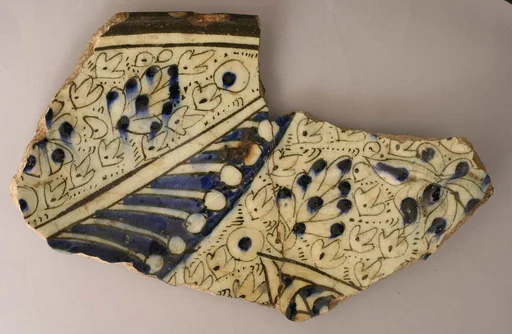
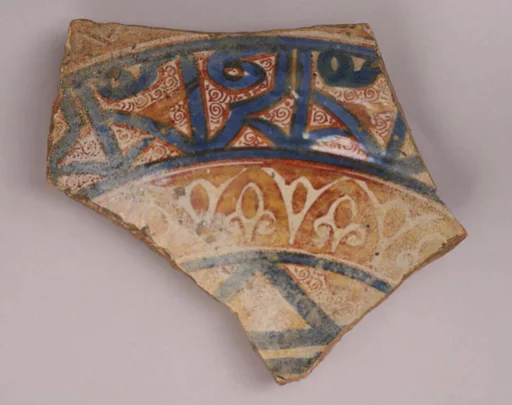
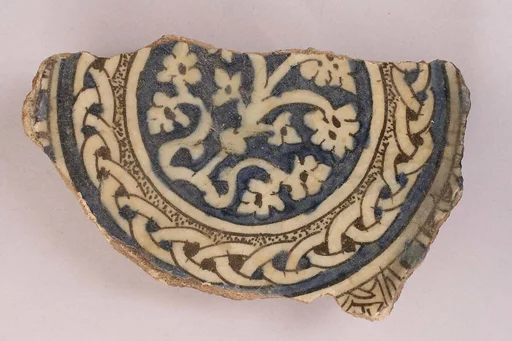
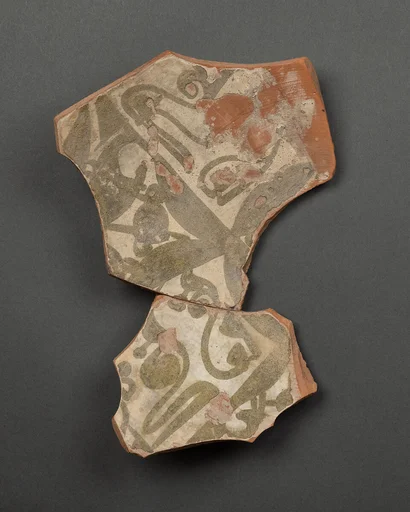
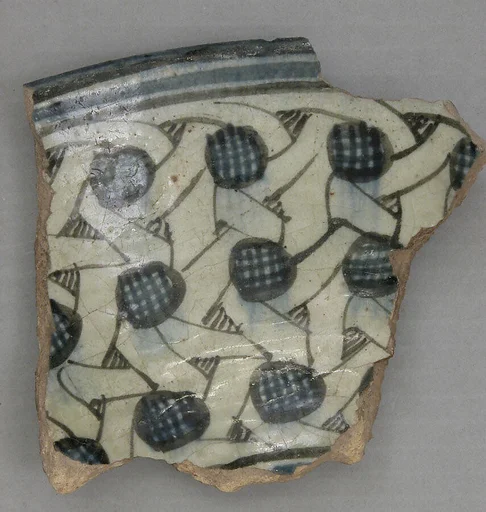
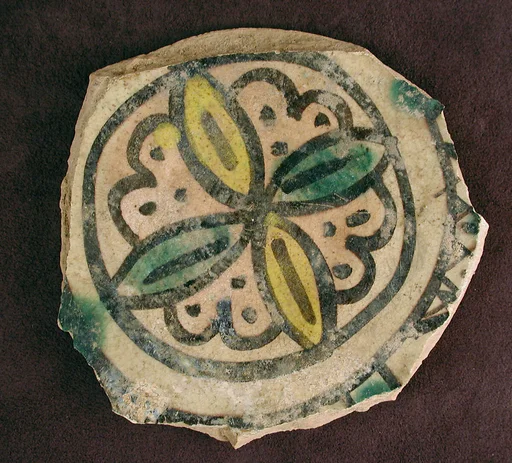
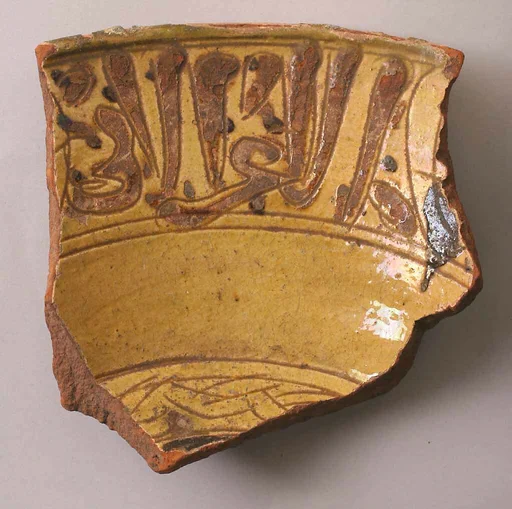
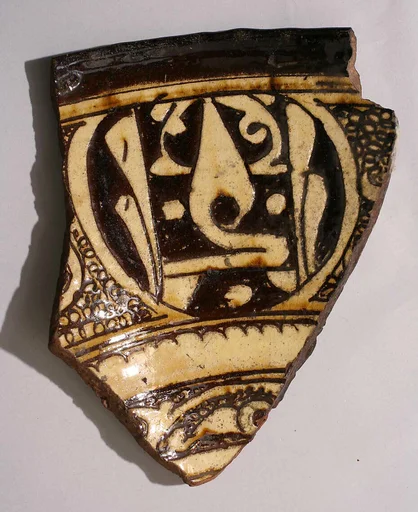
Fragmentary Tile, Probably Arrow-Shaped in Origin, and Modern Filling
Unknown
late 12th–13th century, with 20th-century fills · Stonepaste; in-glaze and overglaze-painted, opaque white glaze · Islamic Art
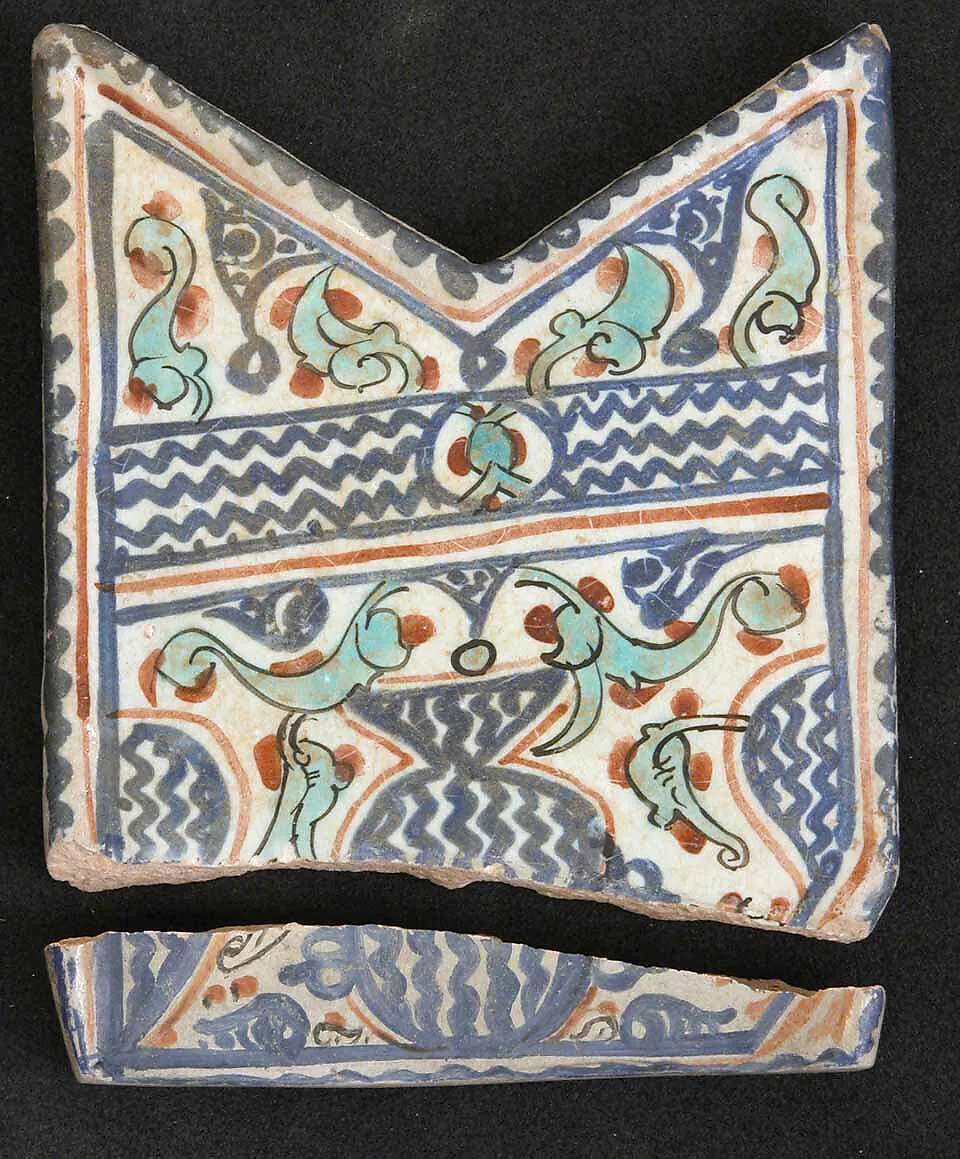
Whether loose or on a building, Iranian glazed tiles fascinated scholars and collectors for aesthetic reasons. The tiles’ role in the decoration of facades and minarets in the second half of the eleventh century became an early subject of academic investigation. This tile shows a once-common restoration that isoverzealous by today’s standards: the missing portion was reconstructed and filled in, and the painting completed. Before museum conservators separated the filling, the restoration would have been barely detectable. The tile originally had a different, probably pointed shape (see the small trace of a corner on the bottom right).
- Artist
- Unknown
- Date
- late 12th–13th century, with 20th-century fills
- Medium
- Stonepaste; in-glaze and overglaze-painted, opaque white glaze
- Department
- Islamic Art
- Credit line
- The Grinnell Collection, Bequest of William Milne Grinnell, 1920