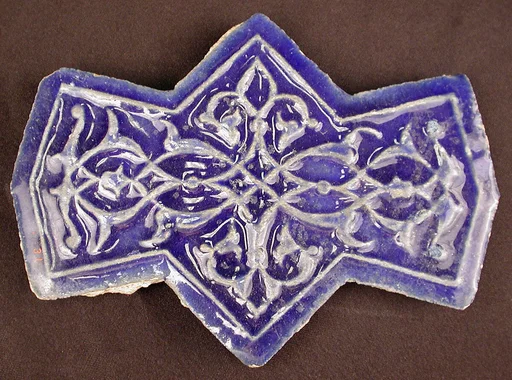
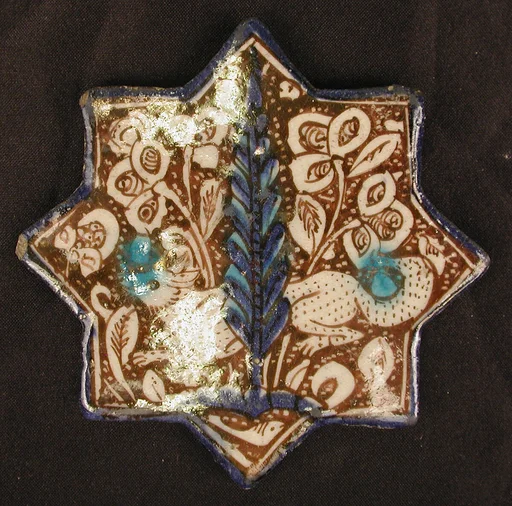
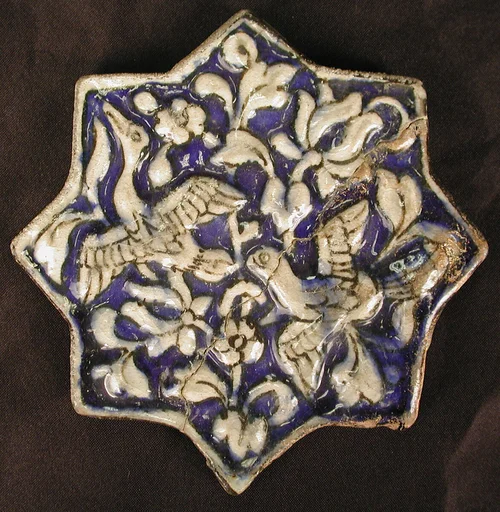
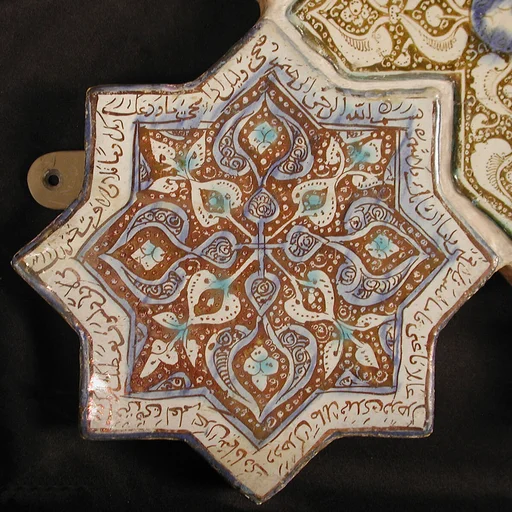
Three Tiles with 'Lajvardina' Glaze
Unknown
second half 13th–14th century · Stonepaste; molded, overglaze painted, and gilded (lajvardina) · Islamic Art
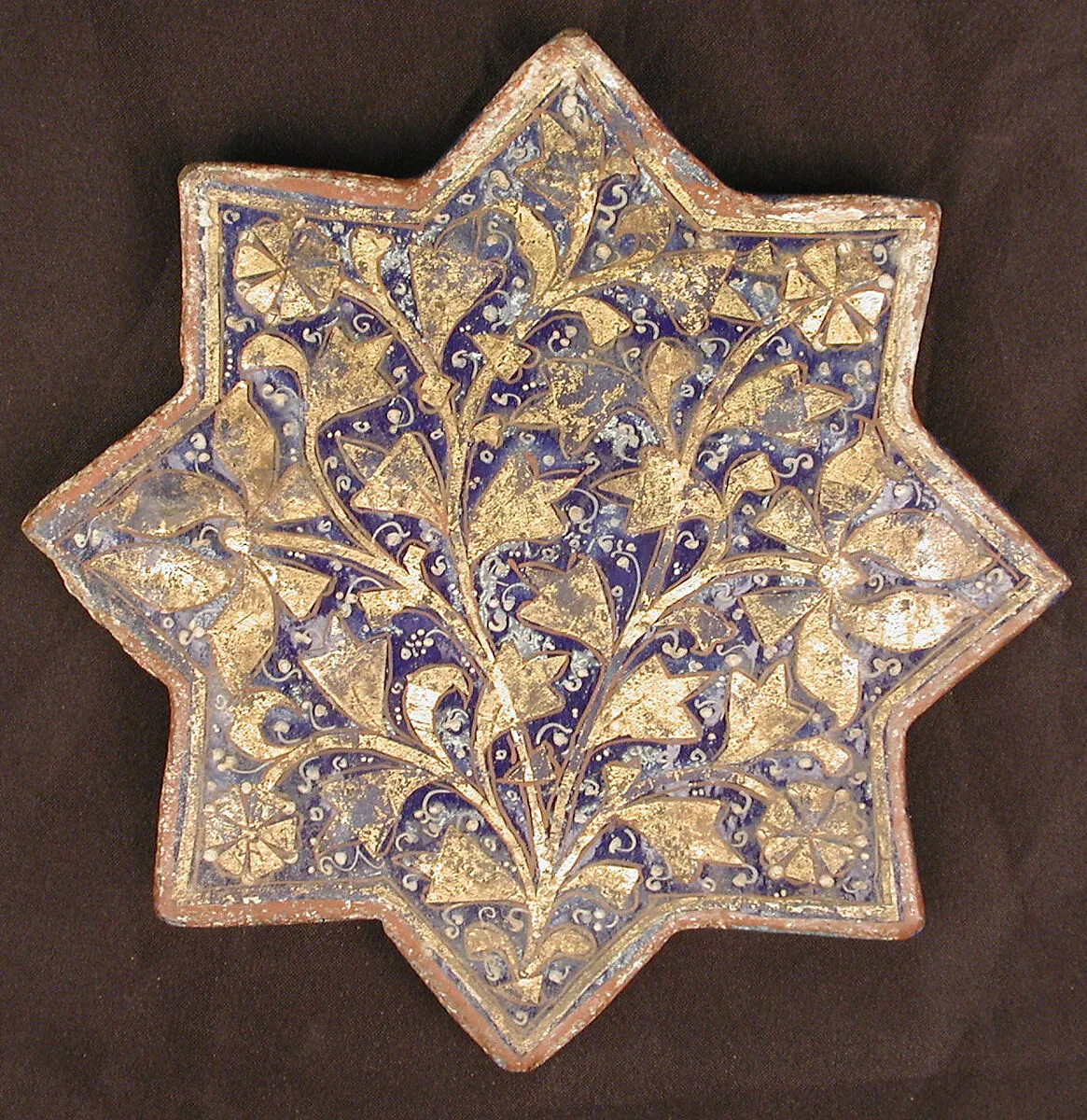
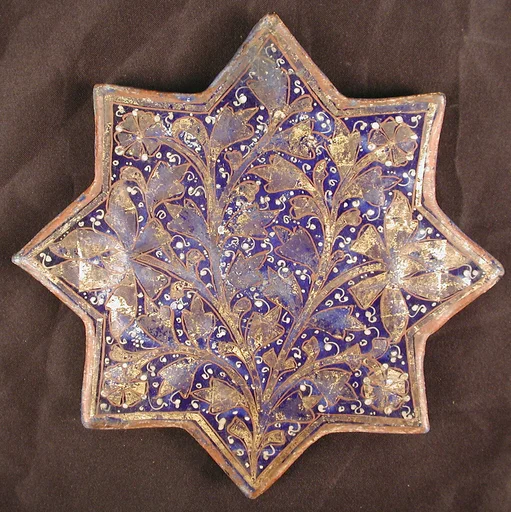
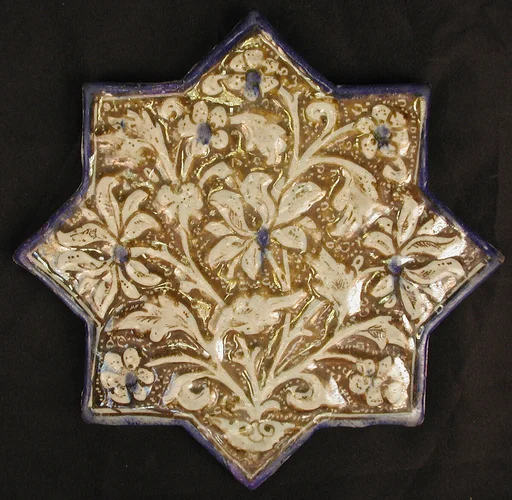
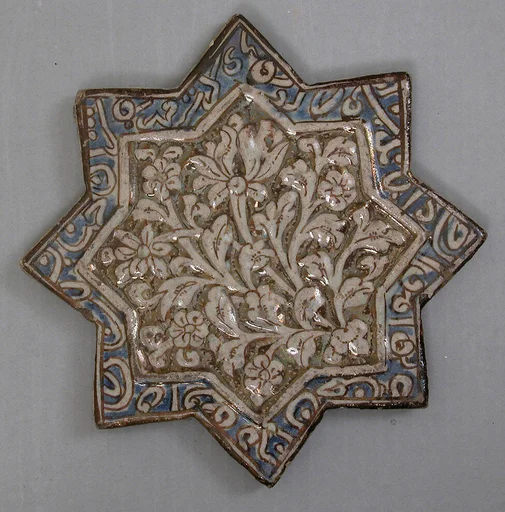
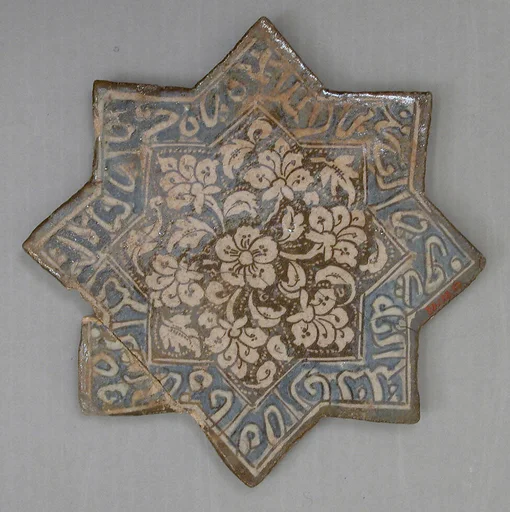
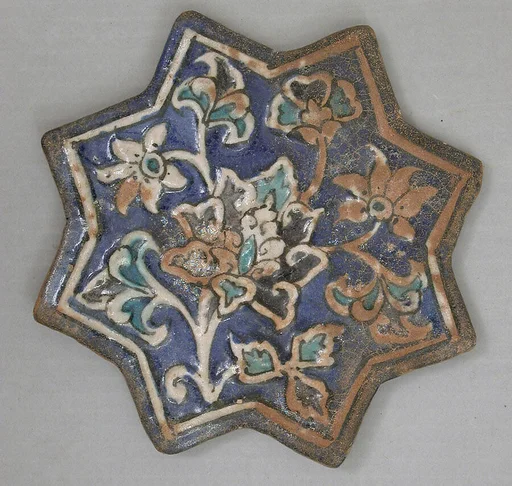
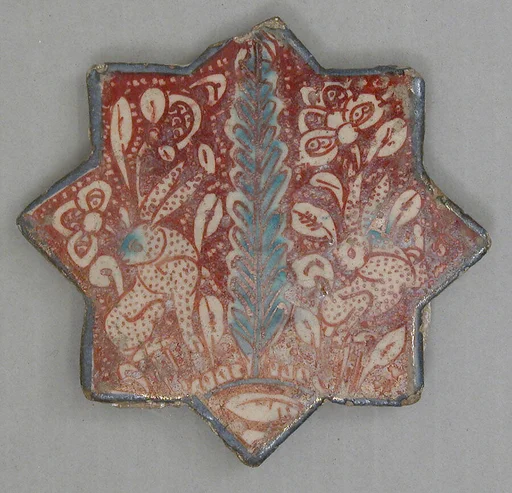
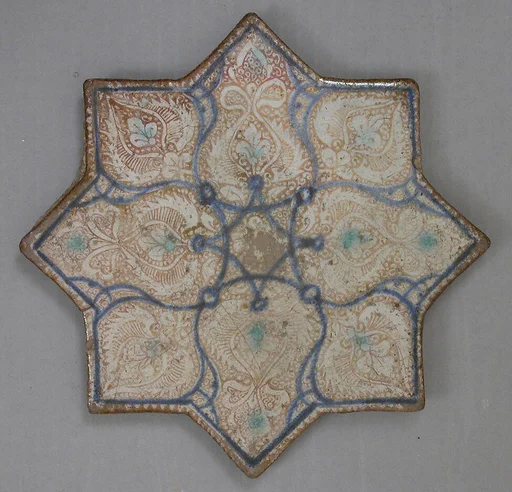
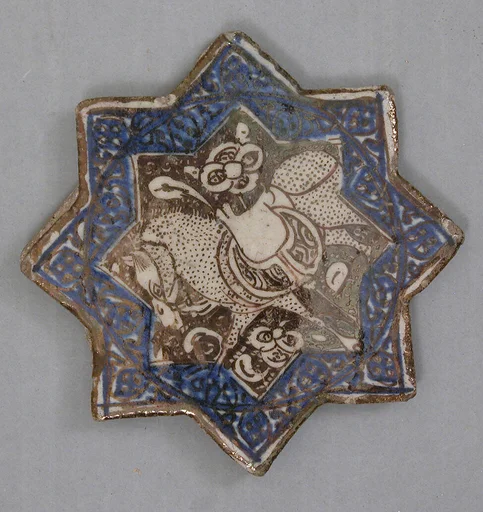
This eight-pointed tile was decorated using a technique called lajvardina, a term that references lapis lazuli, a deep blue colored stone containing gold particles. After an initial firing to establish the dark blue background, the tile underwent a second firing to set the overglazed details and the carefully cut pieces of gold leaf, creating a glimmering surface. A flowering spray of Chinese-inspired lotus and peony blossoms occupies the entire surface of this tile, which was once part of a star-and-cross panel adorning the walls of an Ilkhanid palace, mosque, or mausoleum.
- Artist
- Unknown
- Date
- second half 13th–14th century
- Medium
- Stonepaste; molded, overglaze painted, and gilded (lajvardina)
- Department
- Islamic Art
- Credit line
- The Grinnell Collection, Bequest of William Milne Grinnell, 1920