Textile Fragment
Unknown
16th–17th century · Silk, metal wrapped thread; brocaded · Islamic Art
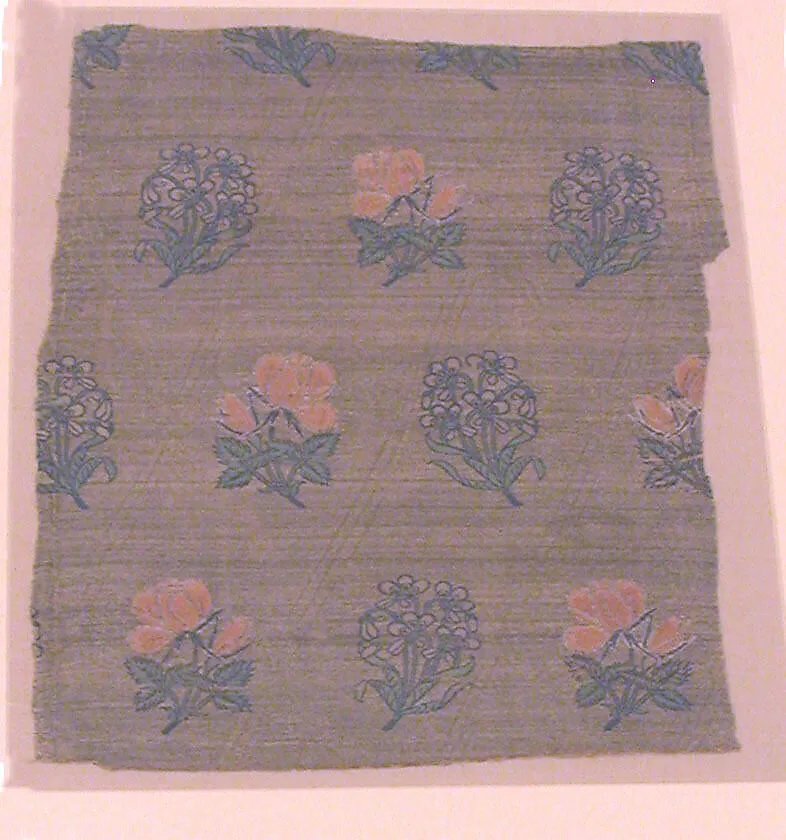
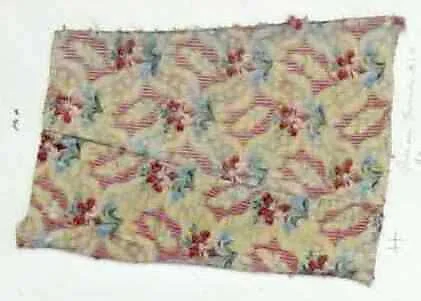
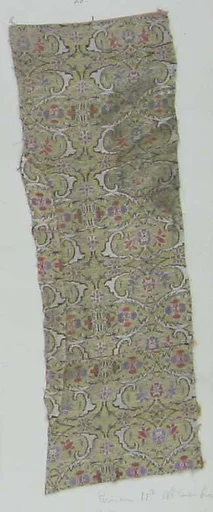
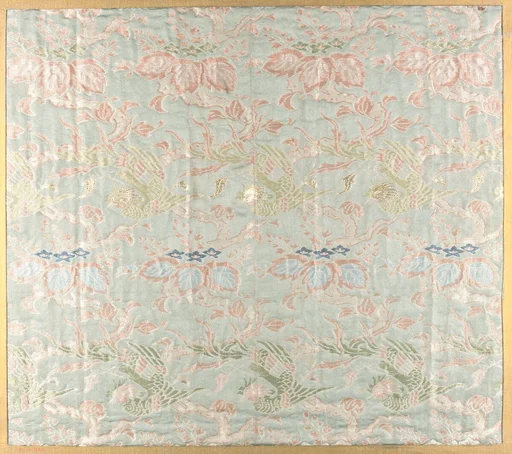
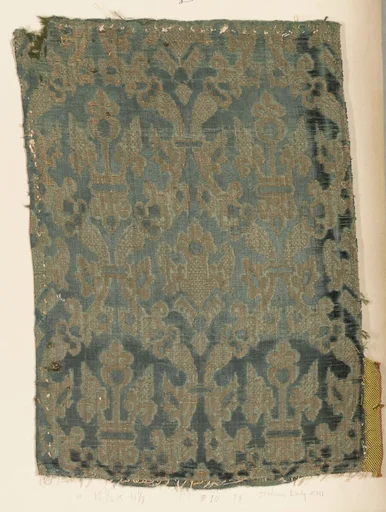
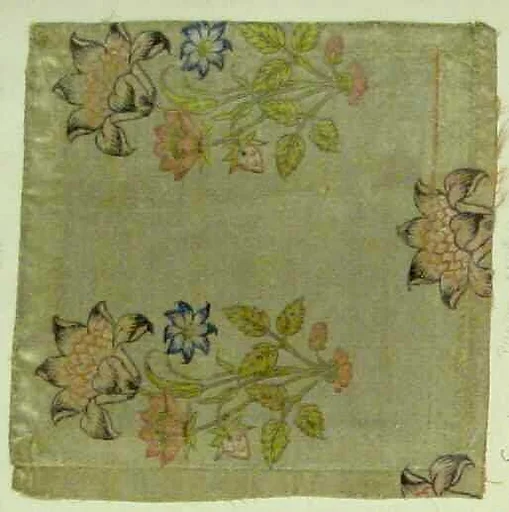
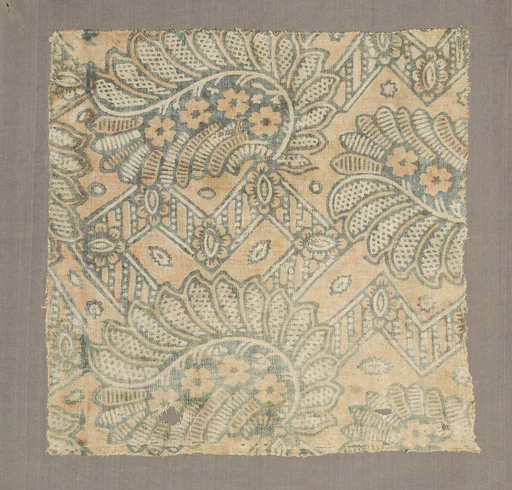
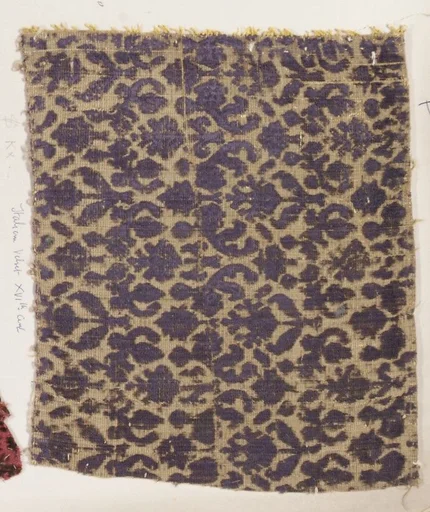
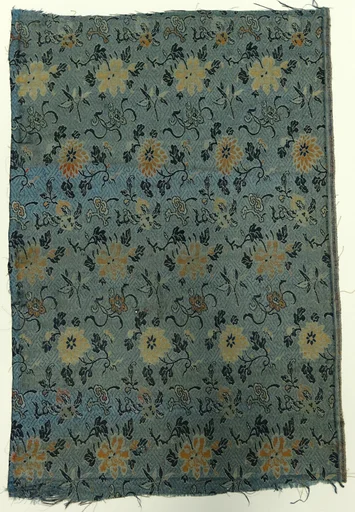
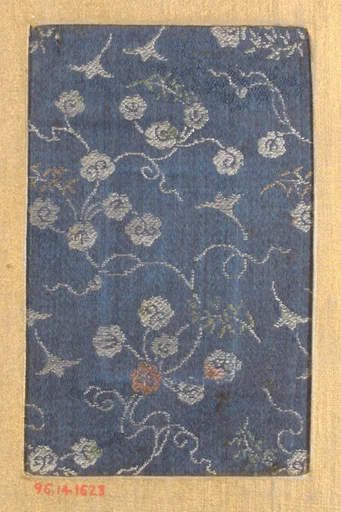
Safavid textiles are praised as the pinnacle of Iranian loom weaving. When the Safavids came to power at the turn of the sixteenth century and set up their capital cities of Tabriz, Qazvin, and Isfahan, the textile industry became centralized, and the production of silk textiles and rugs, as well as raw silk for export, became part of a lucrative revenue stream. This square textile fragment is decorated with violets and roses with green stems and leaves outlined in dark blue or white. The metal-wrapped threads would have contributed to a sumptuous shimmering effect.
- Artist
- Unknown
- Date
- 16th–17th century
- Medium
- Silk, metal wrapped thread; brocaded
- Department
- Islamic Art
- Credit line
- Rogers Fund, 1919