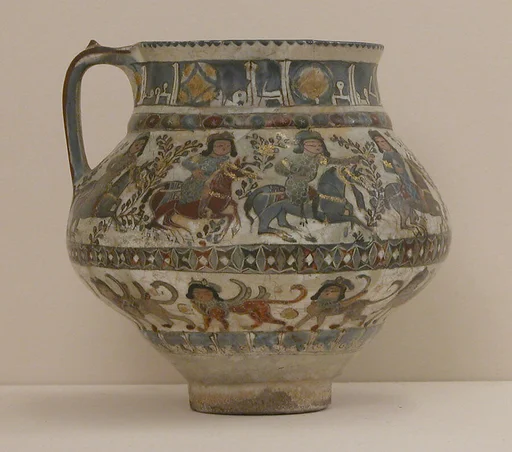
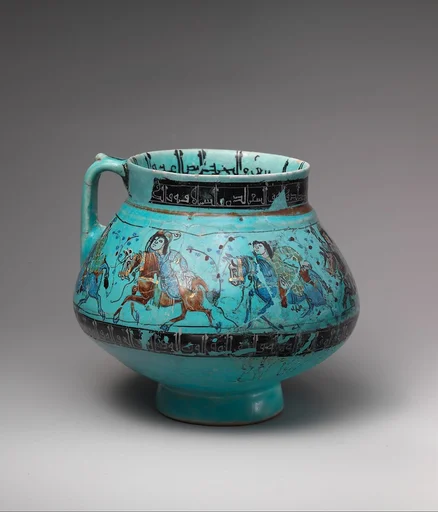
Ewer with Horsemen Inscribed in Arabic with Good Wishes to its Owner
Unknown
second half 12th–early 13th century · Stonepaste; polychrome inglaze and overglaze painted on opaque monochrome glaze (mina'i) · Islamic Art
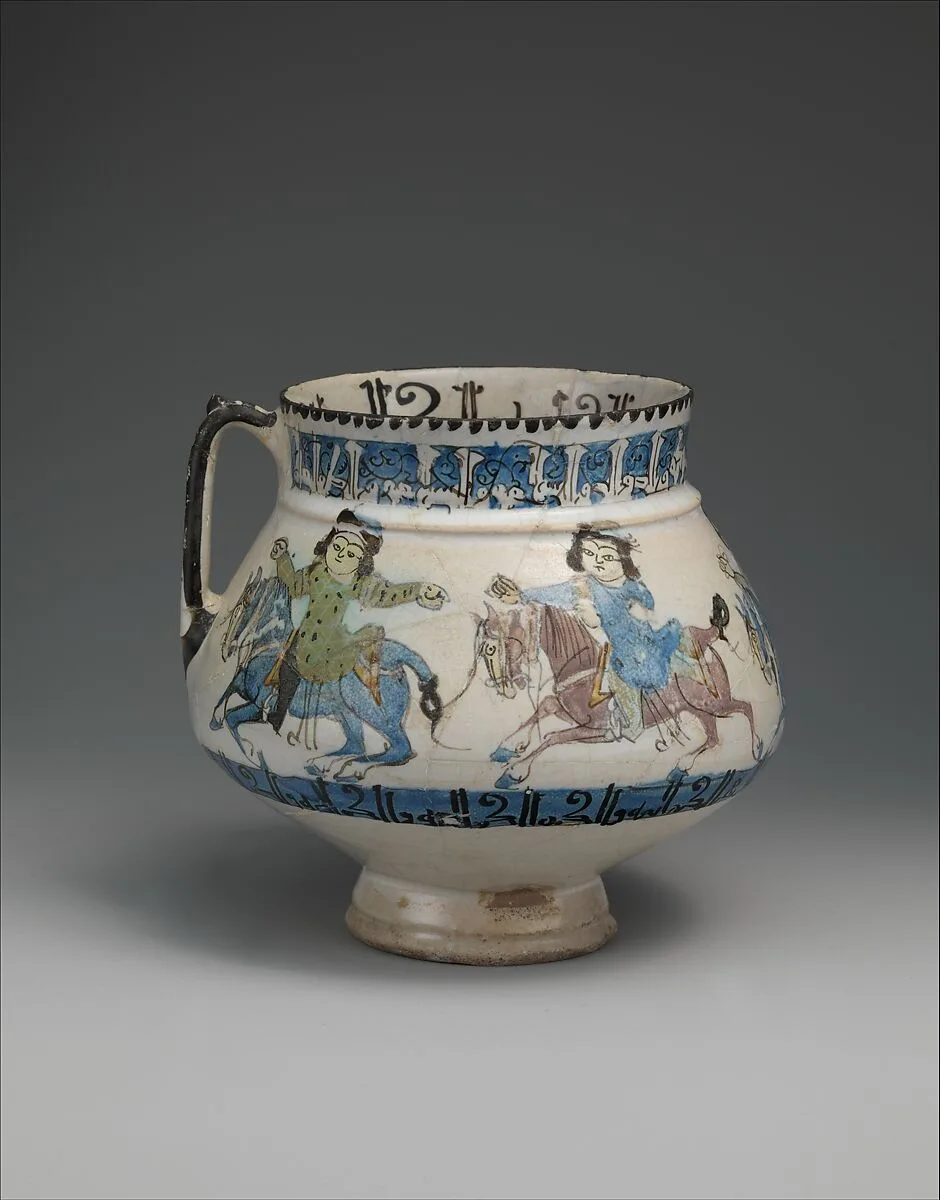
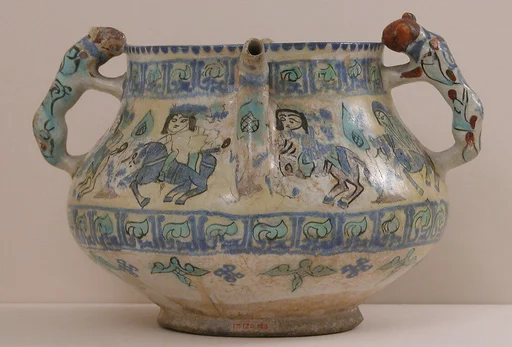
Mina’i production, like luster painting, was a labor-intensive process due to the multiple firings required to set its colors. In this technique, colored pigments are applied to an already glazed and fired piece that is returned to the kiln at a temperature just high enough to fix a second layer of pigments without damaging the first glazing. This squat ewer depicts a band of horsemen in procession between two rows of kufic inscription. Men engaged in equestrian sport were associated with the aristocracy in Seljuq art, and the raised arms of these riders may have signified a display of ability on horseback.
- Artist
- Unknown
- Date
- second half 12th–early 13th century
- Medium
- Stonepaste; polychrome inglaze and overglaze painted on opaque monochrome glaze (mina'i)
- Department
- Islamic Art
- Credit line
- Mr. and Mrs. Isaac D. Fletcher Collection, Bequest of Isaac D. Fletcher, 1917