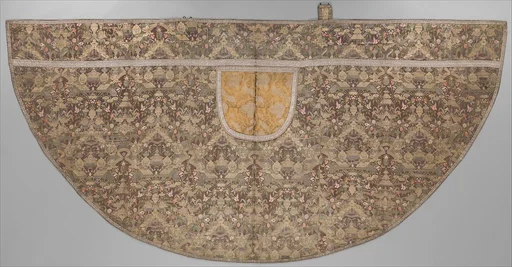
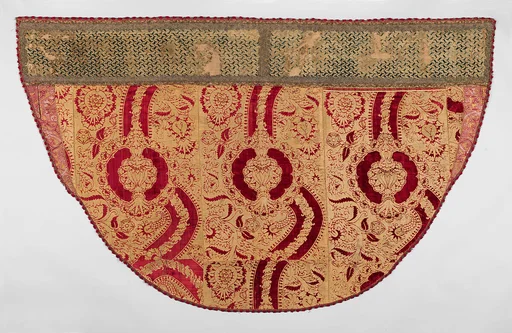
Cope
Unknown
first half 17th century (velvet) · Silk, cotton, metal wrapped thread; cut and voided velvet, brocaded, embroidered, with engraved metal fittings · Islamic Art
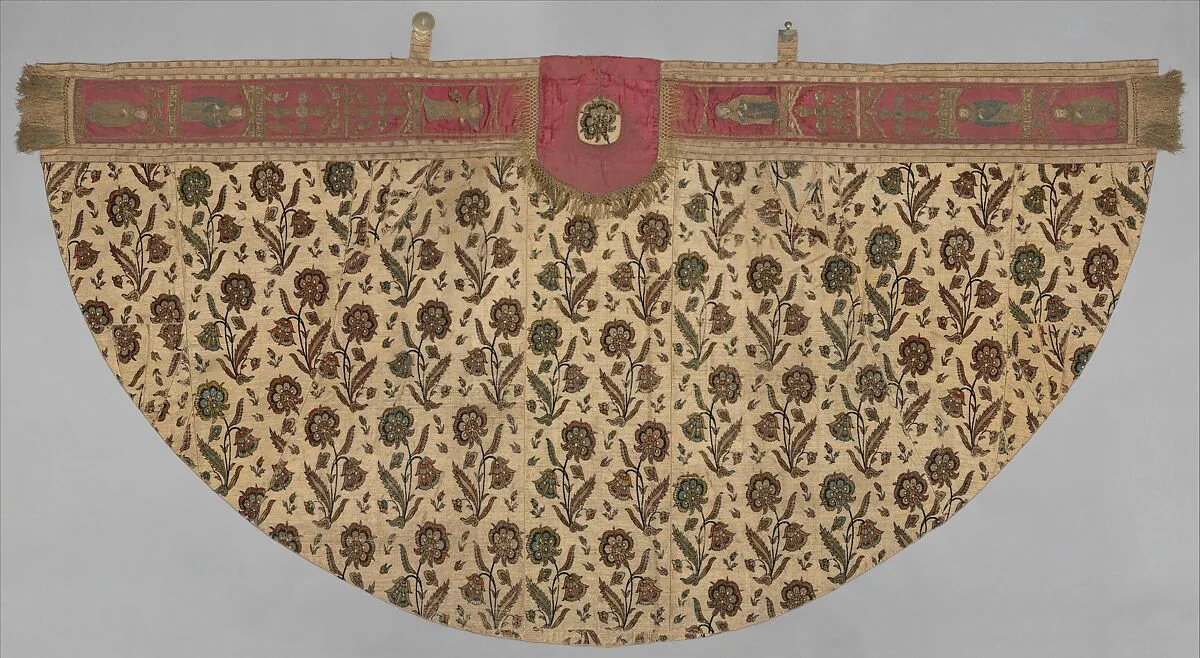
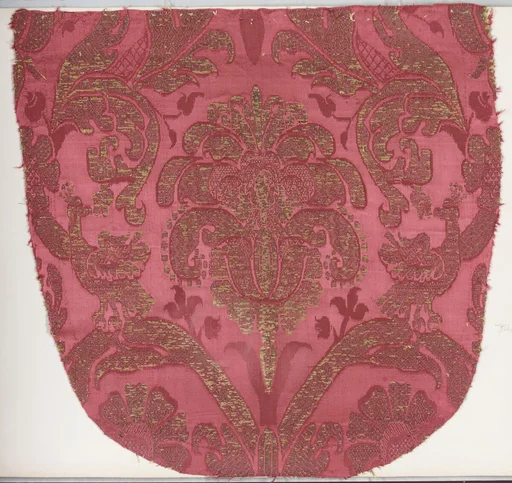
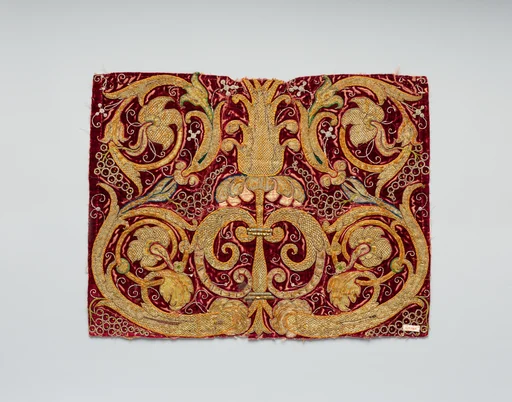
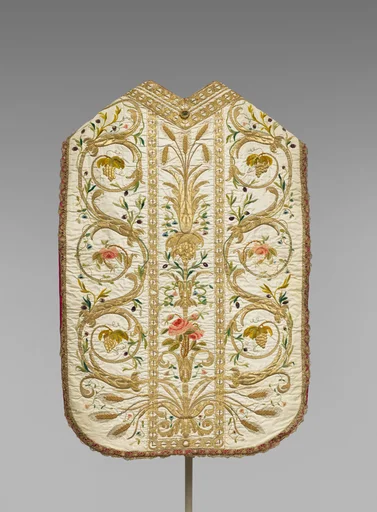
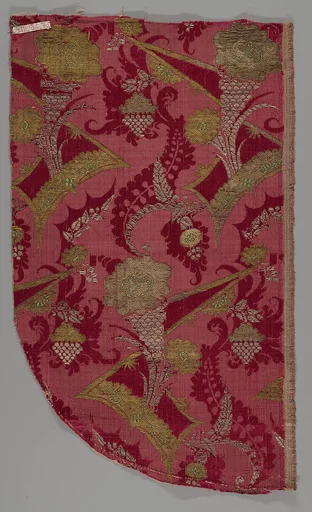
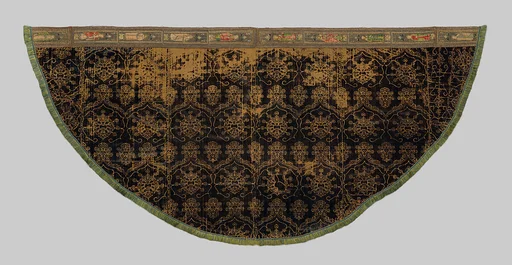
Armenian merchants played an important role in facilitating trade in and outside Iran, so when the Safavid ruler Shah 'Abba' (r. 1587–1629) planned to revitalize Iran's economy, he resettled a community of Armenians from the city of Julfa to his new capital, Isfahan. From there, the Armenians helped Iran's famous silk reach markets around the world. This cope probably comes from an Armenian church in Isfahan, as suggested by the presence of Armenian bishop-saints and Armenian inscriptions on the orphrey attached to its long straight edge. The cope was pieced together from robes (the seams are still visible) of a type of costly, popular seventeenth-century Persian velvet.
- Artist
- Unknown
- Date
- first half 17th century (velvet)
- Medium
- Silk, cotton, metal wrapped thread; cut and voided velvet, brocaded, embroidered, with engraved metal fittings
- Department
- Islamic Art
- Credit line
- Rogers Fund, 1914