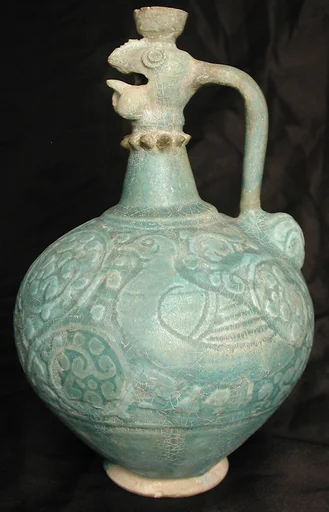
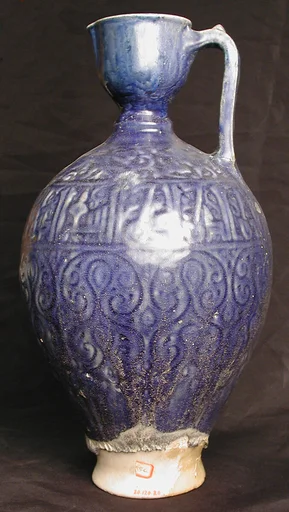
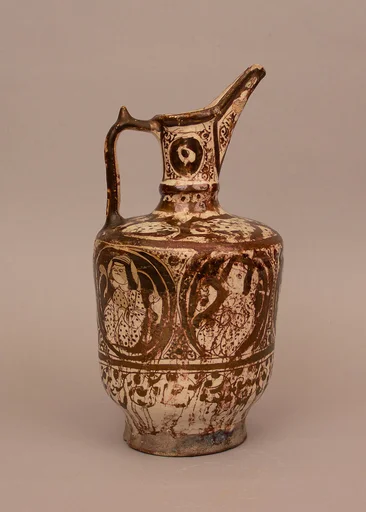
Ewer with Molded Inscriptions and Figures on Horseback
Unknown
last quarter 11th–12th century · Stonepaste; molded, monochrome glazed · Islamic Art
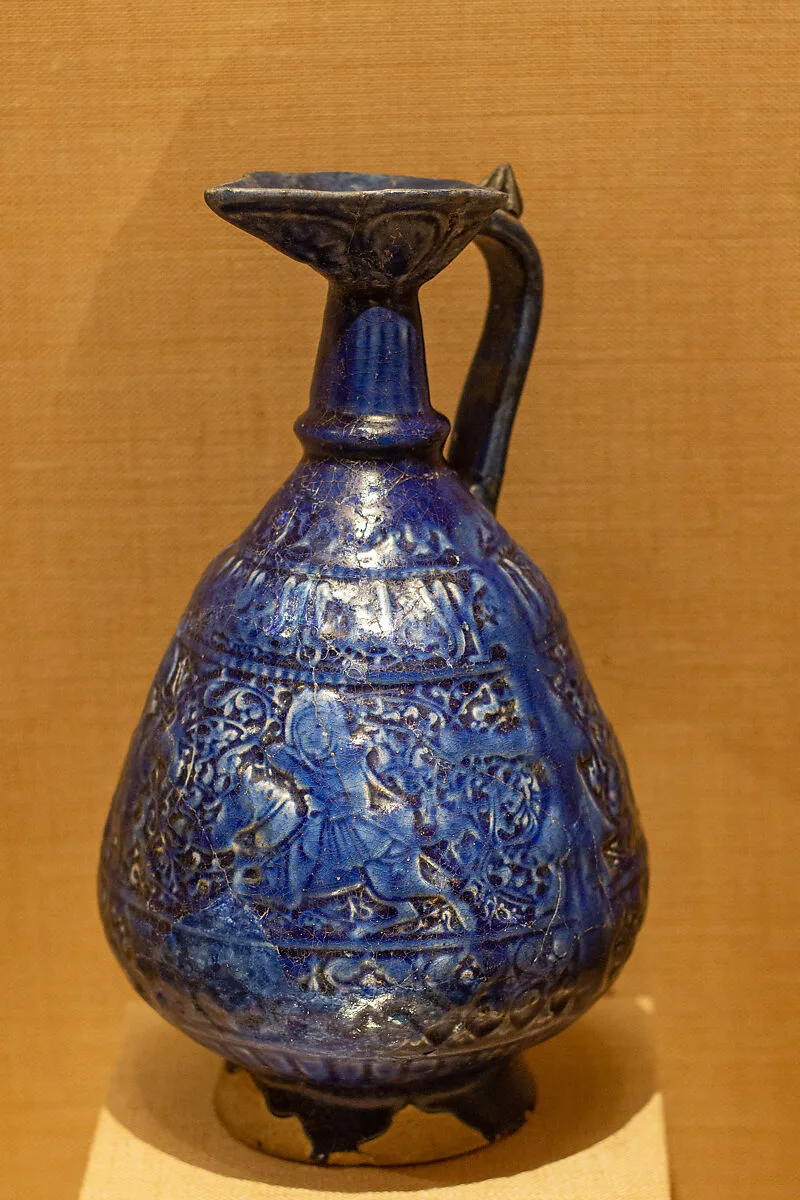
In the last quarter of the 11th century Iranian potters started to work with stonepaste, a drastically new material in place of clay, made mainly of crushed pebbles with only small portions of clay and frit added to make it malleable during manufacturing and solid after firing. However, despite this, its stiffness required the use of molds for the shaping of the objects, as seen in this ewer. Stonepaste would eventually become one of the most durable technical innovations in Iran, where it is used even today in local pottery productions of both vessels and tiles. The mold employed for this ewer displays courtly scenes and an inscription with a sequence of eulogistic attributes.
- Artist
- Unknown
- Date
- last quarter 11th–12th century
- Medium
- Stonepaste; molded, monochrome glazed
- Department
- Islamic Art
- Credit line
- Rogers Fund, 1913