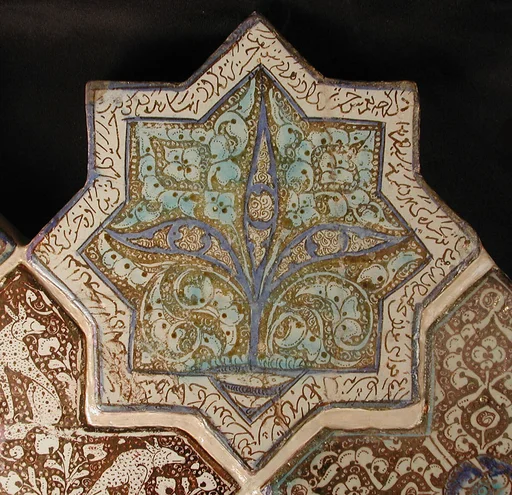
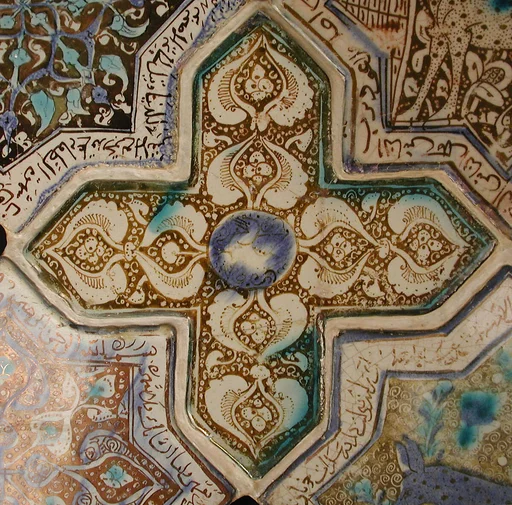
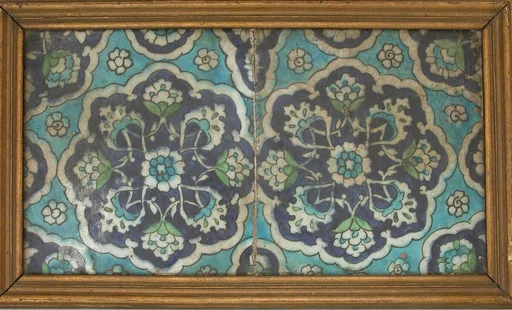
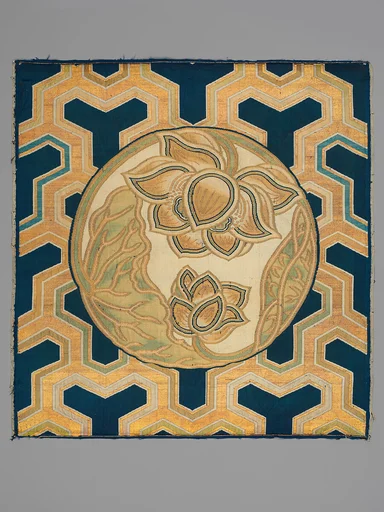
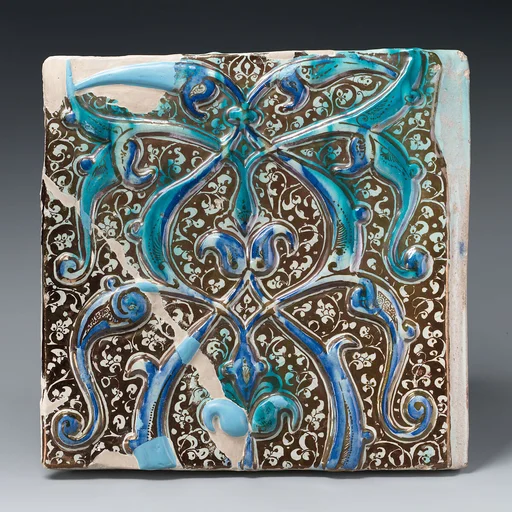
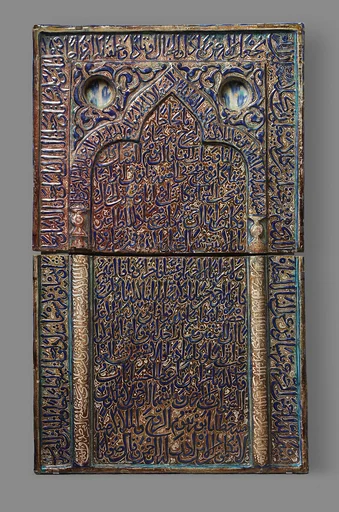
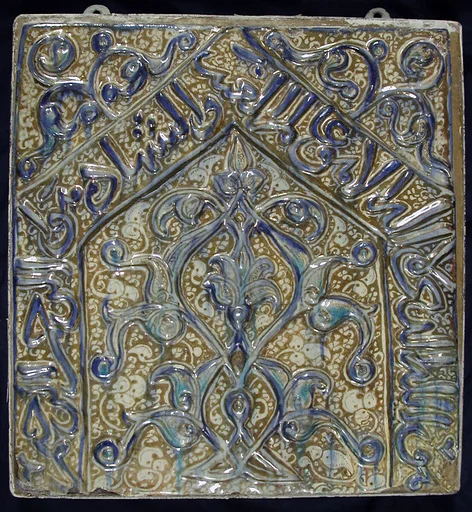
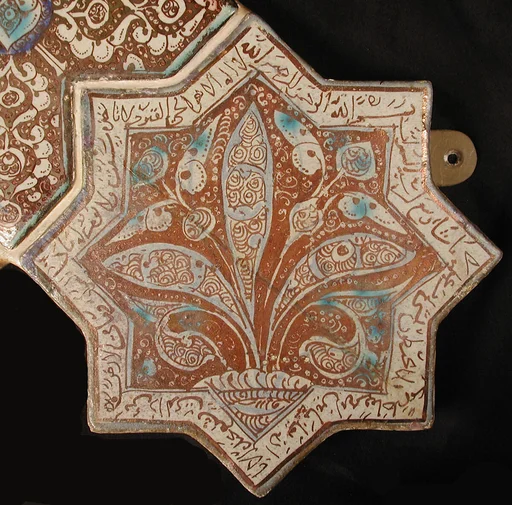
Shaped Tiles in the 'Cuerda Seca' Technique
Unknown
late 14th century · Stonepaste; polychrome glaze within black wax resist outlines (cuerda seca technique) · Islamic Art
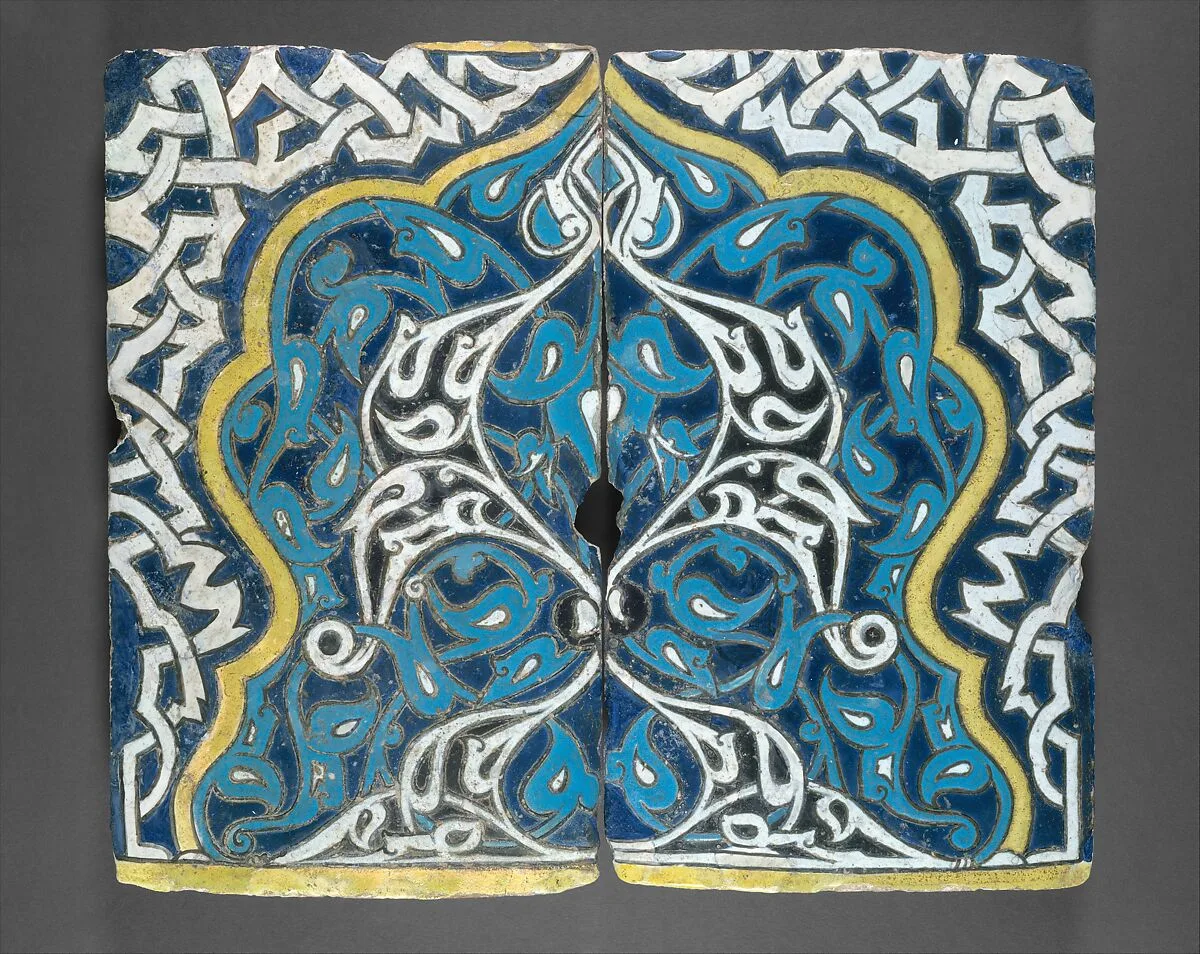
A brilliant but short‑lived episode in the history of Anatolian ceramic production was the appearance of tiles decorated in the so‑called cuerda seca ("dry cord") technique. In the cuerda seca process, thin bands of waxy resist maintain color separation between glazes during firing, but leave behind "dry cords" of unglazed tile. This technique seems to have been introduced to Turkey from Iran as early as the fourteenth century. These tiles are also distinguished by their curving shape, recalling their original placement—probably on the exterior of the polylobed tower of the Mevlana Turbesi (Tomb of Rumi) in Konya.
- Artist
- Unknown
- Date
- late 14th century
- Medium
- Stonepaste; polychrome glaze within black wax resist outlines (cuerda seca technique)
- Department
- Islamic Art
- Credit line
- Rogers Fund, 1908