Tile Panel
Unknown
first quarter 17th century · Stonepaste; polychrome glazed within black wax resist outlines (cuerda seca technique) · Islamic Art
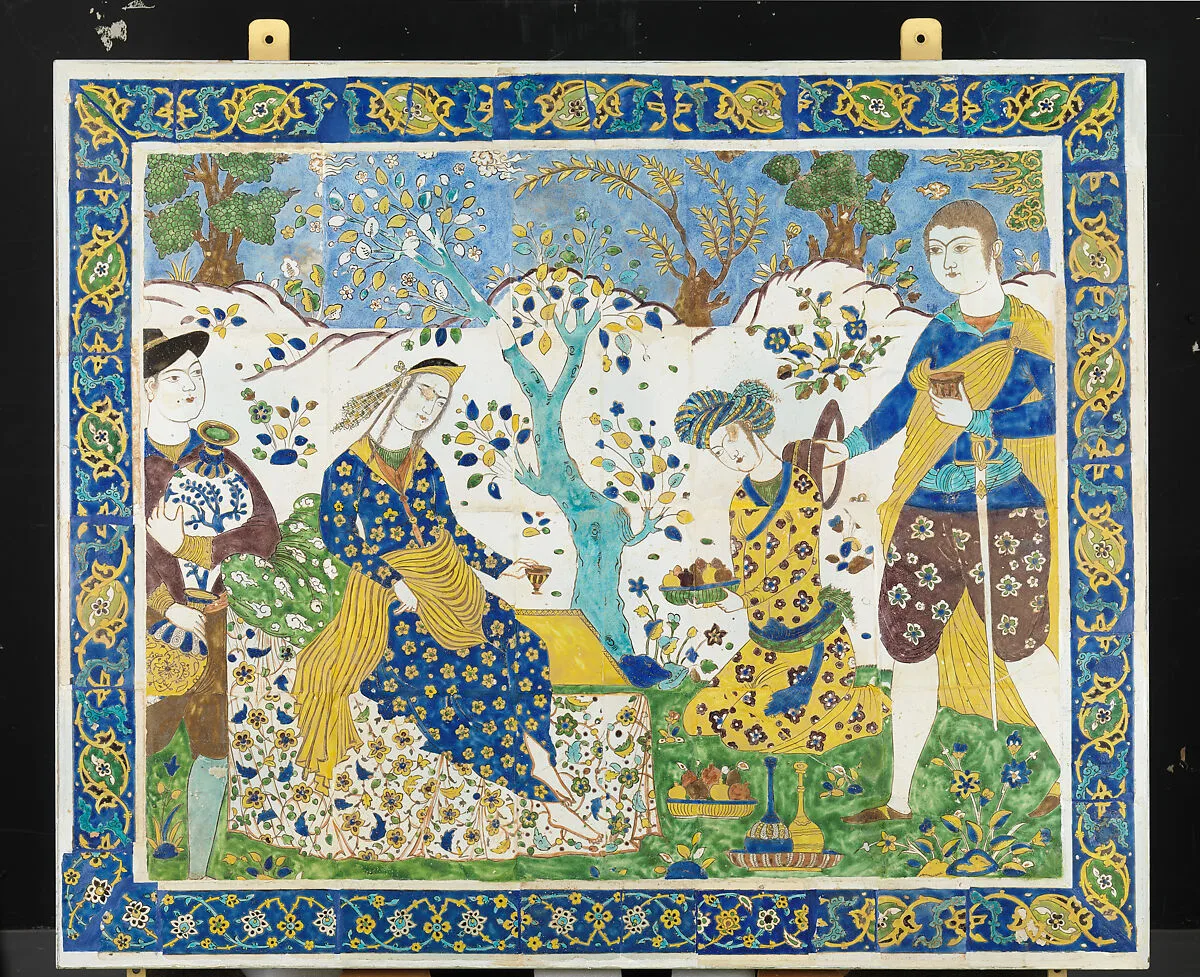
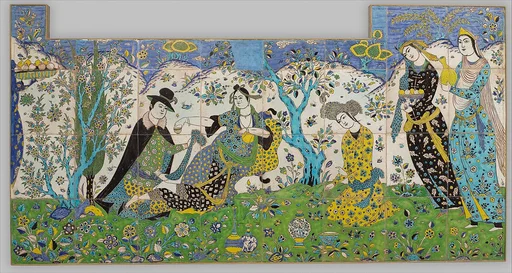
Isfahan, the Safavid capital, and Na'in were the two main centers in which buildings were lavishly decorated with tilework. The old tile-making tradition of composing repetitive geometrical or vegetal patterns was kept alive on mosques and madrasas, but an important innovation on secular buildings was a composition of square tiles individually painted as single elements of an outdoor scene with characters set in a garden landscape. These were placed in royal garden pavilions from the time of Shah 'Abbas to that of Shah Sulayman (the last example being the Hasht Bihisht of 1669). The Museum owns three of these panels, all purchased in 1903 and reported to come from "a palace and pavilion built by Shah 'Abbas on the garden avenue of the Chahar Bagh at Isfahan." The panel here shows a woman and three men in the garden. Such scenes were among the most frequent and fashionable subjects chosen by miniature painters of the Safavid period.
- Artist
- Unknown
- Date
- first quarter 17th century
- Medium
- Stonepaste; polychrome glazed within black wax resist outlines (cuerda seca technique)
- Department
- Islamic Art
- Credit line
- Rogers Fund, 1903
![Illustration for "Maria Morevna" [Tsarevich Ivan meets Tsarevna Maria]](https://d2pvxr3eb77vb4.cloudfront.net/assets/v1/0b/0b9f67a04a99e3adab09ae9a1f46a7ff83d637b29f541e8a8ae4c9a2c951433d/graph.webp)