Water Container (Ganga-Jumna Lota)
Unknown
19th century · Brass and copper · Islamic Art
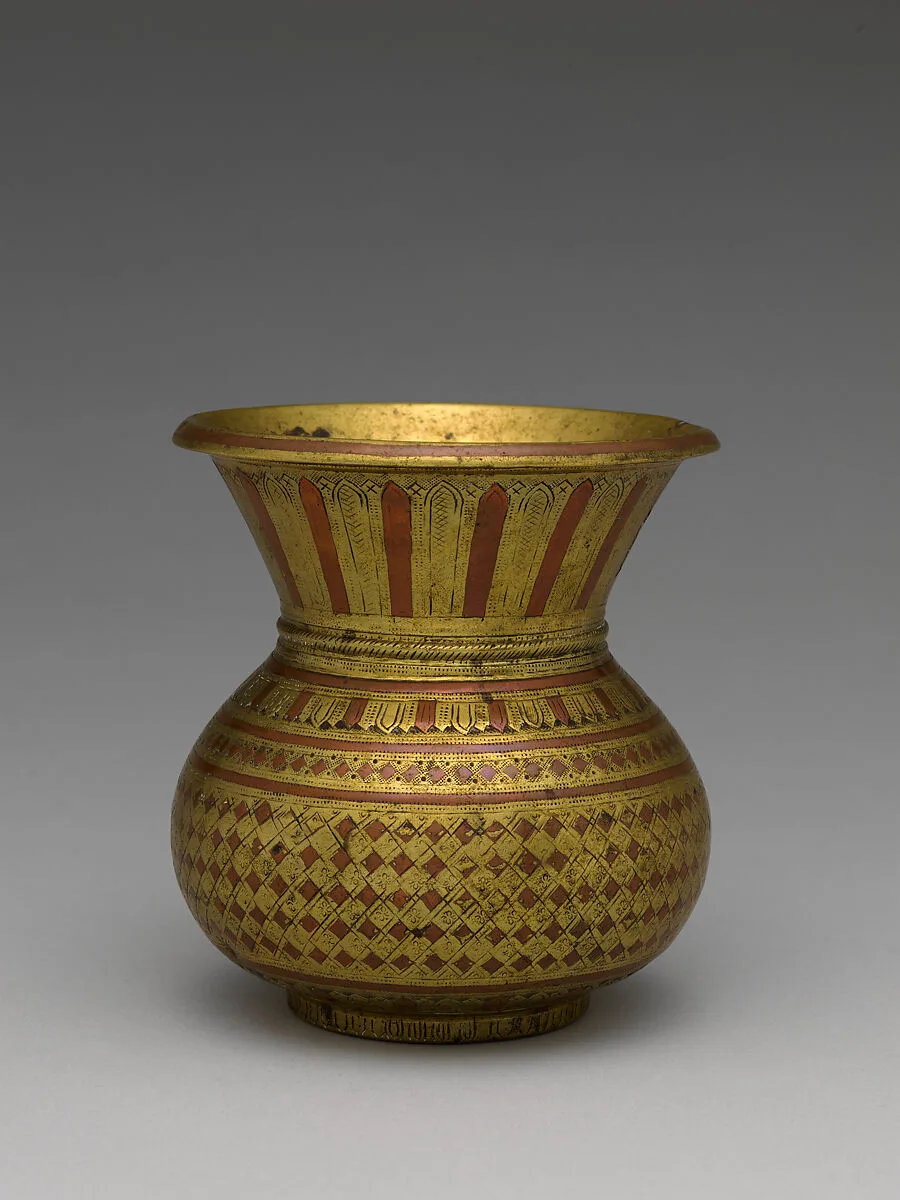
This lota, or water container, is probably based on earlier models of seventeenth-century India that also survived after the beginning of British rule in the region. Its checkerboard pattern, perhaps derived from early Hindu decoration, reflects Islamic influence as well—specifically, the prominance of geometric patterns in the Islamic world. The square unit exists not only in the checkerboard design but also as a repeated sequence of diamond shapes in the band above the vessel's belly. The technique of employing brass and copper together on the same object, unique to India, is called ganga-jumna, after the contrasting colors of the Ganges and Jumna rivers. The Museum's lota most likely was made in Thanjavur, known for its superior brass production in the nineteenth century.
- Artist
- Unknown
- Date
- 19th century
- Medium
- Brass and copper
- Department
- Islamic Art
- Credit line
- Edward C. Moore Collection, Bequest of Edward C. Moore, 1891