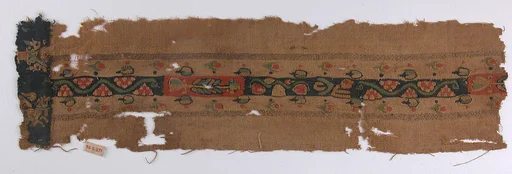
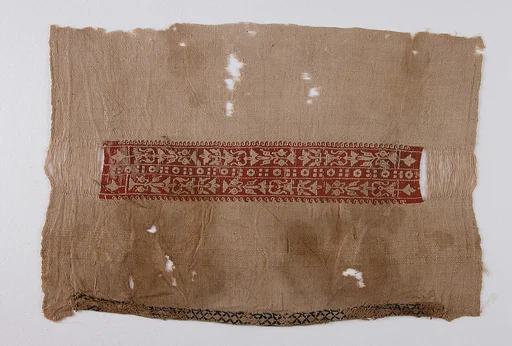
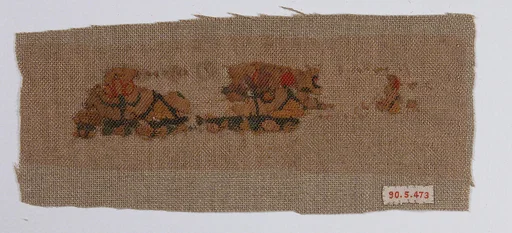
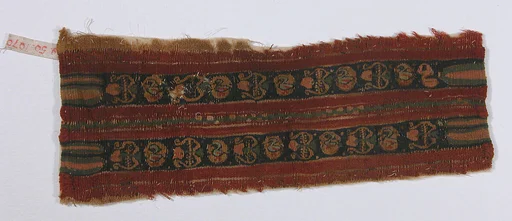
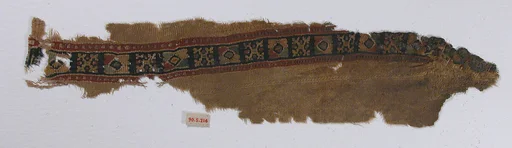
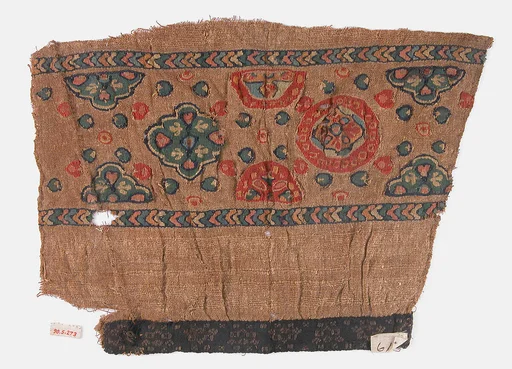
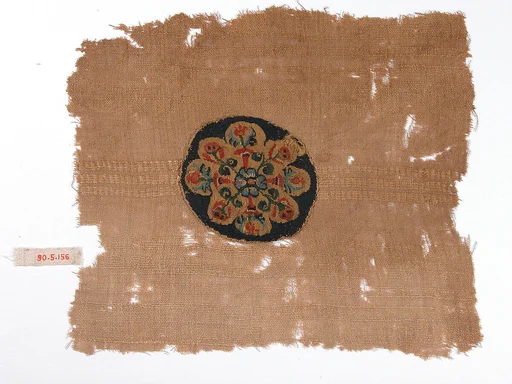
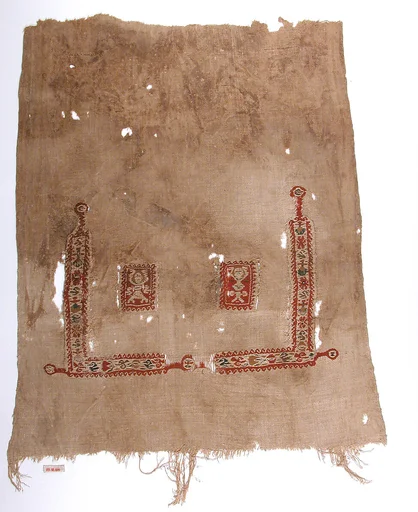
Band with Vegetal Motif
Unknown
6th–9th century · Wool, linen; plain weave, tapestry weave · Islamic Art
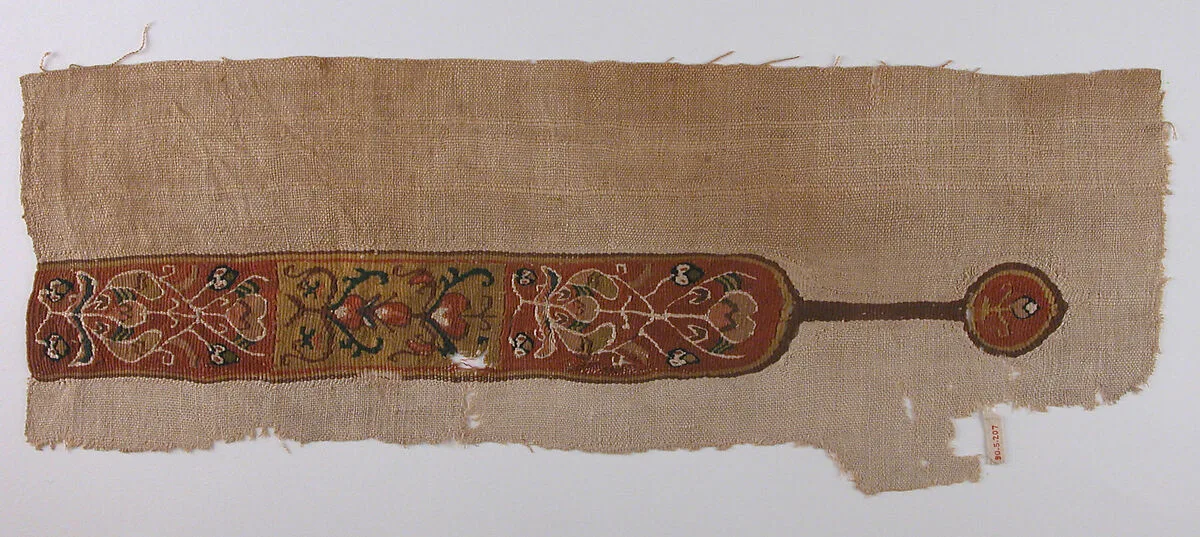
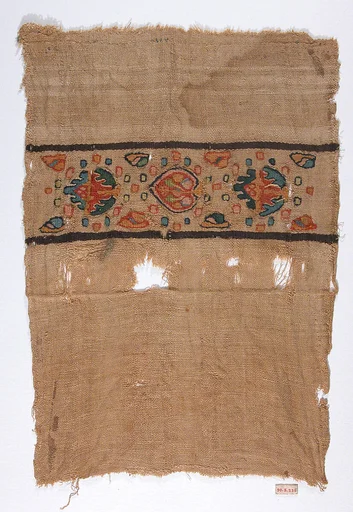
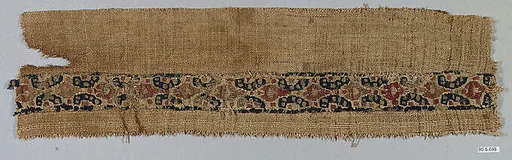
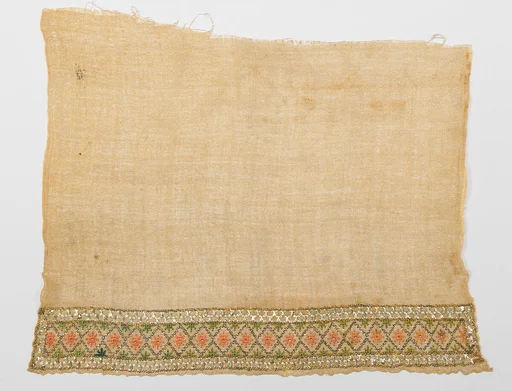
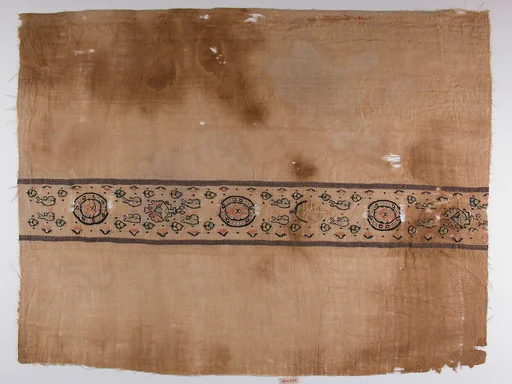
The pattern of this earth-toned clavus is created from a candelabrum-like design of delicate tendrils, leaves, buds, and heart-shaped flowers; a tiny bud accents the leaf-shaped pendant. The linen ground is embellished with self-bands (ornamental bands of multiple, undyed weft threads). The combination of fruit-bearing or flowering trees, palmettes, candelabra, and acanthus scrolls - a synthesis of Hellenistic, Roman, and Sasanian motifs - became popular during the early Islamic period. Such designs may be related to contemporary silk weavings that came to Egypt from the East via trade and the Persian and Arab invasions.
- Artist
- Unknown
- Date
- 6th–9th century
- Medium
- Wool, linen; plain weave, tapestry weave
- Department
- Islamic Art
- Credit line
- Gift of George F. Baker, 1890