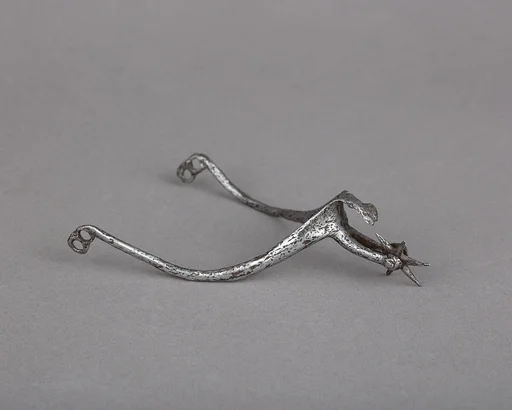
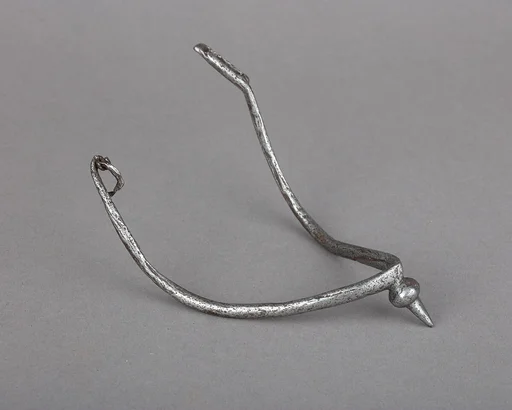
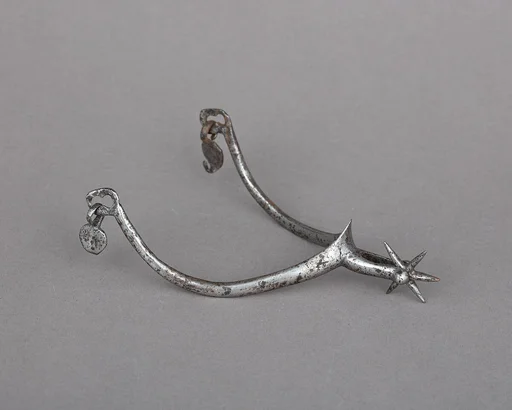
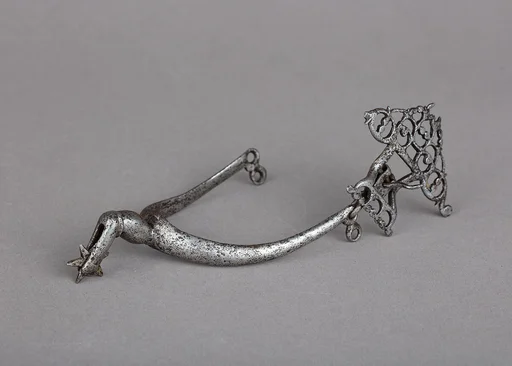
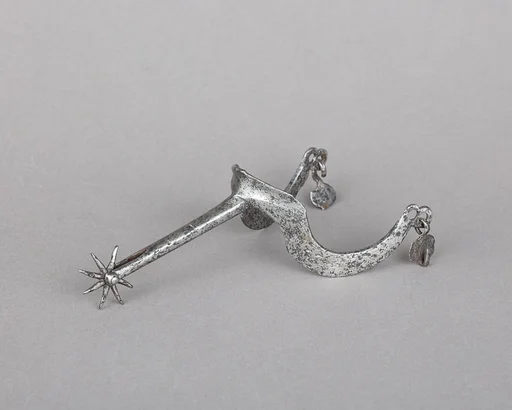
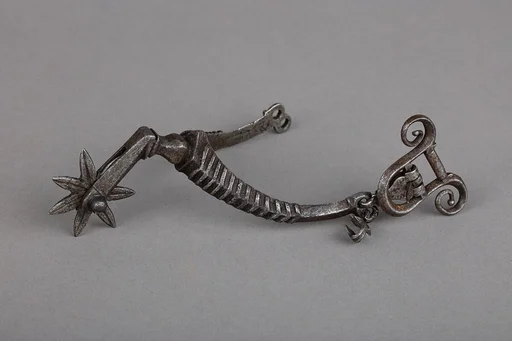
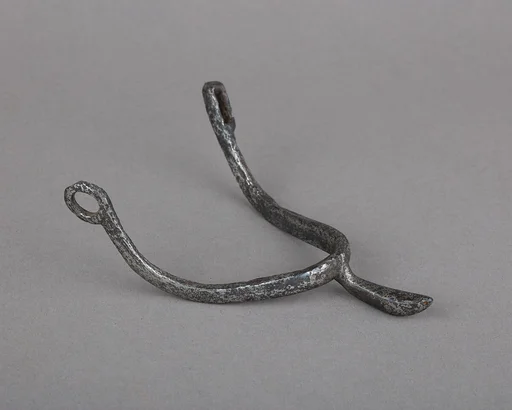
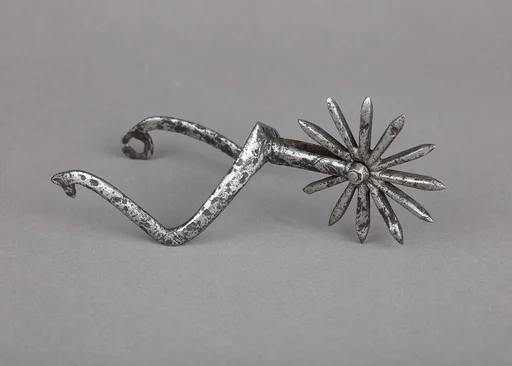
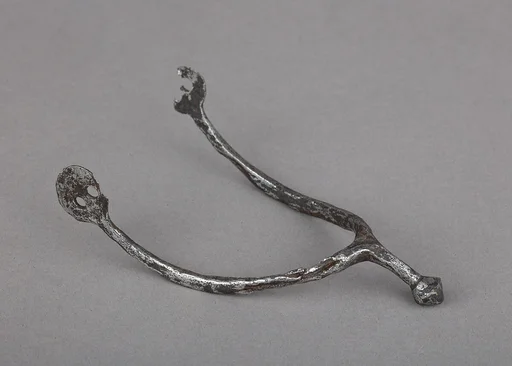
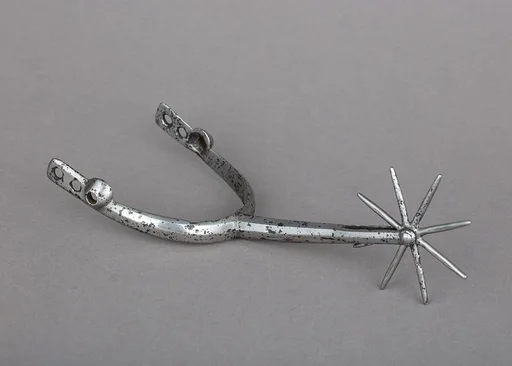
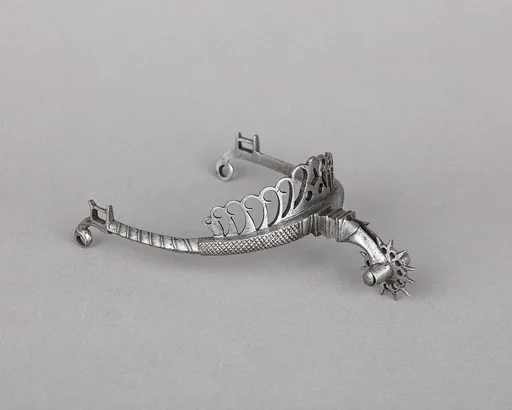
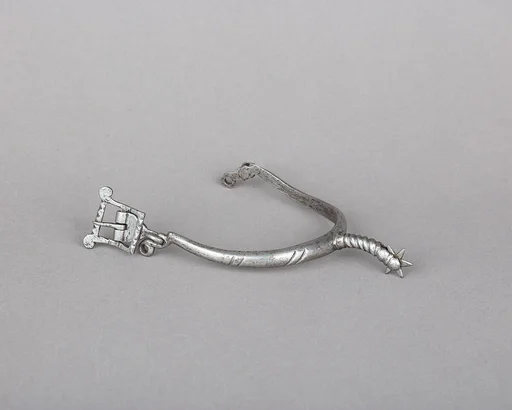
Rowel Spur
Unknown
late 14th century · Iron alloy · Arms and Armor
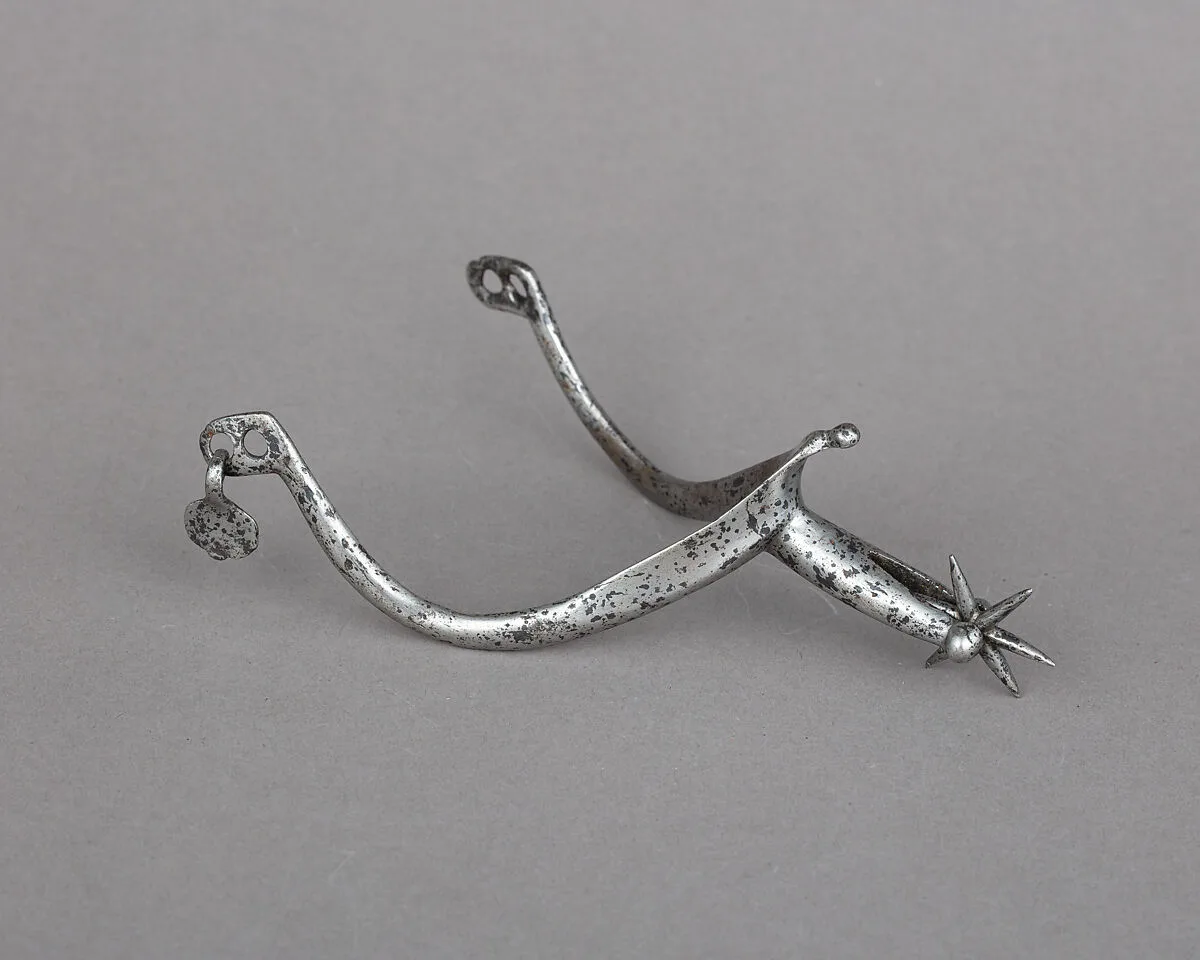
The first rowel spurs, featuring a revolving disc or star at the end of the neck, appeared in Western Europe around the mid-13th century. They cohabitated with the earlier form, the prick spur, for about a century, before replacing it almost completely in Europe by the mid 14th century. The advantage of the rowel spur over the prick was it allowed the rider to reach the flanks of its horse with one of the points whatever the angle of its foot, which was very convenient regarding the riding position of the time, with long stirrups-leathers and extended legs. The fact that the rowel rolled against the horse instead of hitting it directly reduced also the probability of injuring it too seriously. As a knight’s status was closely related to his horse, spurs became one of the symbols of chivalry, and one of the tokens given to him during his knighting.
- Artist
- Unknown
- Date
- late 14th century
- Medium
- Iron alloy
- Culture
- possibly Italian
- Department
- Arms and Armor
- Credit line
- Gift of William H. Riggs, 1913