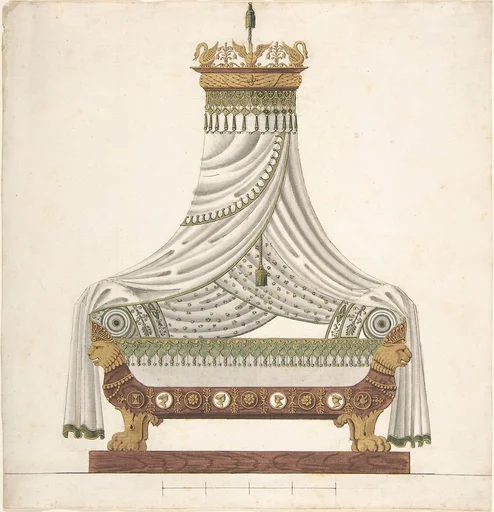
Design for an Empire Daybed
Anonymous, French, 19th century|Anonymous, Italian, 19th century
1800–1820 · Pen and ink with brown, red, yellow and green wash · Drawings and Prints
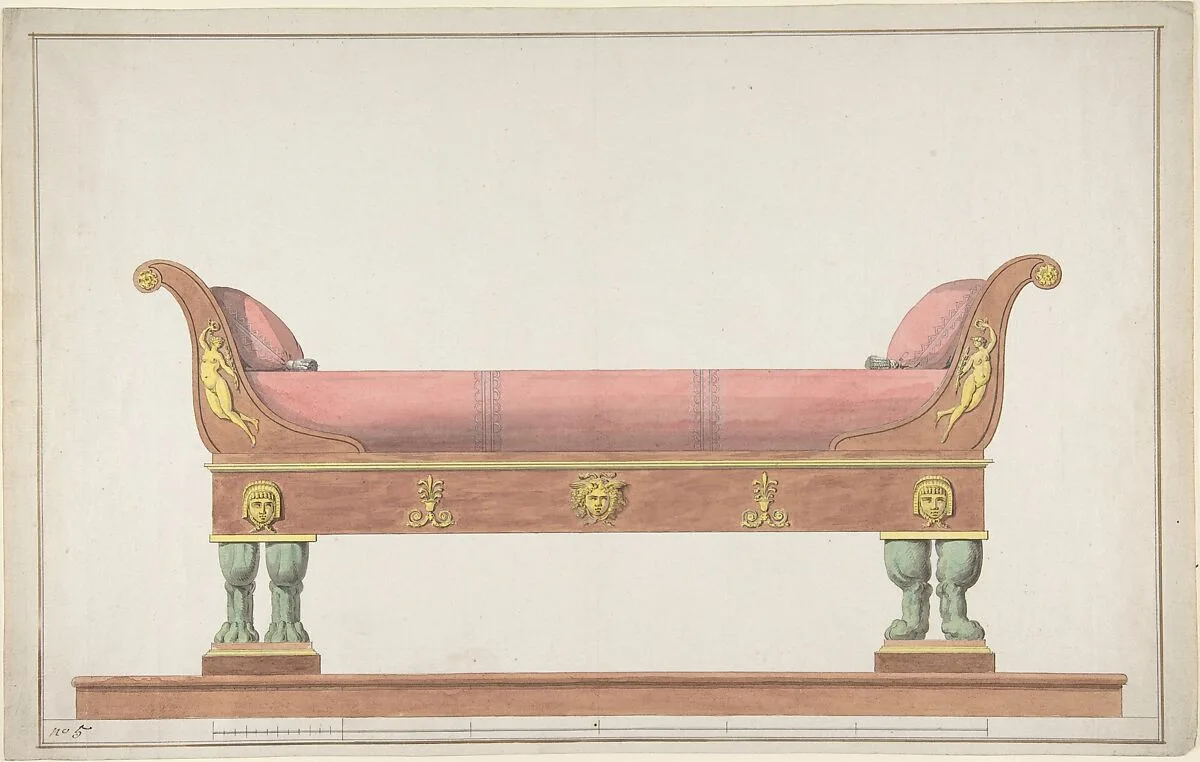
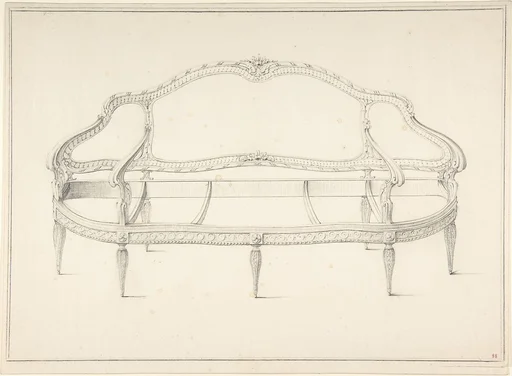
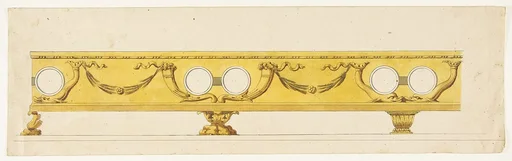
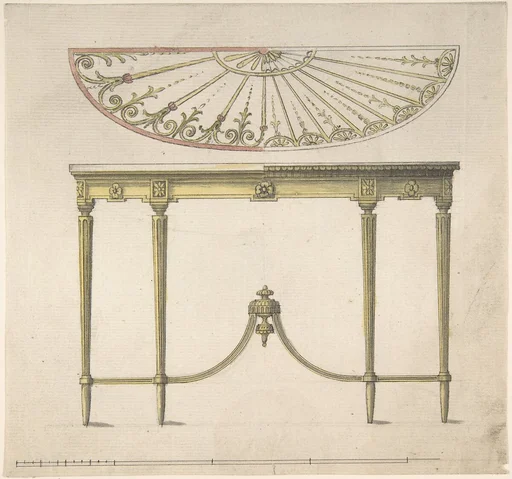
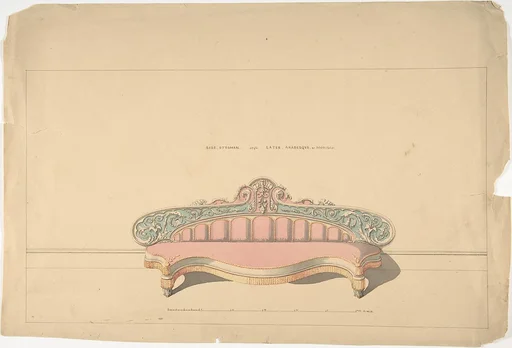
This design for a daybed was made early in the 19th century. Characteristic are its legs which are directly based on Antique models found during the excavations at Pompeii and Herculaneum. The objects were published in various ways amongst others by Giovanni Battista Piranesi. Percier and Fontaine used similar legs in many of their designs in their Collection of interior designs (…). Through these publications a wide audience became familiar with the same type of vocabulary which sometimes makes it difficult to determine where a specific design was actually conceived. The watermark in the paper indicates that the paper’s manufacturer was a Dutch company known as Honig & Zoonen. It does not follow that the design is therefore Dutch as well. The same watermark is found for example in the 18th-century copies of the Declaration of Independence made by the American printer John Dunlap. Just like design esthetic, by the early 19th century the paper trade had become an international business. This design for a daybed is most likely either Italian or French, but as long as the hand of the artist is not recognized, it is difficult to ascertain its origins with certainty.
- Artist
- Anonymous, French, 19th century|Anonymous, Italian, 19th century
- Date
- 1800–1820
- Medium
- Pen and ink with brown, red, yellow and green wash
- Department
- Drawings and Prints
- Credit line
- Rogers Fund, 1970