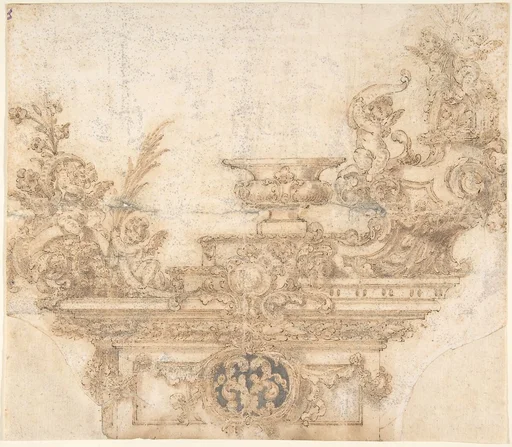
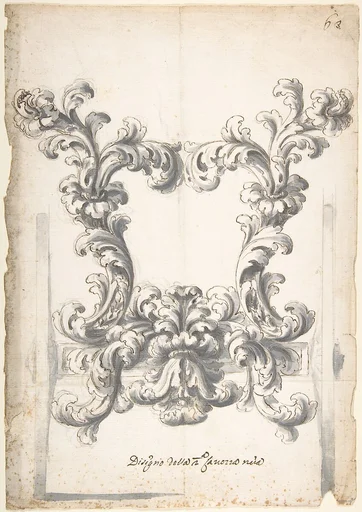
Design for a Cassone (Recto), Design for a Tomb (Verso)
Anonymous, Italian, 16th century
ca. 1530–60 · Pen and brown ink, brush and gray-brown wash (recto and verso) · Drawings and Prints
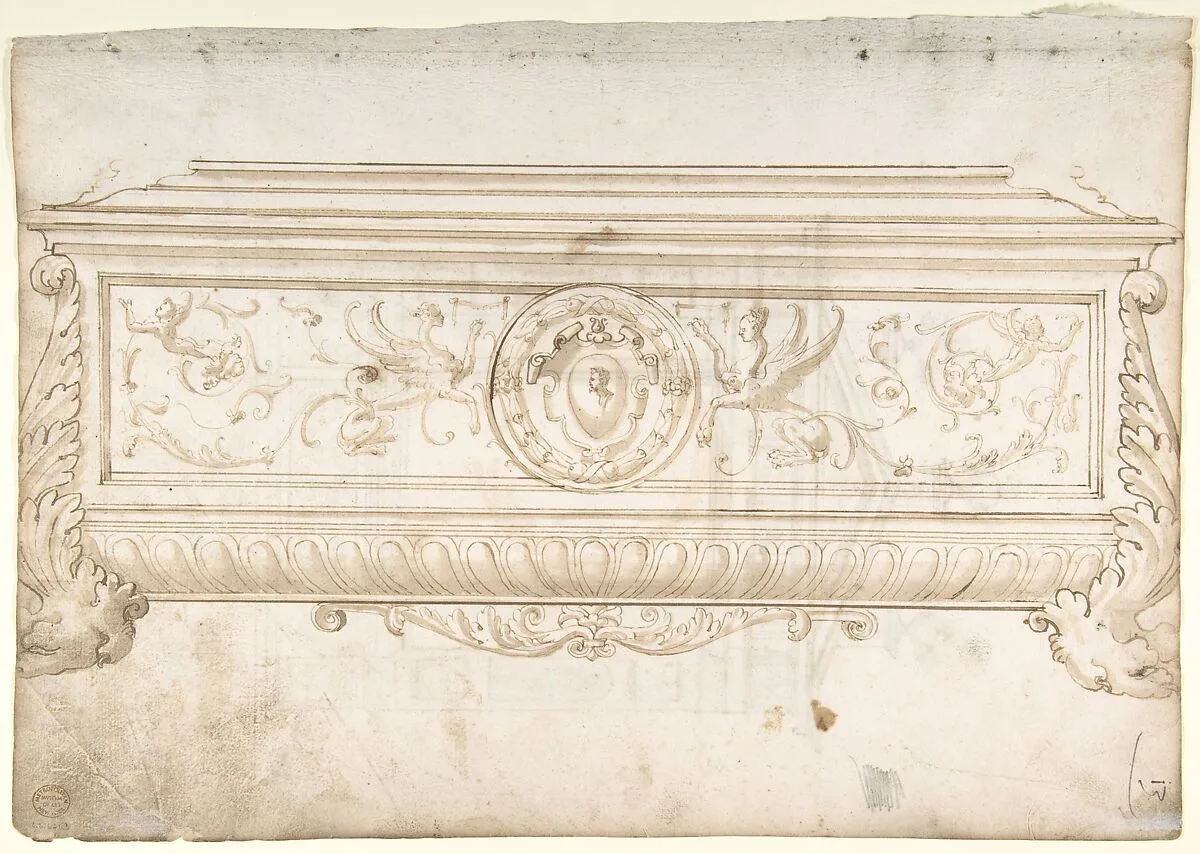
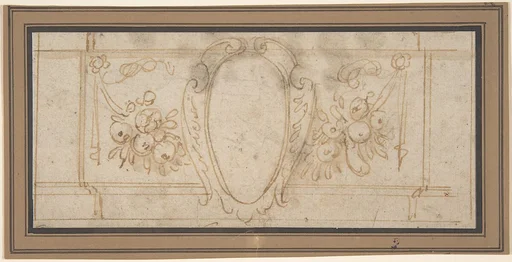
From the 14th to the 16th century the cassone played an important role in the Italian household. It was the main furniture piece to provide storage, but was also used as a seat or several could be pushed together to form a makeshift bed. It is probably this central role in the household which was the reason why cassoni were often given as wedding gift. The shape and decoration of the cassoni varied. The earlier examples were often painted, sometimes combined with some carved or molded decorations. During the 16th century the cassoni were most often carved and took their inspiration from antique sarcophagi. Typical elements which are incorporated in this design are the lion’s feet and the continuous frieze decorating the front of the cassone. Most cassoni also have room for a crest in the center, identifying for which family or household the cassone was made.
- Artist
- Anonymous, Italian, 16th century
- Date
- ca. 1530–60
- Medium
- Pen and brown ink, brush and gray-brown wash (recto and verso)
- Department
- Drawings and Prints
- Credit line
- Rogers Fund, 1966