Snaffle Bit
Unknown
9th–10th century · Iron alloy · Arms and Armor
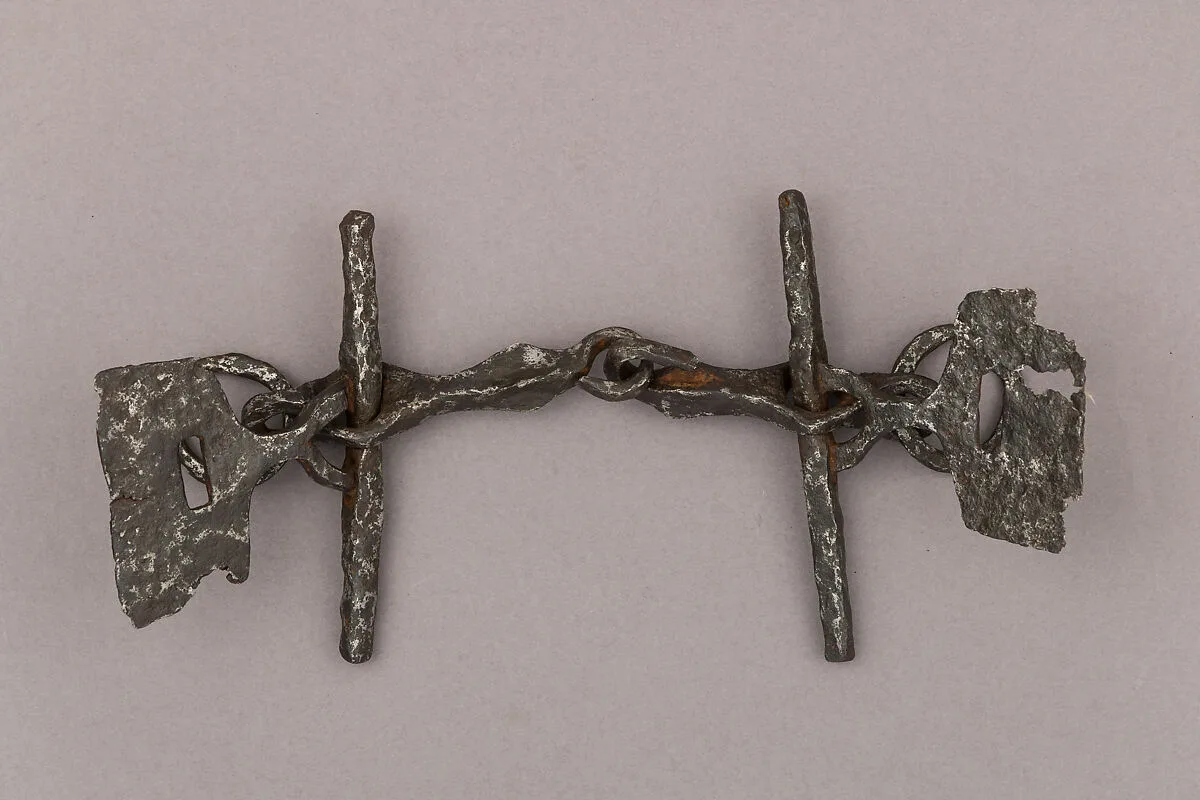
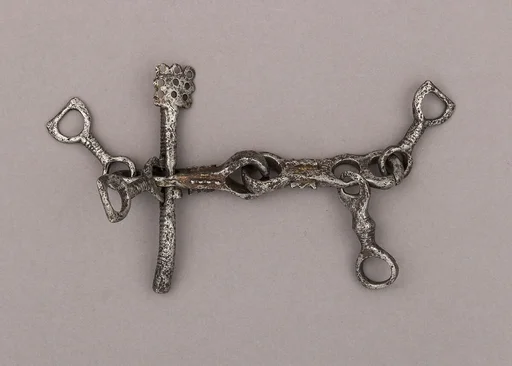
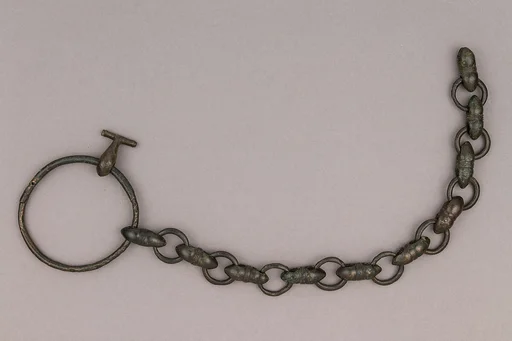
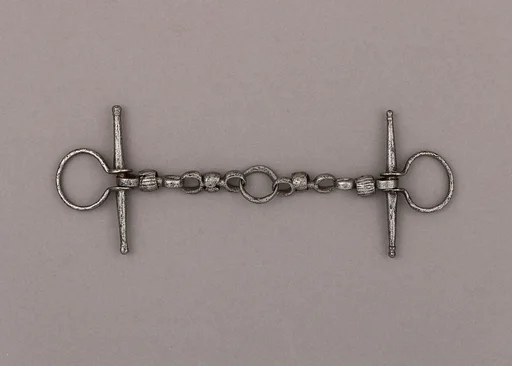
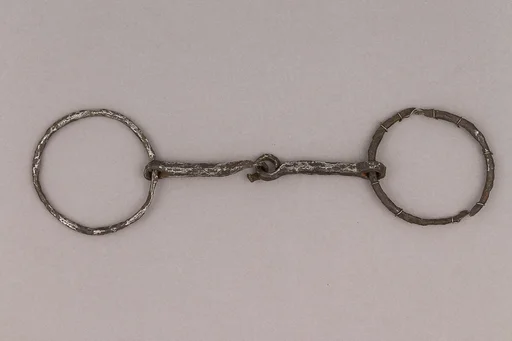
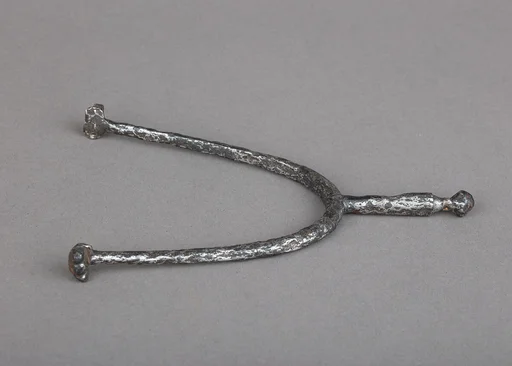
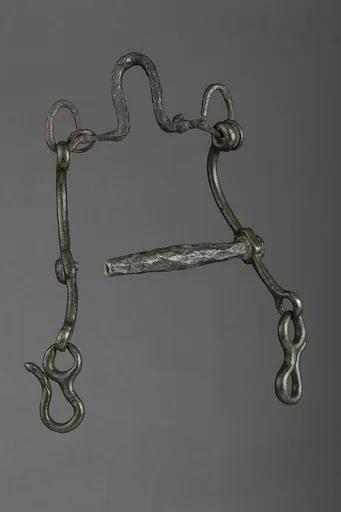
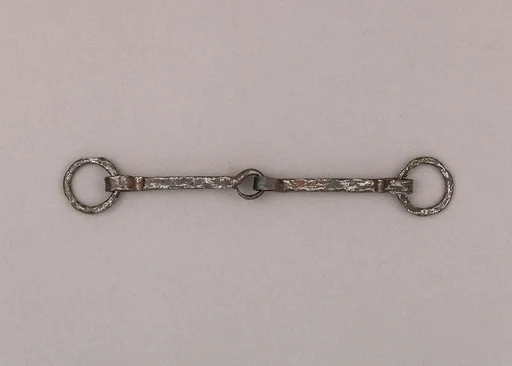
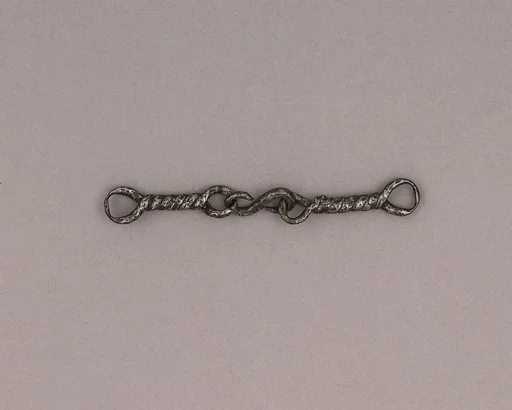
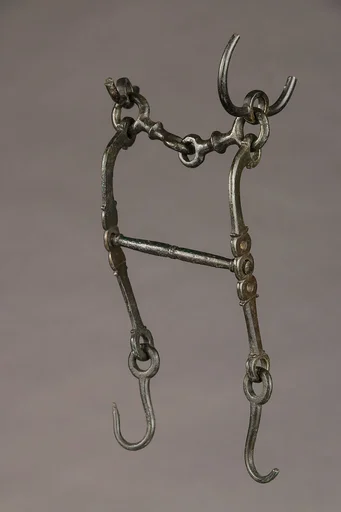
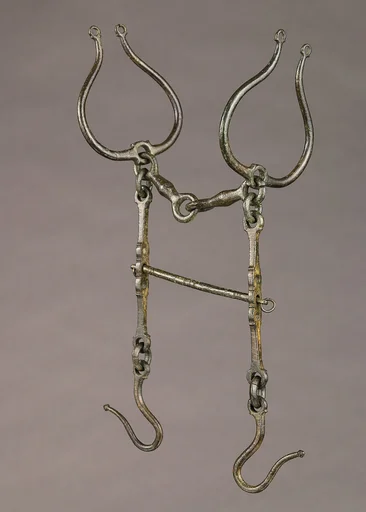
If the Vikings are mostly known for being talented sailors, one may forget they were also horse riders, and as in all the Germanic cultures, horses had great importance in their society, in both its social and religious aspects. Equestrian equipment, like stirrups, spurs and bits, are regularly found in Viking burials, among the goods warriors wanted to bring with them to the afterlife. The elite would sometimes even be accompanied by sacrificed horses, a meaningful practice at that time, considering the high economic value of horses. The snaffle bit is the simplest type of horse bit, and has an effect on the bars (part of the horses’ jaw without teeth) and the corners of the lips. The mouthpiece of this bit consists in two articulated links, square in section, with thin ridges. The mouthpiece is flanked by vertical cheekpieces with pierced square plaques, used to hang the bit from the bridle. Reins were attached to the large rings hanging from each side of the bit. The sharp ridges on the mouthpiece make it harsh, preventing the horse from grasping the bit with its jaws (the horse needed to have a relaxed jaw for the bit to be effective). When they were pulled, the cheekpieces would compress the corners of the lips, forcing the horse to stop. They would also help indicate the direction to the horse and keep the rings from pulling through the mouth.
- Artist
- Unknown
- Date
- 9th–10th century
- Medium
- Iron alloy
- Culture
- Germanic
- Department
- Arms and Armor
- Credit line
- Gift of Stephen V. Grancsay, 1942