Snaffle Bit
Unknown
3rd century BCE · Copper alloy (bronze) · Arms and Armor
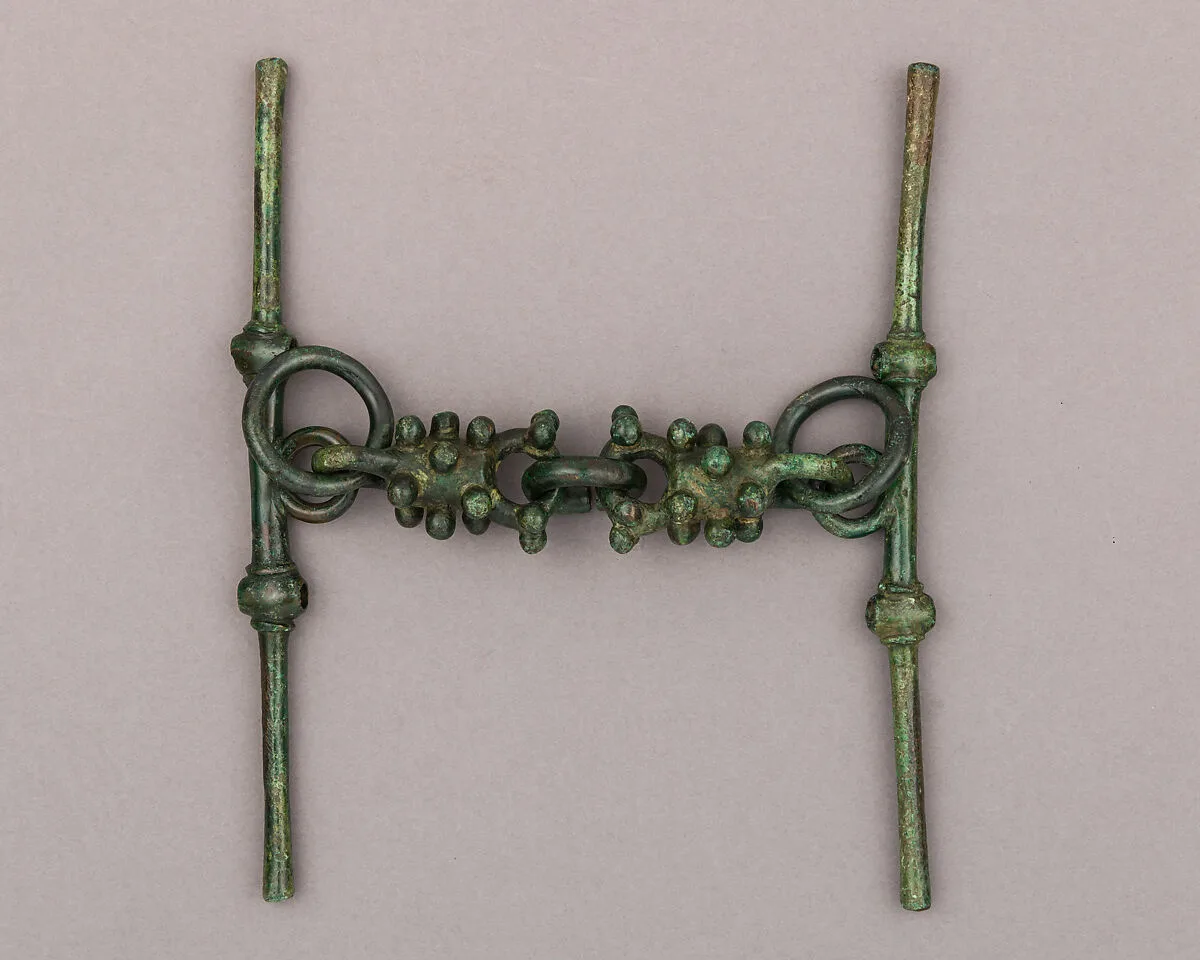
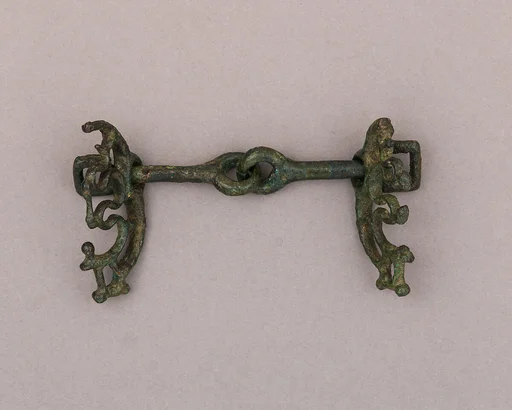
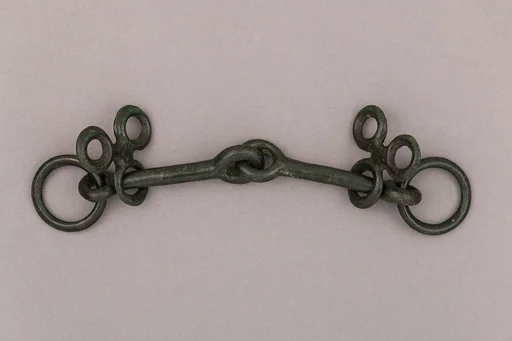
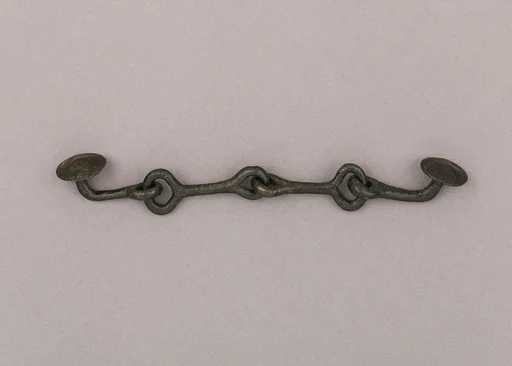
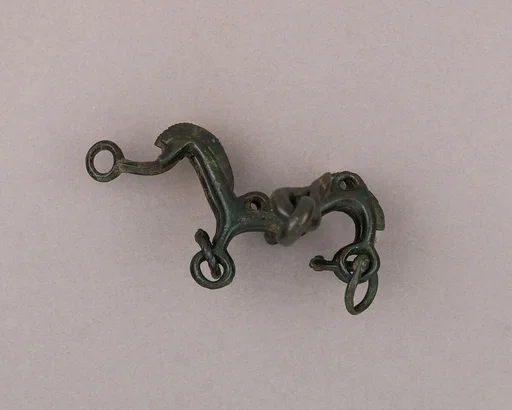
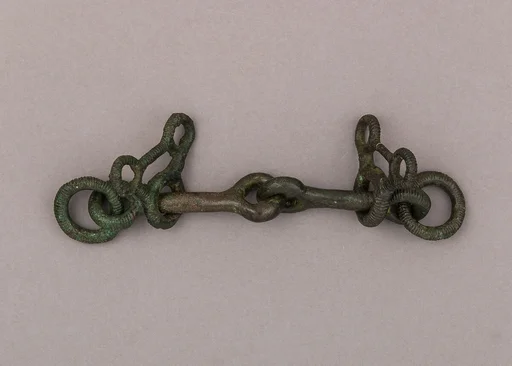
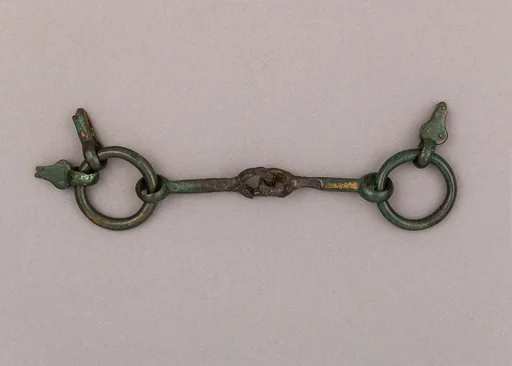
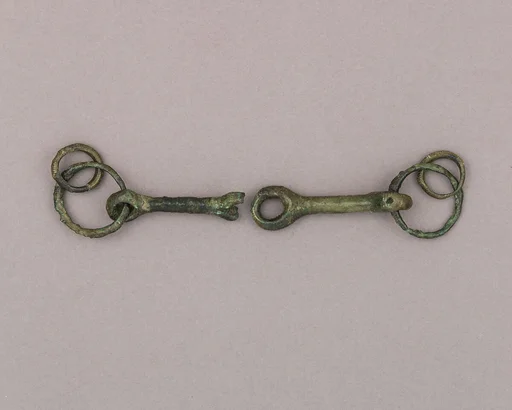
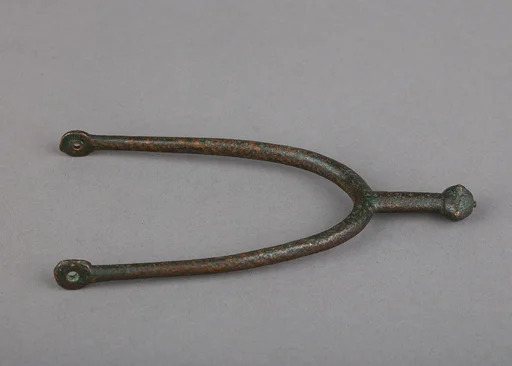
The mouthpiece consists of two canons studded with rounded spikes, linked by a ring in the center. Each one terminates with a ring for the reins and a long and straight full-cheek piece, pierced with two holes for hanging it from the bridle. This very submissive type of snaffle was inspired by both Achaemenid and Greek bits. The spiky canons, called 'hedgehogs' by the Greek Xenophon (ca. 430–355 B.C.) in his equestrian treatise, accentuate its severity. These elements being very uncomfortable for the tongue, they force the horse to retract it. Consequently the tongue cannot cushion the bit and the mouthpiece is resting directly on the most sensitive part of the bars (part of the horses’ jaw without teeth). The very long cheekpieces added control for changing directions by pressing the horse's cheek when pulling the opposite rein. This bit is said to have been found in Rome. If true, it might have come from the tomb of a Thracian or Anatolian cavalryman buried there.
- Artist
- Unknown
- Date
- 3rd century BCE
- Medium
- Copper alloy (bronze)
- Culture
- Thracian or Anatolian
- Department
- Arms and Armor
- Credit line
- Gift of Stephen V. Grancsay, 1942