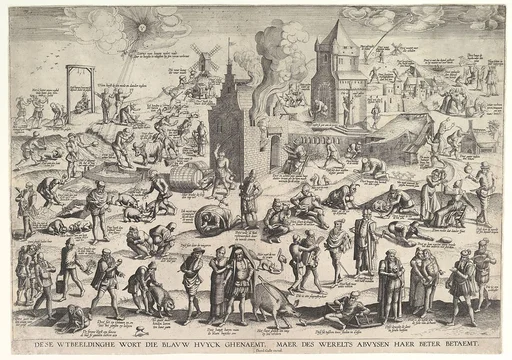
Tabula Cebetis
David Kandel
16th century · Woodcut; second state of two · Drawings and Prints
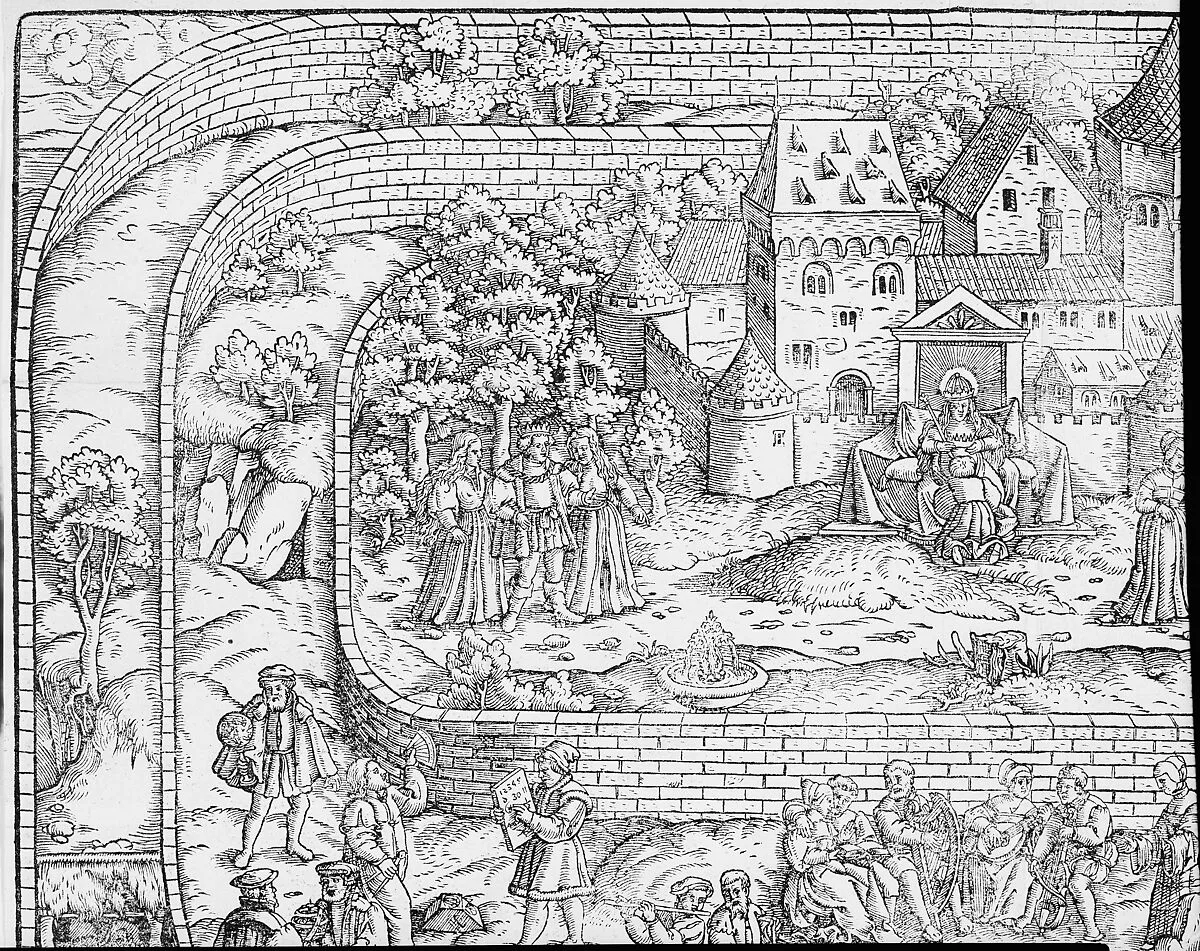
The Table of Cebes, or The Journey of Human Life, is an allegory—popular in Europe from the fifteenth through the eighteenth century—that represents the dangers and temptations that beset man and threaten to divert him from an existence predicated upon piety and study, including the study of mathematics. It is often depicted in the form of three concentric walled enclosures, each accessible by a single gate and populated with a variety of figures engaged in the pursuit of knowledge and self-knowledge. Kandel’s print subverts the traditional values of the inward spatial progression, whereby each move closer to the center symbolizes a greater degree of moral purity. Here, even the innermost sanctum is not immune to worldly desires—a Reformation-era commentary on the hypocrisy of institutions claiming to uphold standards of human behavior.
- Artist
- David Kandel
- Date
- 16th century
- Medium
- Woodcut; second state of two
- Department
- Drawings and Prints
- Credit line
- Harris Brisbane Dick Fund, 1944