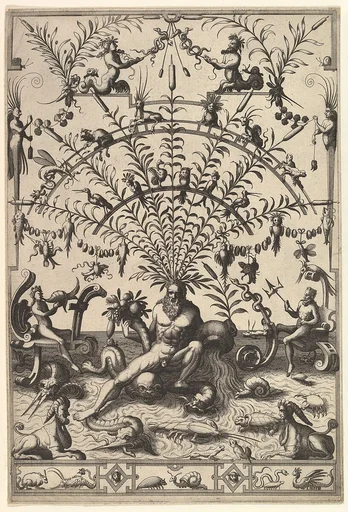
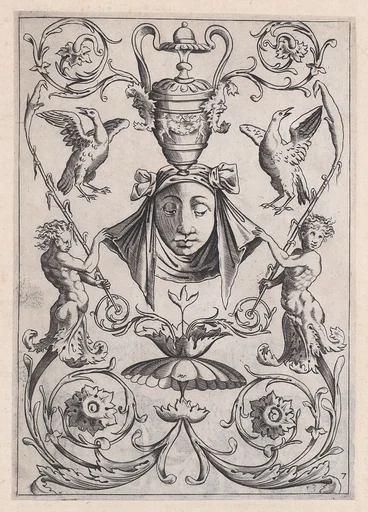
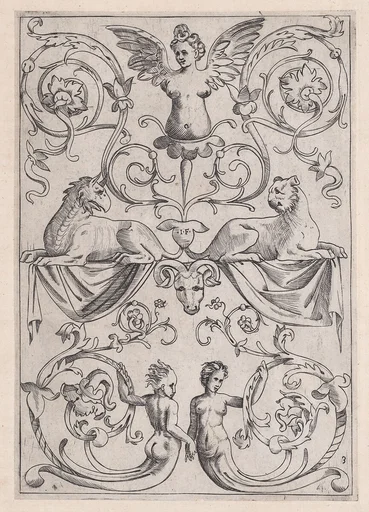
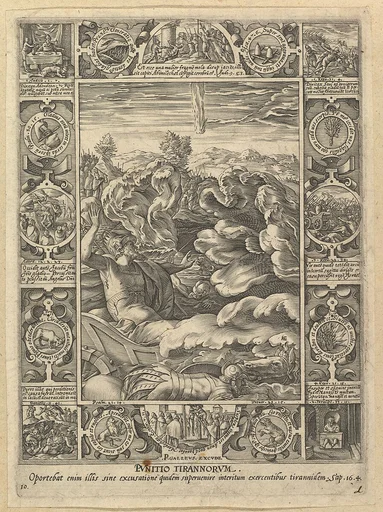
Allegory of Europe, from "The Four Continents"
Philips Galle|Marcus Gheeraerts the Elder
ca. 1590–1600 · Engraving · Drawings and Prints
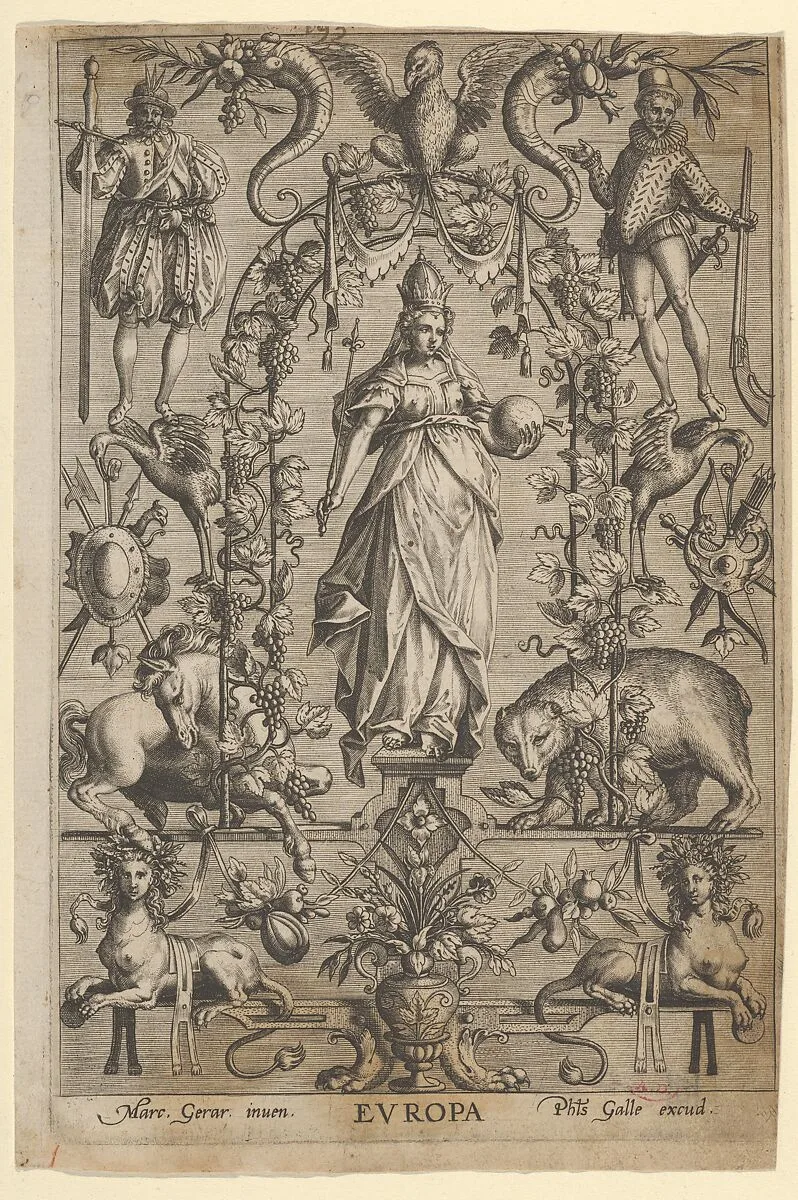
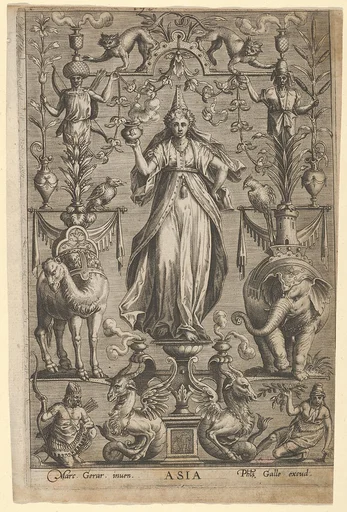
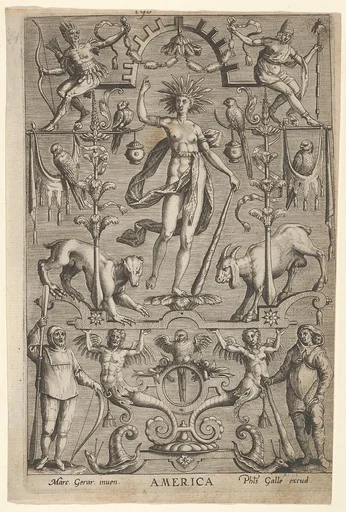
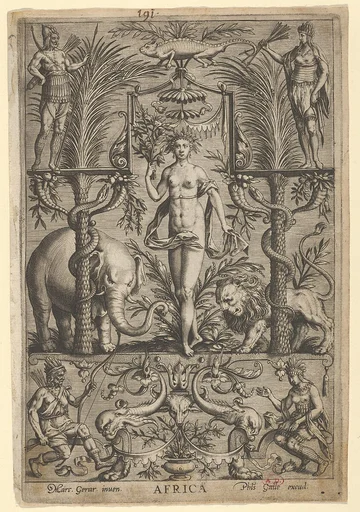
Marcus Gheeraerts likely trained with the Brussels painter Bernard van Orley; and, after his death, in Antwerp with the prolific printmaker and publisher Hieronymus Cock. Gheeraerts produced his own etchings as well as hundreds of drawings for engravings, which were executed by some of the most well-known Flemish artists of the time. His connections to these printers and publishing houses—Cock, Sadeler, Galle, de Jode—remained strong even while he was working in exile in London. This Allegory of Europe is part of a series of engravings of the four continents after drawings by Gheeraerts. European artists from the Renaissance onwards represented the known world through allegorical figures derived from antiquity. They often took the form of clothed or naked women and were used in ephemeral works made for triumphal entries and pageants, in maps, coins, prints, and the decorative arts. The representations were eventually standardized in the Iconologia by the Italian Cesare Ripa (1593; illustrated in 1603), and supplemented by contemporary travel accounts. In his representations of the Continents, Gheeraerts surrounded the allegories -- sexualized young women -- with the symbols and attributes that the artists and the viewers associated with each continent—in some cases the commodities to be traded and resources to be exploited. These images, steeped in a white Christian and male Eurocentrism, reinforced ideas of the self and the other that characterized the era. In this engraving, Europe is shown dressed as a queen wearing a crown and carrying a scepter and orb of the world. She is placed beneath a cloth of honor and framed by two fashionably dressed soldiers. Beside her are panoplies of arms–likely the spoils of war—and animals long associated with the continent: a fierce bear, a noble horse, and the eagle of empire. Gheeraerts’s Allegory of Europe also demonstrates his intense interest in flora and fauna. Most of his independent drawings as well as the prints after his designs are series of birds and butterflies, quadrupeds, fables, bears, the elements and hunting scenes.
- Artist
- Philips Galle|Marcus Gheeraerts the Elder
- Date
- ca. 1590–1600
- Medium
- Engraving
- Department
- Drawings and Prints
- Credit line
- Gift of the Estate of James Hazen Hyde, 1959