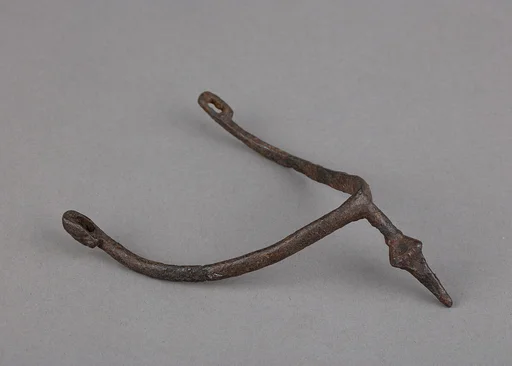
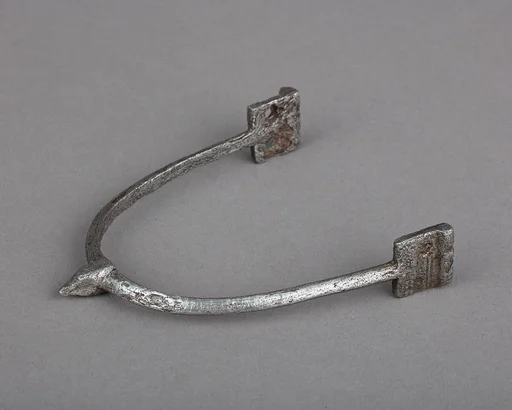
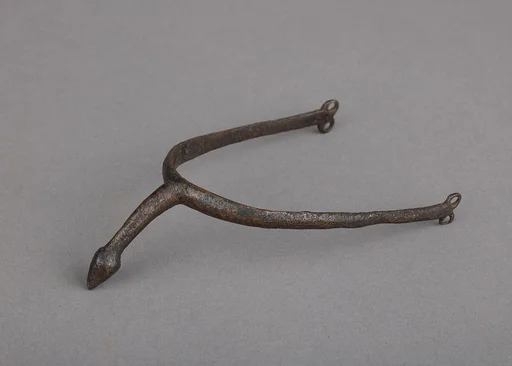
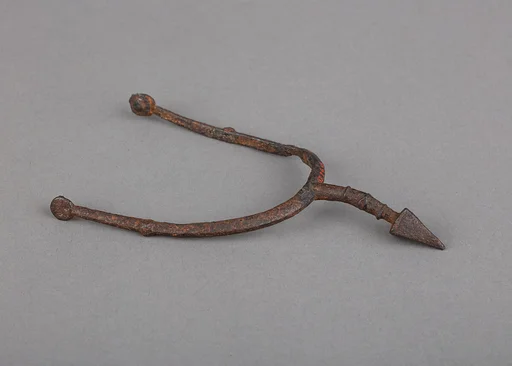
Prick Spur (Left)
Unknown
13th century · Iron alloy · Arms and Armor
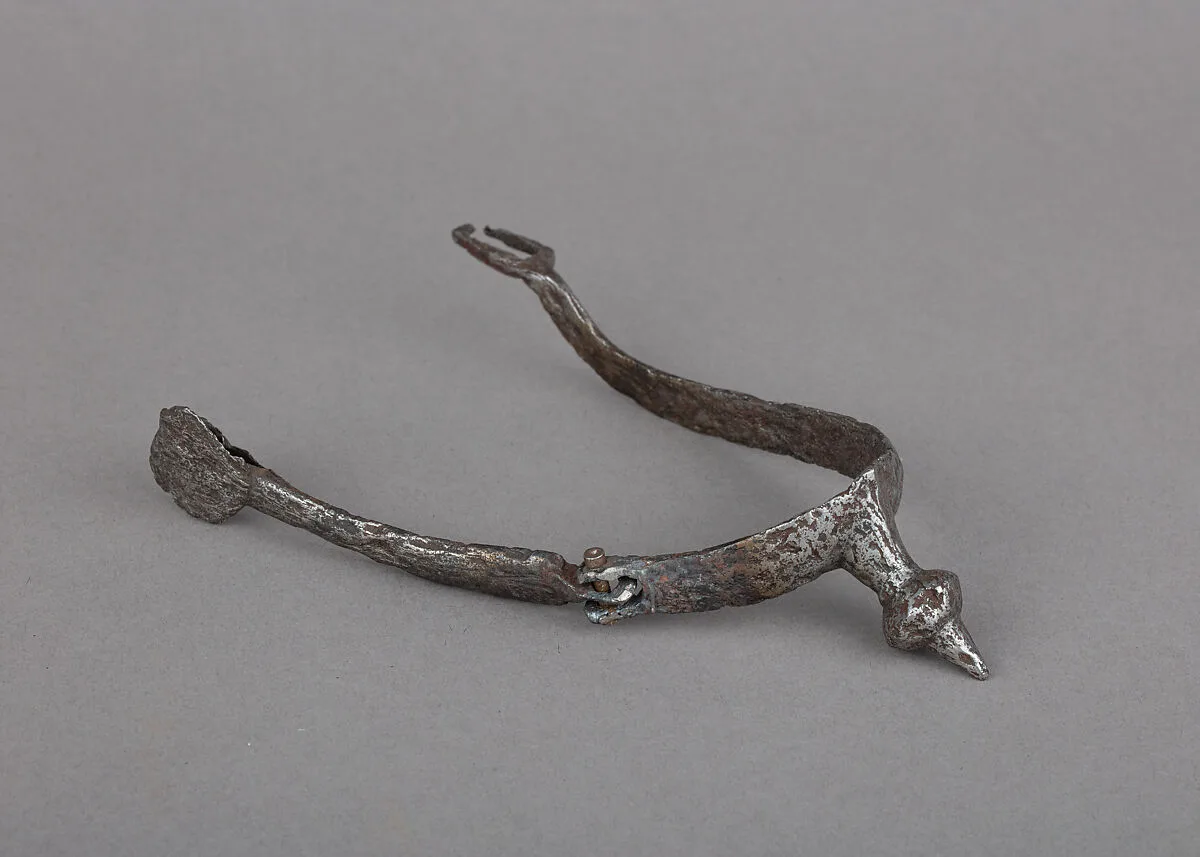
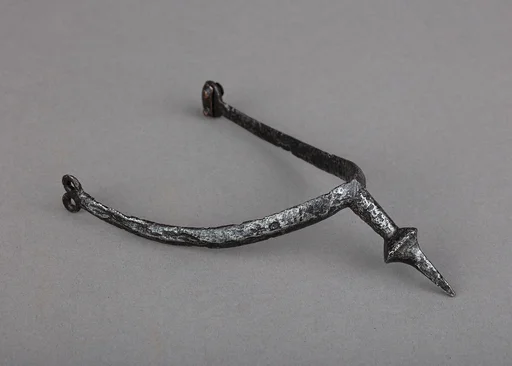
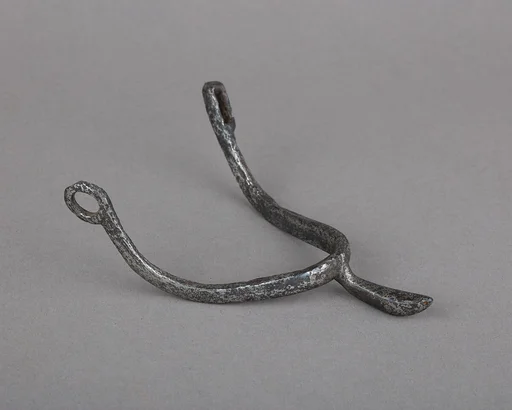
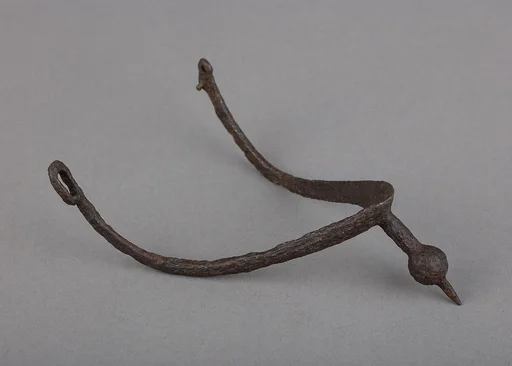
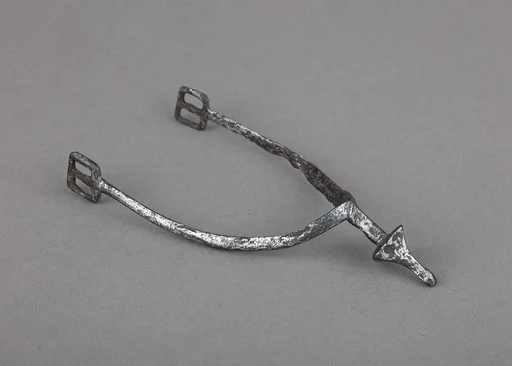
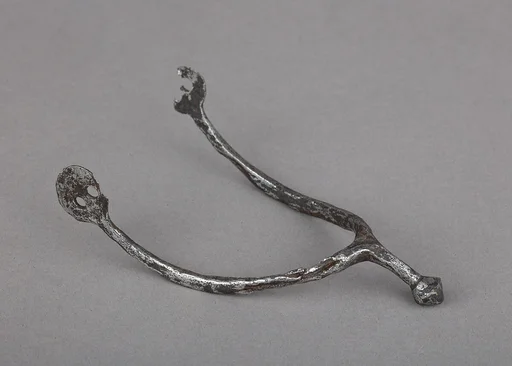
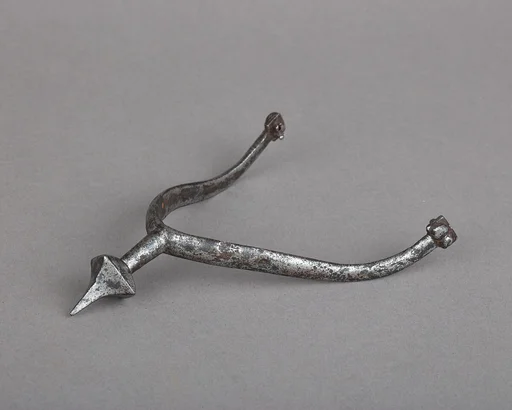
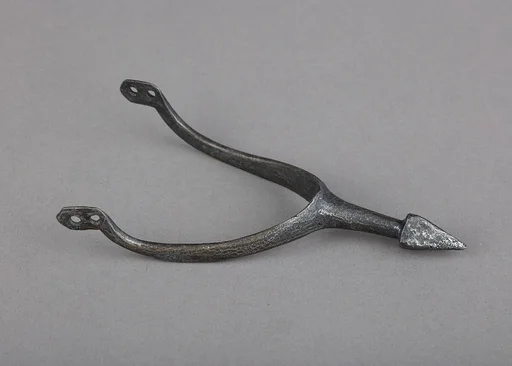
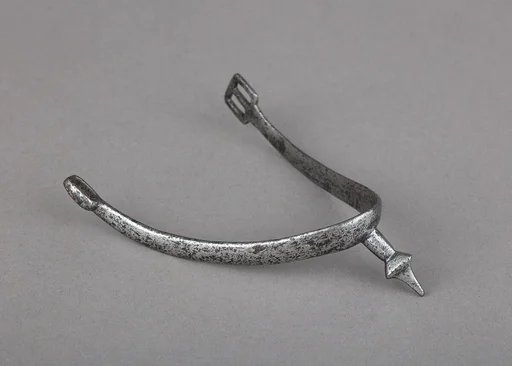
Medieval spurs with articulated branches are very rare, and usually found in Central and Eastern Europe. The articulated branch was meant to adjust the spur better to the foot. The rest of the spur is identical to more regular 13th-century European examples. On this example the joint has been restored in the 20th century, so it is now difficult to know if the branch was originally articulated or not. The prick spur was the first type of spur to be invented, and it consists of a goad or prick, more or less pointed, connected to side arms or a heel plate. Prick spurs were the main type of spurs used in the Middle Ages until the mid-14th century, when they were supplanted by rowel spurs, which appeared in Europe a century before and with which they had cohabitated for a time. As a knight’s status was closely related to his horse, spurs became one of the symbols of chivalry, and one of the tokens given to him during his knighting.
- Artist
- Unknown
- Date
- 13th century
- Medium
- Iron alloy
- Culture
- German or Slavic
- Department
- Arms and Armor
- Credit line
- Gift of Stephen V. Grancsay, 1942