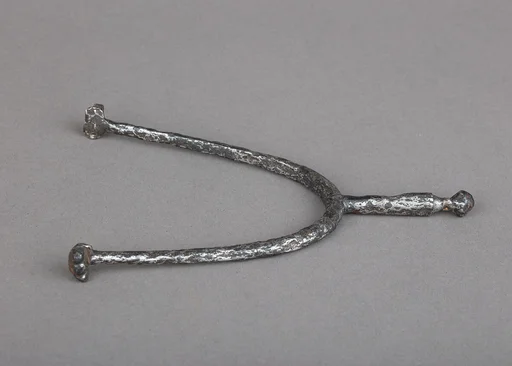
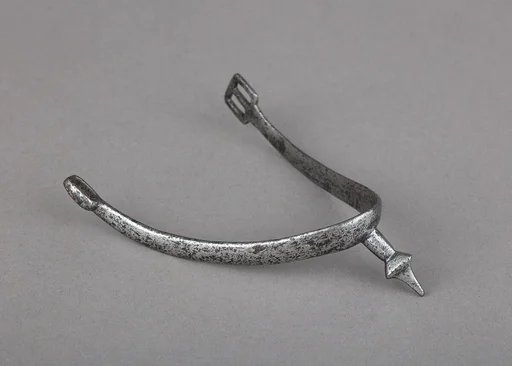
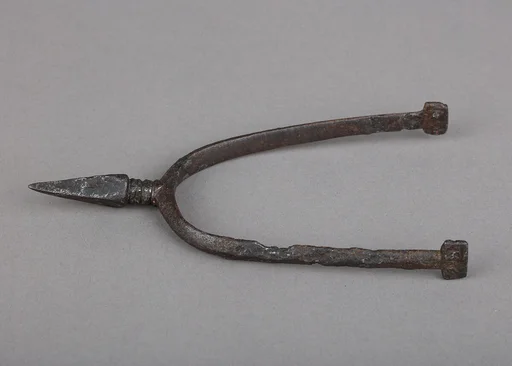
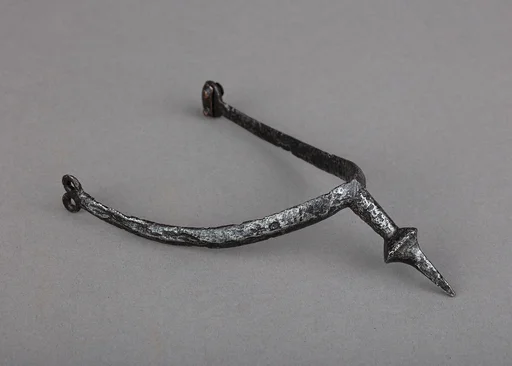
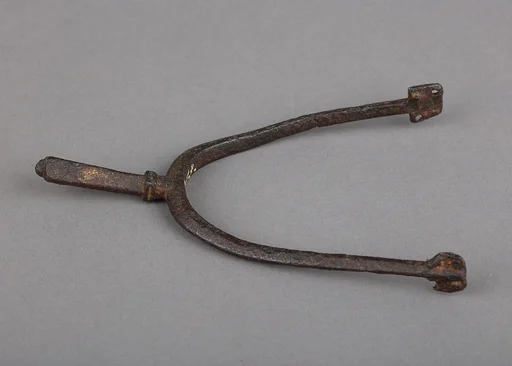
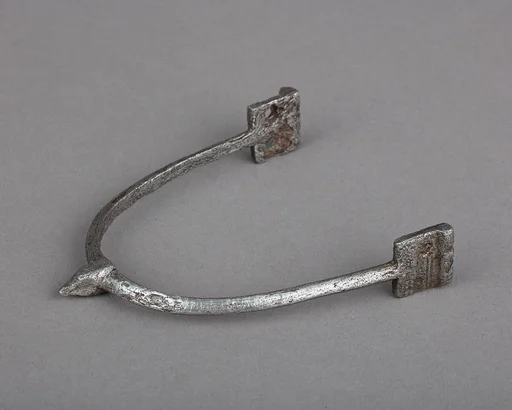
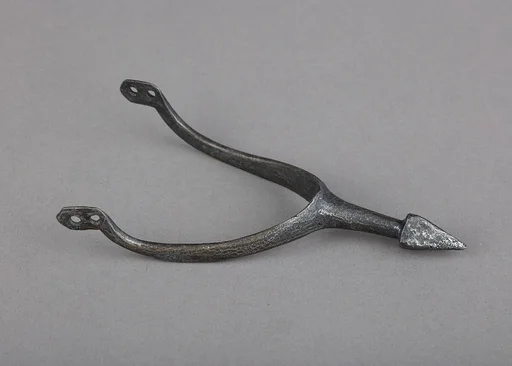
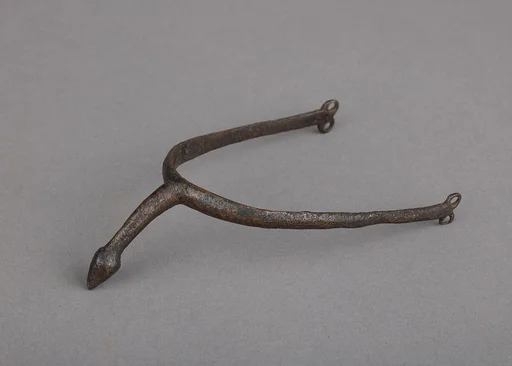
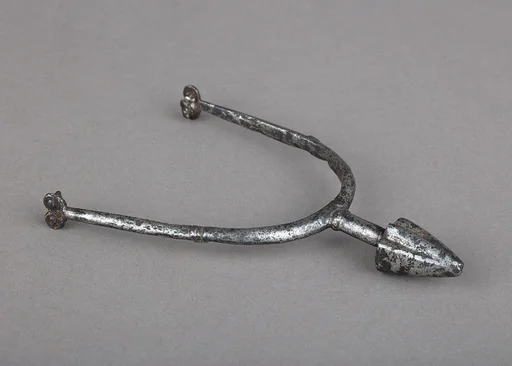
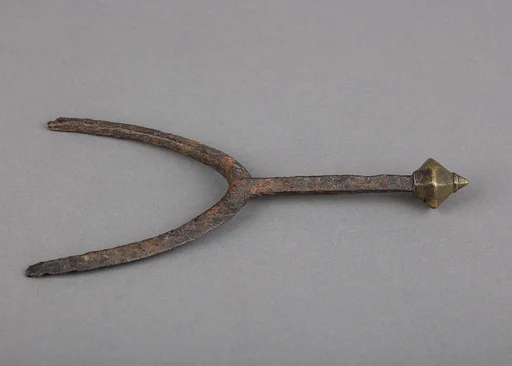
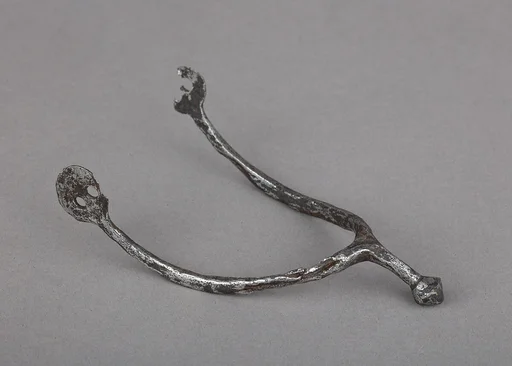
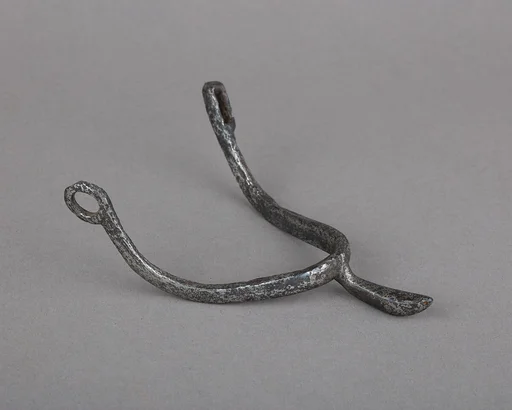
Prick Spur
Unknown
late 10th–early 11th century · Iron alloy · Arms and Armor
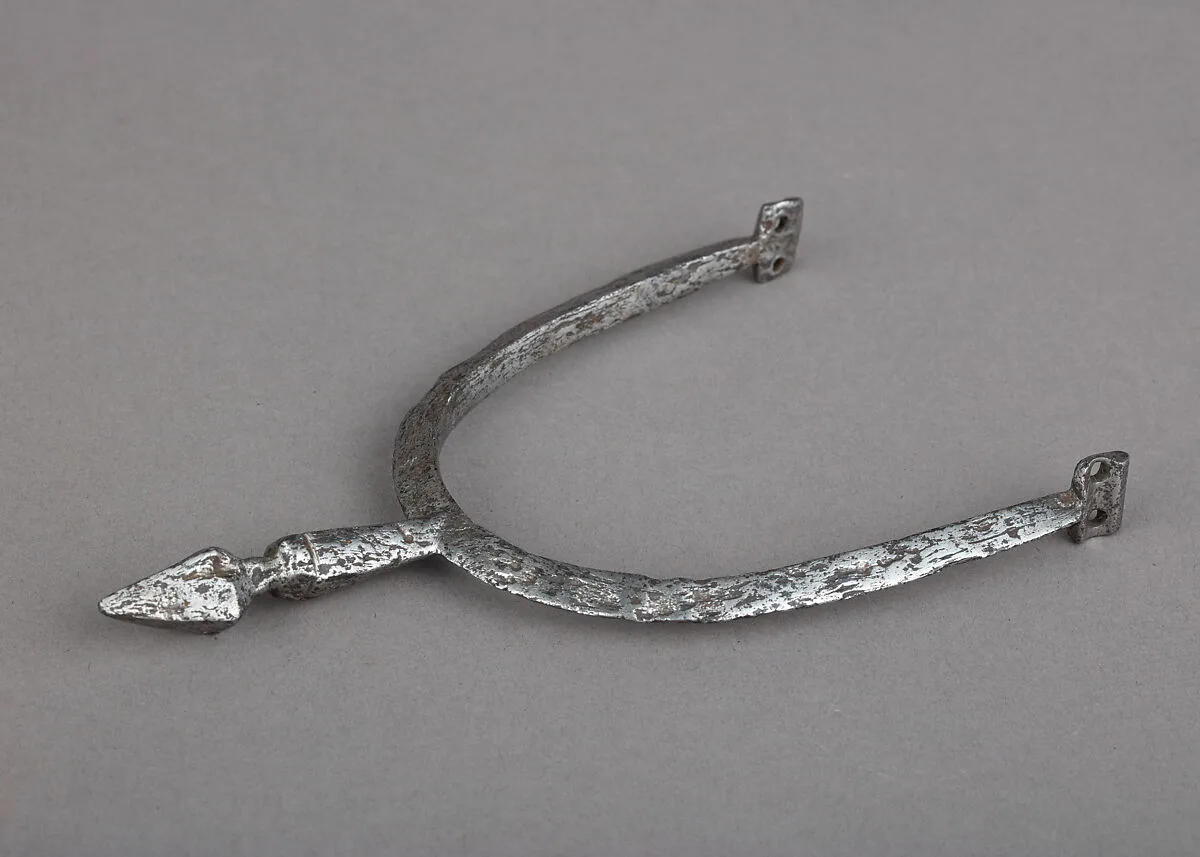
Horses had great importance in Germanic cultures, in both social and religious aspects. Equestrian equipment, like stirrups, spurs and bits, are regularly found in their burials, among the goods warriors wanted to bring with them to the afterlife. The elite would sometimes even be accompanied by sacrificed horses, a meaningful practice at that time, considering the high economic value of horses. The prick spur was the first type of spur to be invented, and it consists of a goad or prick, more or less pointed, connected to side arms or a heel plate. The earliest spurs were probably simple thorns attached at the back of the heel, before they started to be made out of metal in antiquity. Prick spurs were the main type of spurs used in the Middle Ages until the mid-14th century, when they were supplanted by rowel spurs, which appeared in Europe a century before and with which they had cohabitated for a time. As a knight’s status was closely related to his horse, spurs became one of the symbols of chivalry, and one of the tokens given to him during his knighting.
- Artist
- Unknown
- Date
- late 10th–early 11th century
- Medium
- Iron alloy
- Culture
- German
- Department
- Arms and Armor
- Credit line
- Gift of Stephen V. Grancsay, 1942