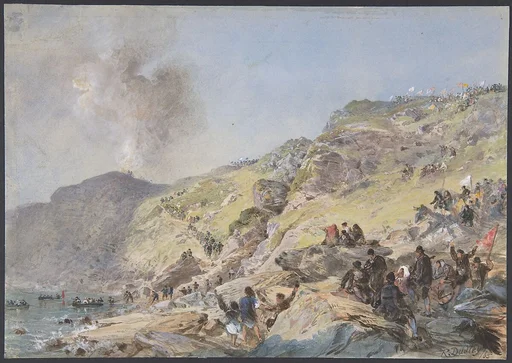
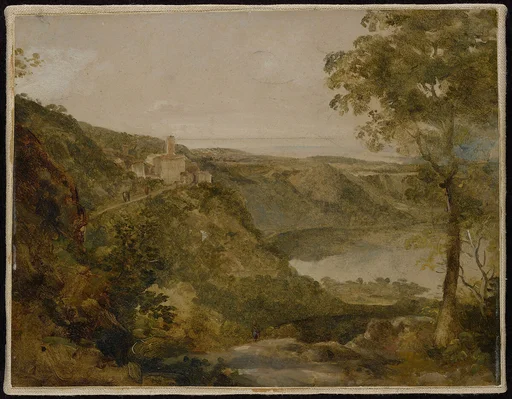
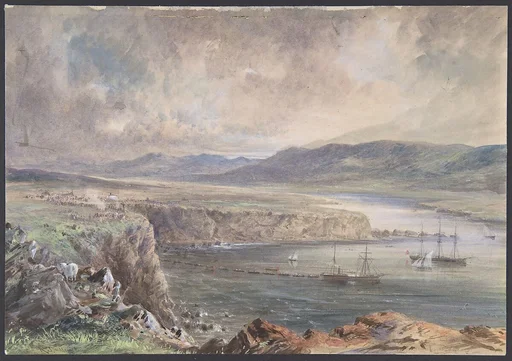
Valentia, Ireland, from the Harbor, Opposite Knight's-town, at the Period of Laying the Cable of 1857
Robert Charles Dudley
1865–66 · Watercolor over graphite with touches of gouache (bodycolor) · Drawings and Prints
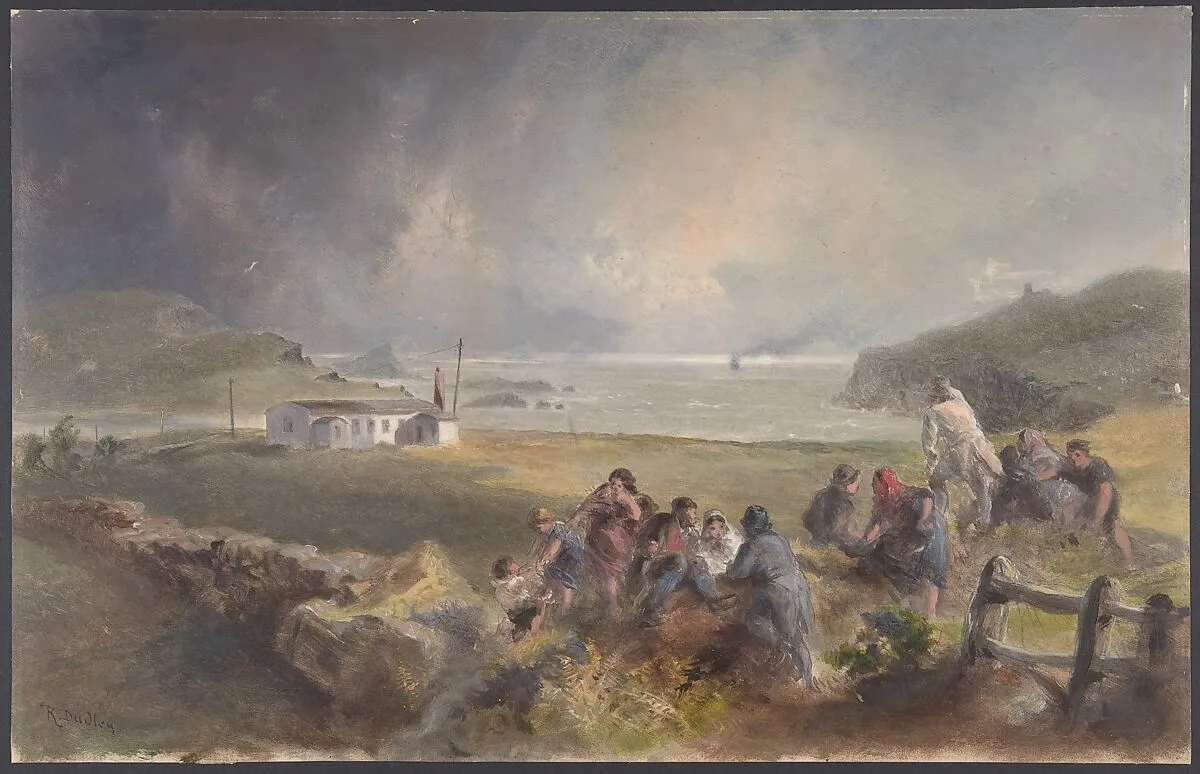
One of the 19th century's great technological achievements was to lay a telegraphic cable beneath the Atlantic, allowing messages to speed back and forth between North America and Europe in minutes, rather than ten or twelve days by steamer. An initially successful attempt in 1858, led by Cyrus W. Field and financed by the Atlantic Telegraph Company, failed after three weeks. Two working cables were finally laid in July and September 1866, the result of repeated efforts by the indefatigable Field, a cadre of engineers, technicians, and sailors, two groups of financial backers, and significant help from the British and United States navies. Dudley documented the long, arduous process in a series of watercolors and oils, here showing Foilhommerum Bay, Ireland, chosen in 1857 as the site for the cable to enter the ocean from the east. In 1892 Field donated art works by Dudley, commemorative medals, memorabilia, and specimens of cable to the Museum.
- Artist
- Robert Charles Dudley
- Date
- 1865–66
- Medium
- Watercolor over graphite with touches of gouache (bodycolor)
- Department
- Drawings and Prints
- Credit line
- Gift of Cyrus W. Field, 1892