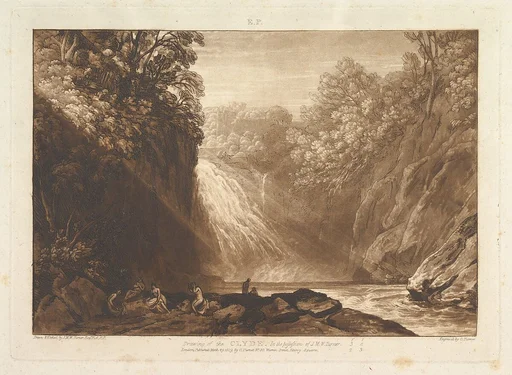
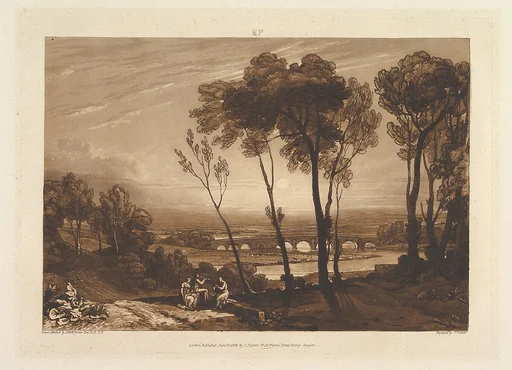
Drawing of the Clyde (Liber Studiorum, part IV, plate 18)
Joseph Mallord William Turner|Charles Turner
March 29, 1809 · Etching and mezzotint; third state of three · Drawings and Prints
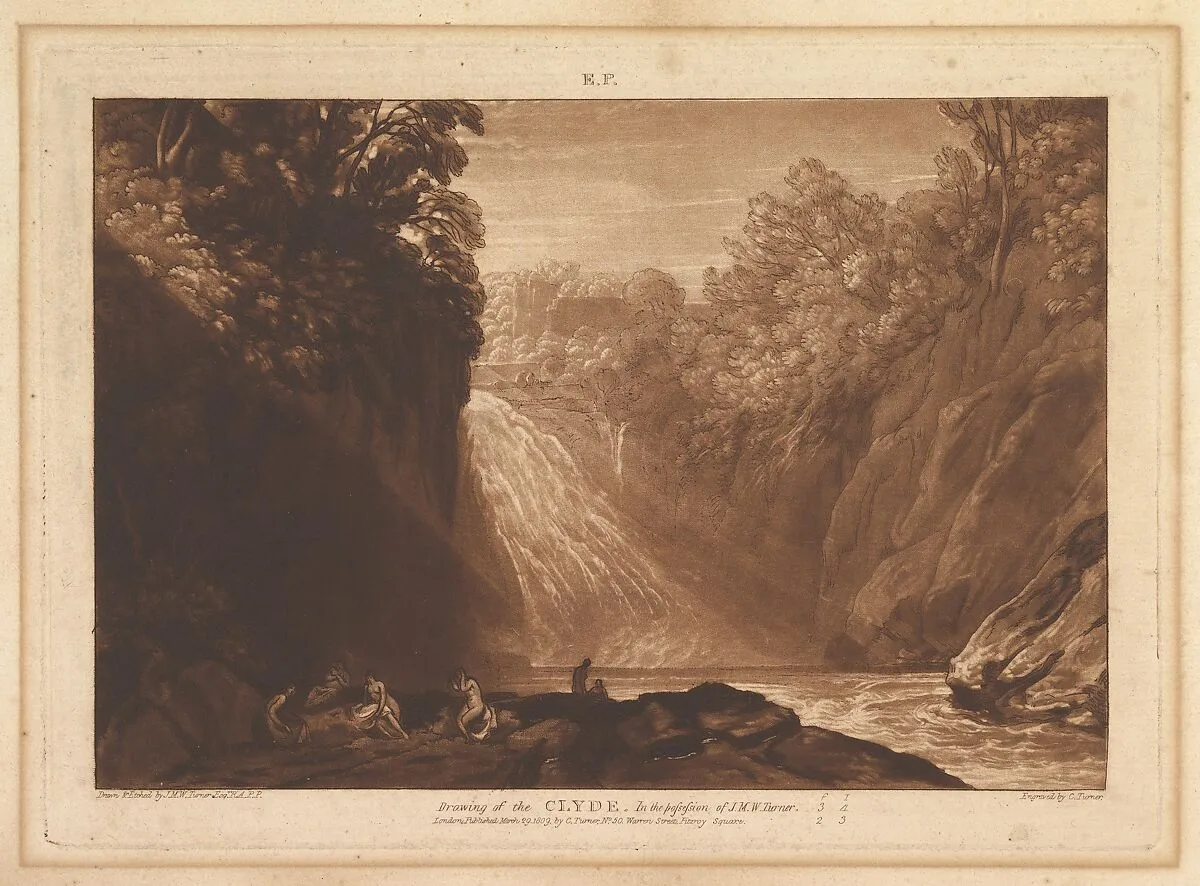
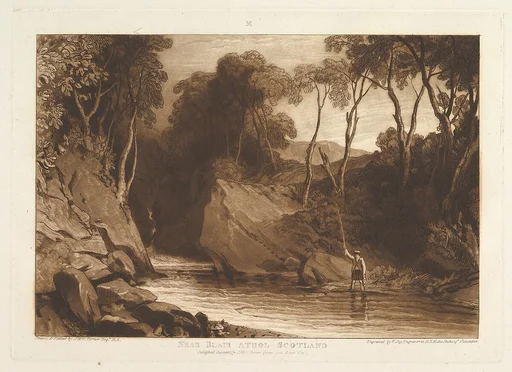
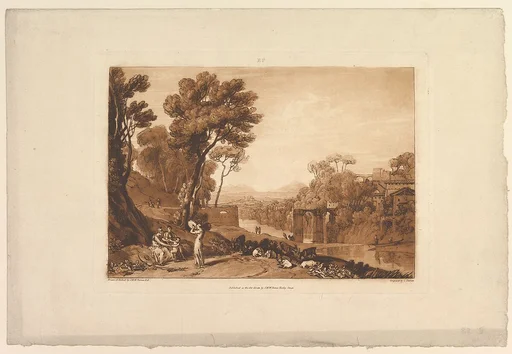
Turner distilled his ideas about landscape In "Liber Studiorum" (Latin for Book of Studies), a series of seventy prints plus a frontispiece published between 1807 and 1819. To establish the compositions, he made brown watercolor drawings, then etched outlines onto copper plates. Professional engravers usually developed the tone under Turner's direction, and Charles Turner here added mezzotint to describe an evocative rendering of Cora Linn, the highest of the falls of the River Clyde in Lanarkshire, Scotland. By placing nymphs on the river bank, the artist emphasized nature's generative power and elevated the image beyond simple topography. Slanted rays transform the mist into a backdrop that suits the mytical bathers. The letters "EP" in the upper margin likely stand for Elevated Pastoral, and were applied by Turner to landscapes within the set that echo the Arcadian sensibility of Claude.
- Artist
- Joseph Mallord William Turner|Charles Turner
- Date
- March 29, 1809
- Medium
- Etching and mezzotint; third state of three
- Department
- Drawings and Prints
- Credit line
- Gift of Mary W. Tweed, 1929