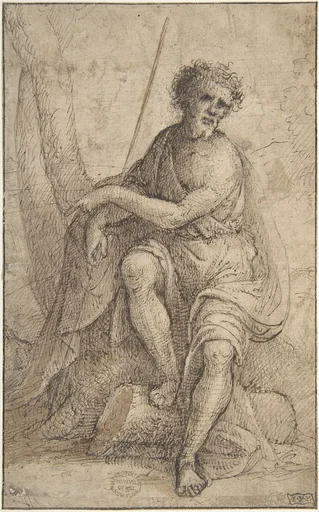
The poet, standing crowned with laurel, leaning on a stone
Jusepe de Ribera (called Lo Spagnoletto)
1620–21 · Etching · Drawings and Prints
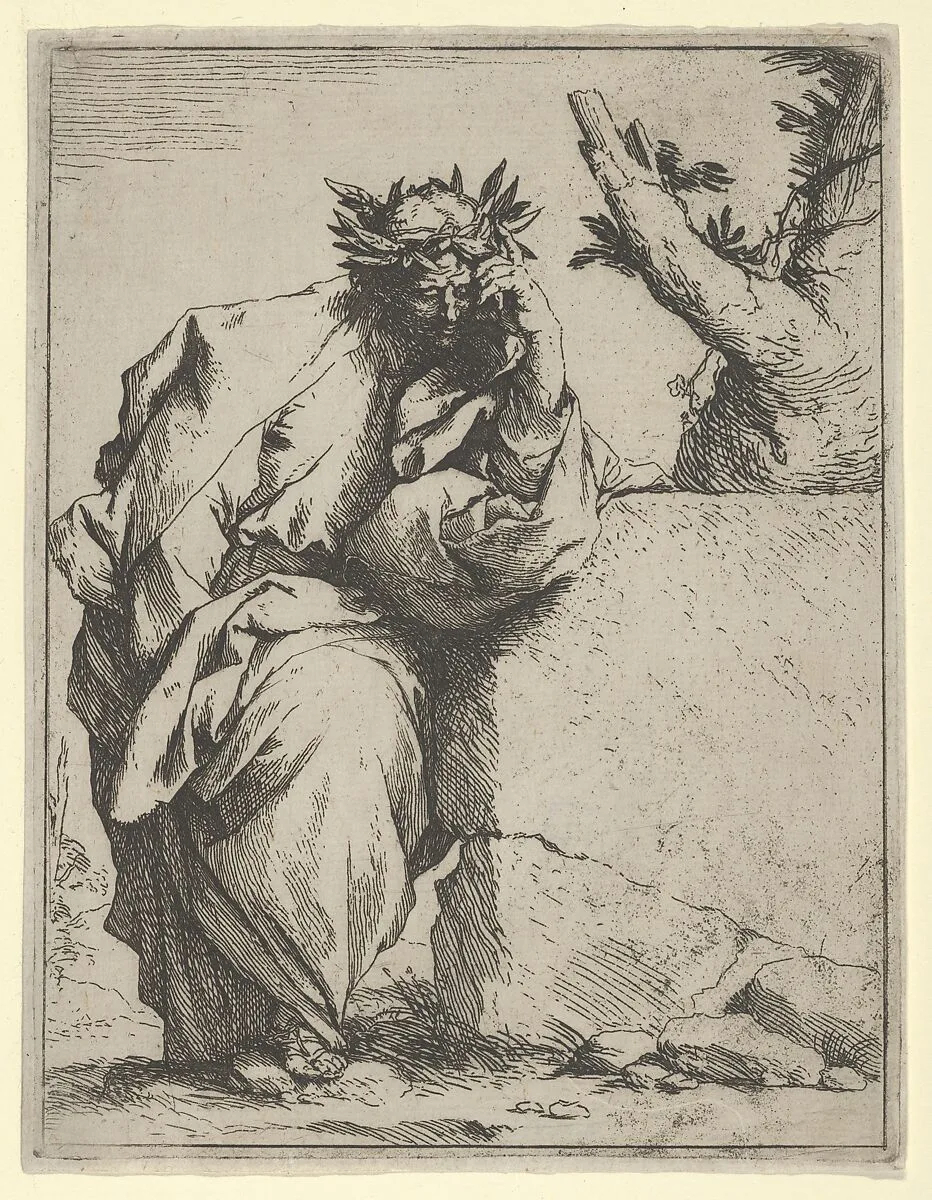
Dressed in voluminous robes, crowned with laurel, and leaning on a stone with head in hand, The Poet is one of Ribera's most striking images made early in the artist's career. The iconography, a synthesis of the attributes of Melancholy and Poetry, has been explored in detail by scholars, who have found literary parallels ranging from verses by Walther von der Vogelweide (1170?–1230) to works by Petrarch and Lorenzo de' Medici. Another suggestion that the poet is Virgil seems plausible, especially since his tomb was traditionally thought to be in Naples. Generally identified with a columbarium, or dovecote mausoleum, above the 'Grotto' or tunnel of Posilipo, the purported burial place of the famous poet was a tourist attraction beginning at least in the sixteenth century. A well-known legend had it that on top of the tomb grew a bay tree that continued to blossom over the centuries while its roots forced their way through the stone, causing cracks to appear.
- Artist
- Jusepe de Ribera (called Lo Spagnoletto)
- Date
- 1620–21
- Medium
- Etching
- Department
- Drawings and Prints
- Credit line
- Harris Brisbane Dick Fund, 1930