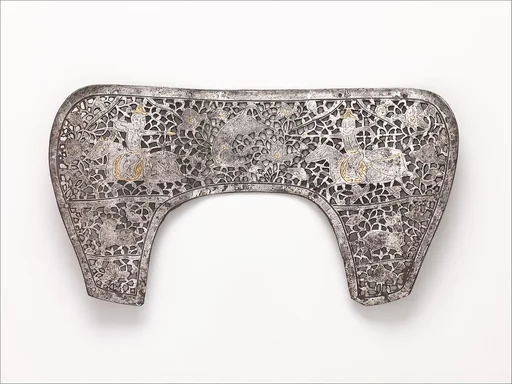
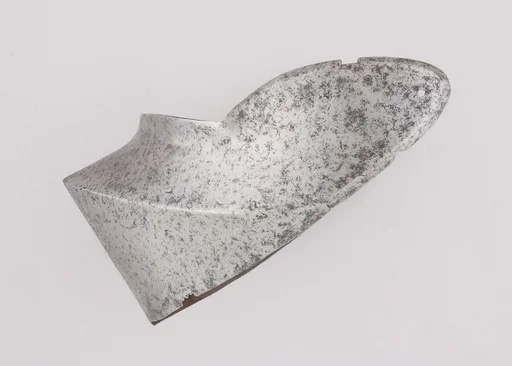
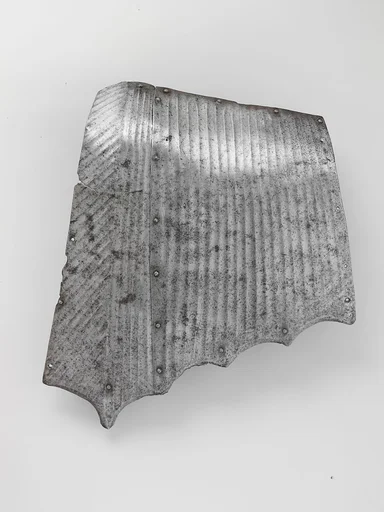
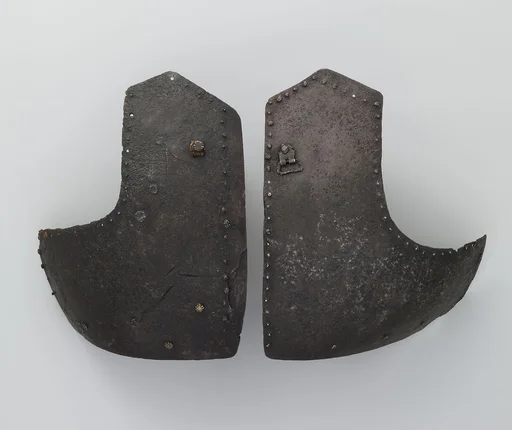
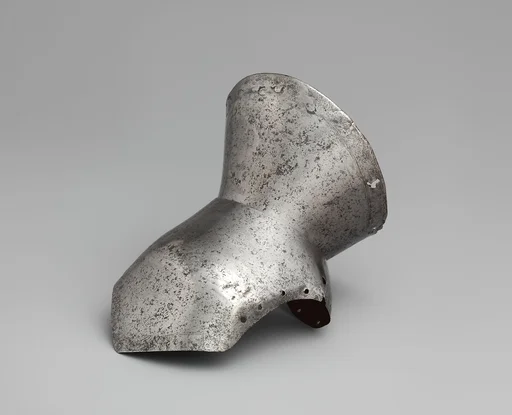
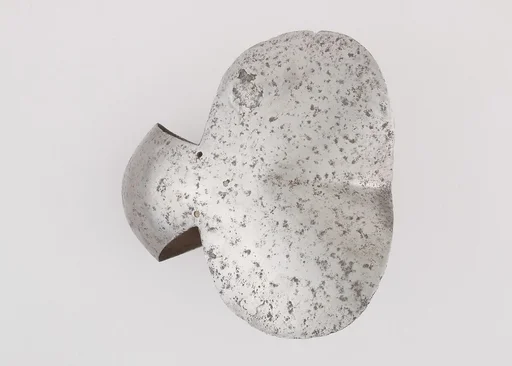
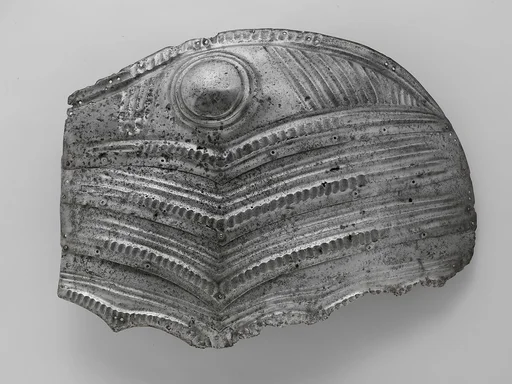
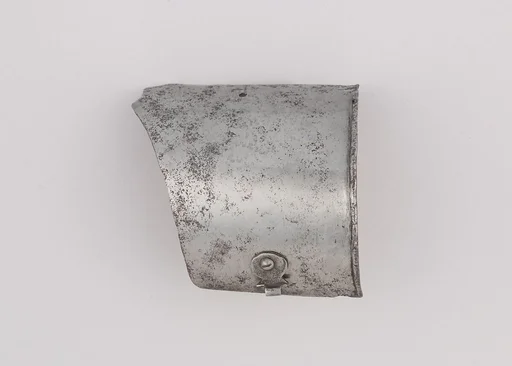
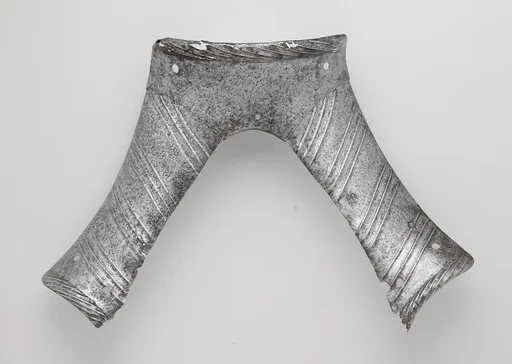
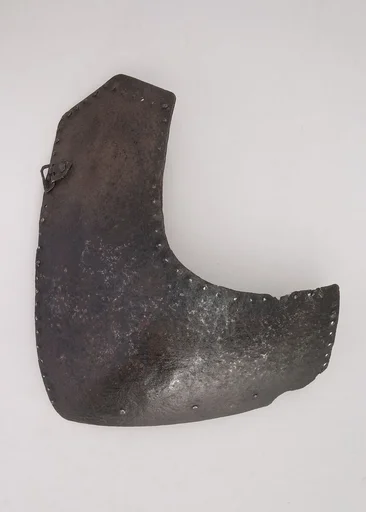
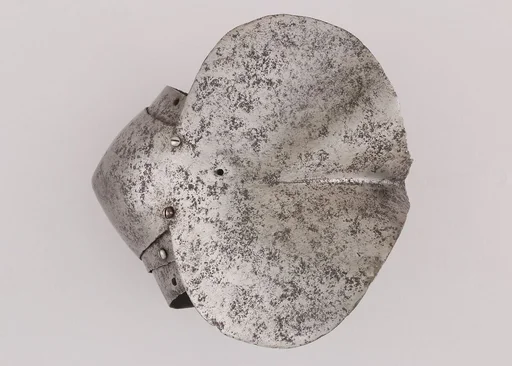
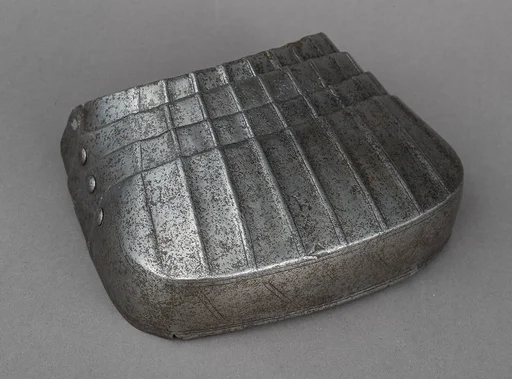
Pommel Plates
Unknown
ca. 1545 · Steel · Arms and Armor
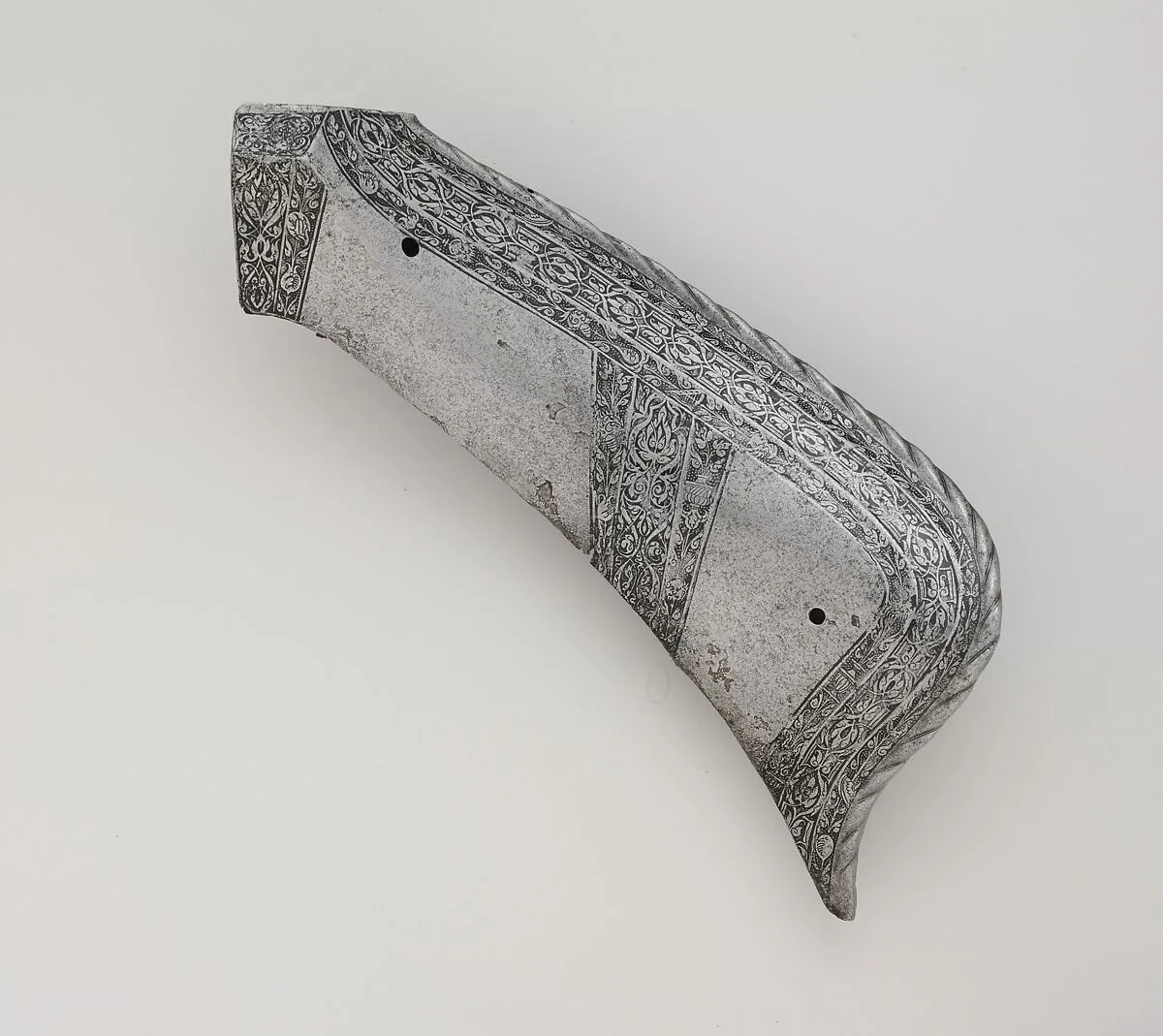
The distinctive triple bands of deoration on these saddle steels are extremely similar to the etched and gilt ornament found on an extensive armor garniture that belonged to Philip II of Spain (1527–1598), which is dated 1544 and part of which he wore at the Battle of Mühlberg in 1547. The garniture includes complete field armors for light and heavy cavalry and tournament armors for foot combat and the tilt (Real Armería, Madrid, A189–A194, A198–A212; and Hofjagd- und Rüstkammer, Kunsthistorisches Museum, Vienna, A547). It was made by the noted Augsburg armorer Desiderius Helmschmid (1513–1579) and etched by Ulrich Holzmann (recorded 1534–62), also of Augsburg, whose initials, VH, appear on the backplate of the Vienna armor. The Metropolitan Museum possesses a small group of elements with this decorative pattern or a slight variation of it, including the present saddle steels, a shaffron (29.158.607), a pair of gauntlets (14.25.901a, b), and three collar plates from a helmet (20.150.2). While the gauntlets and collar plates apparently belong to Philip's garniture, the saddle steels and shaffron, which lack the gilding of the side bands that distinguishes the decoration of Philip's armor, appear either to come from another commission or commissions carried out by the same craftsmen or to be closely modeled after their work. The etching is characterized by groups of three broad, parallel bands, the center one filled with an interlacting, leafy arabesque pattern on a plain, blackened ground, and the sides with subtle foliage on a blackened and dotted ground. The design represents a high point in non-figural ornament on South German armor from the first half of the sixteenth century.
- Artist
- Unknown
- Date
- ca. 1545
- Medium
- Steel
- Culture
- German, Augsburg
- Department
- Arms and Armor
- Credit line
- Bashford Dean Memorial Collection, Funds from various donors, 1929