The Malermi Bible, vol. II
Lucantonio Giunta|Giovanni Ragazzo|Niccolò Malèrmi|Pico Master|Benedetto Bordone|Rimini Ovid Master
October 15, 1490 · Printed book with woodcut illustrations, hand-colored · Drawings and Prints
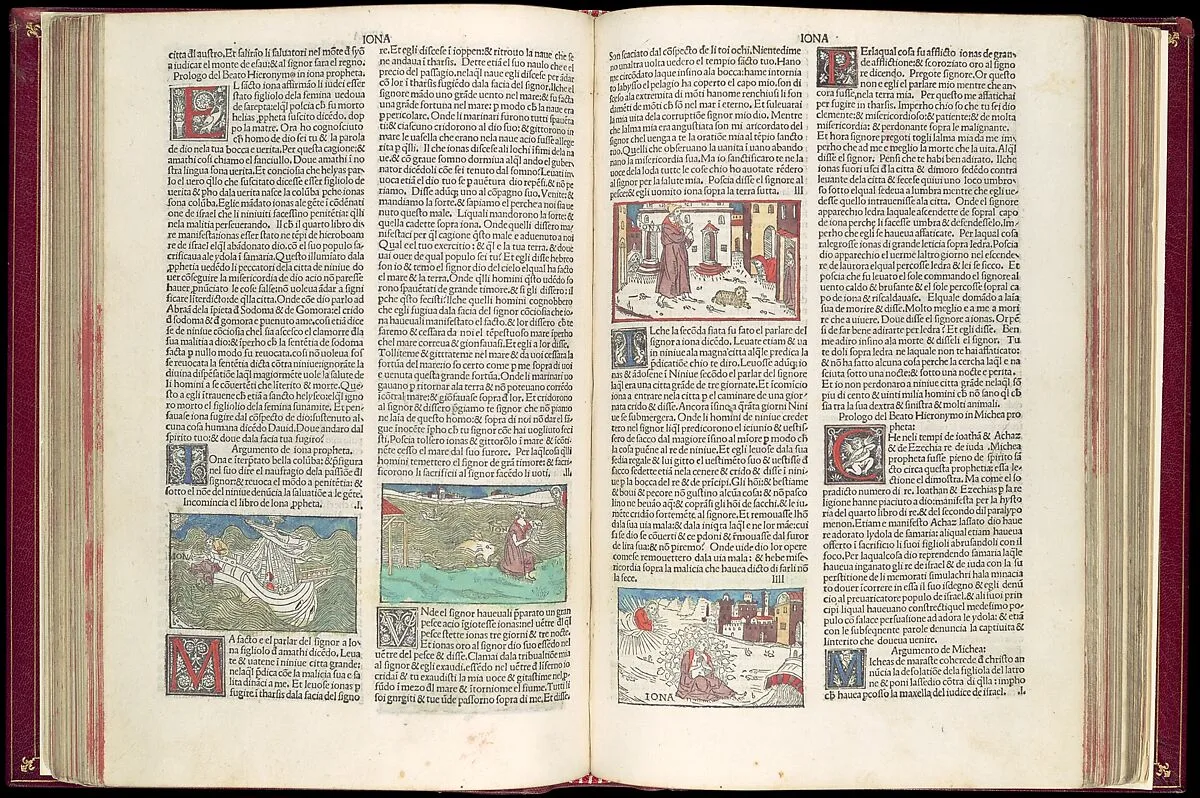
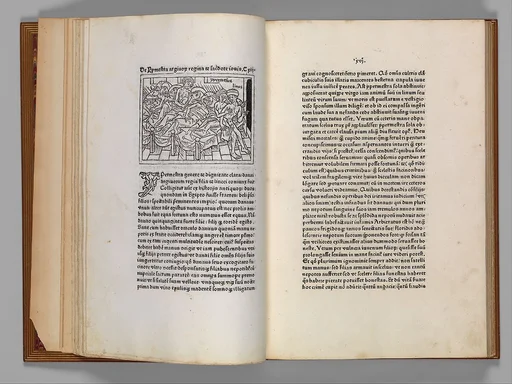
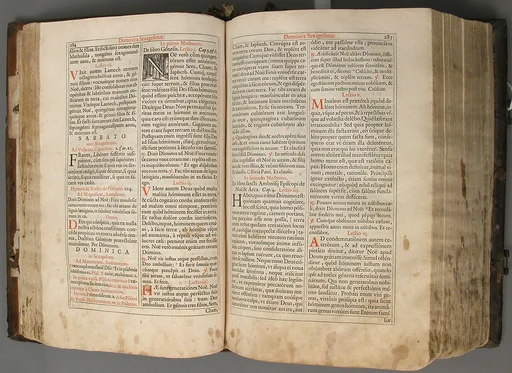
This 1490 edition of Niccolò Malermi's Italian translation of the Bible is one of the earliest, finest, and most profusely illustrated examples of the 'golden age' of Venetian book illustration. Characteristic of Venetian publishing is the richly decorated page that opens the Book of Proverbs, reminiscent of the opening page of an illuminated manuscript. Here, depictions of King Solomon writing (presumably the proverbs) and receiving an audience from his comfortable throne are surrounded by an elaborate architectural framework, adorned with classicizing motifs. The same woodcut frame was used for the opening to the first book of the Biblia Italica, where it enclosed a series of scenes of the Creation. Other pages of the book feature two columns of text, enlivened on nearly every page with small vignette or column cuts, another novel feature of Venetian book illustration in this period. The woodcut frames and many of the narrative scenes have been attributed to an artist known as the Master of the Pico della Mirandola Pliny, after his most famous illuminated manuscript. Characteristic of many miniaturists active in Venice at the end of the fifteenth century, the Pico Master illuminated printed books as well as manuscripts and, around 1490, seems to have turned to the design of woodcut illustrations as well. A second miniaturist, known as the Master of the Rimini Ovid, may be responsible for some of the other narrative vignettes. As was often the case with early illustrated books, the woodcuts in the Museum's copy of the Malermi Bible have been handcolored, in some places sparingly and in others, such as this frontispiece, lavishly. This Bible was not intended for an elite audience but was rather designed for the wealthy middle class. The vernacular text, numerous narrative illustrations, and even the addition of color would have made it accessible and appealing to all members of the family.
- Artist
- Lucantonio Giunta|Giovanni Ragazzo|Niccolò Malèrmi|Pico Master|Benedetto Bordone|Rimini Ovid Master
- Date
- October 15, 1490
- Medium
- Printed book with woodcut illustrations, hand-colored
- Department
- Drawings and Prints
- Credit line
- Harris Brisbane Dick Fund, 1933