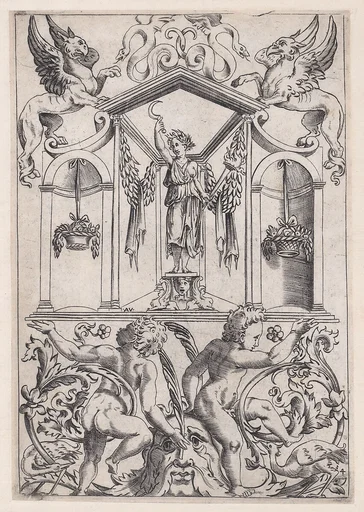
Ornamental Panel
Agostino Veneziano (Agostino dei Musi)|Raphael (Raffaello Sanzio or Santi)|Giovanni da Udine (Giovanni dei Ricamatori)
ca. 1514–36 · Engraving · Drawings and Prints
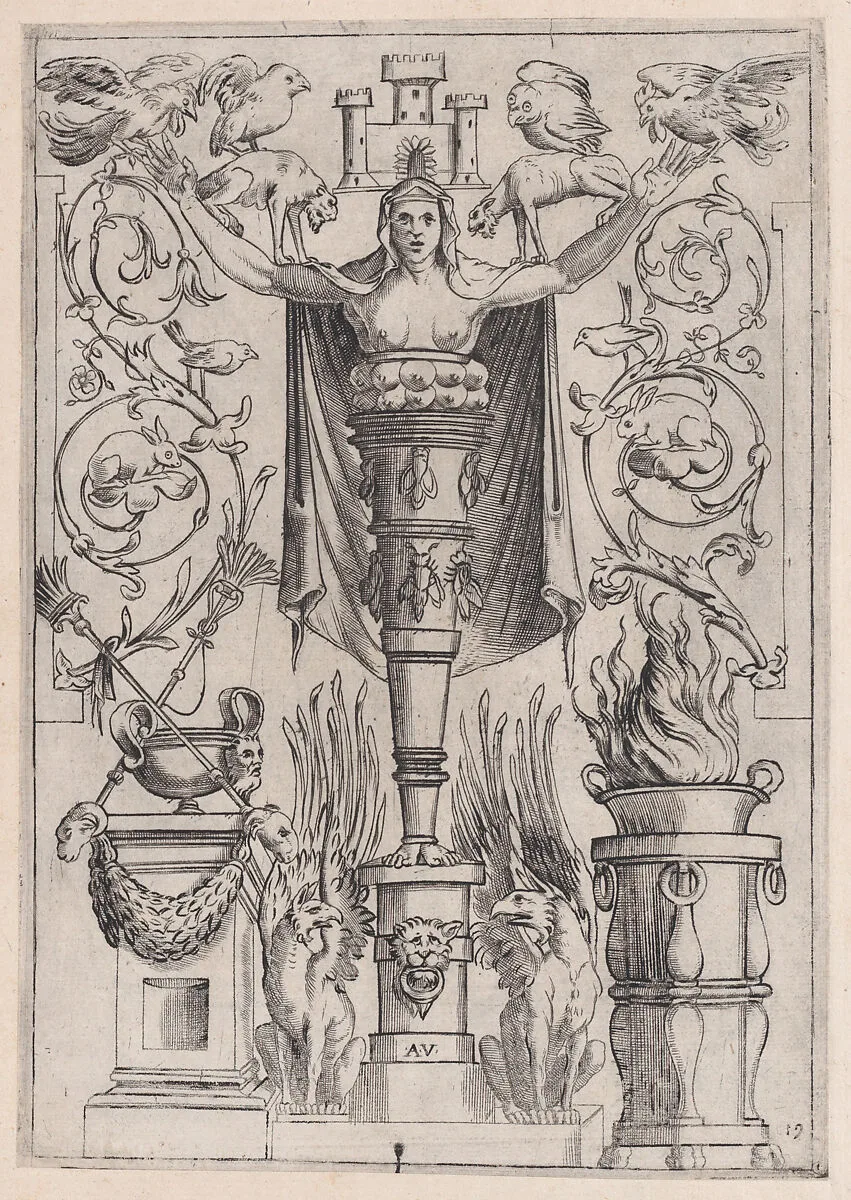
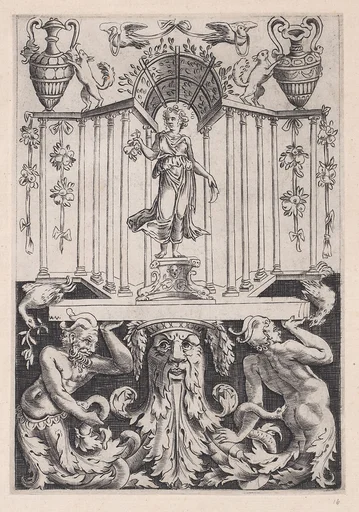
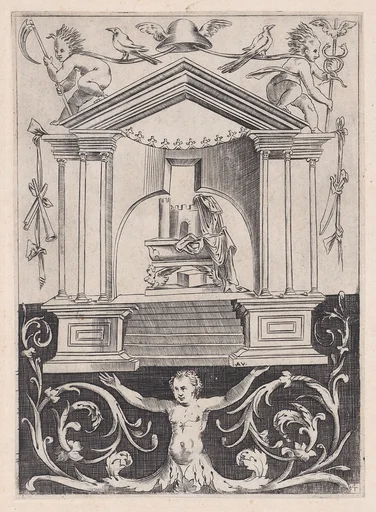
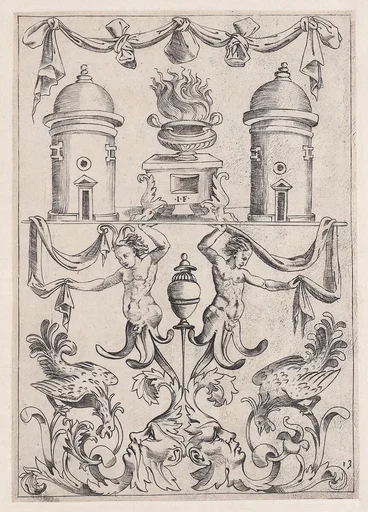
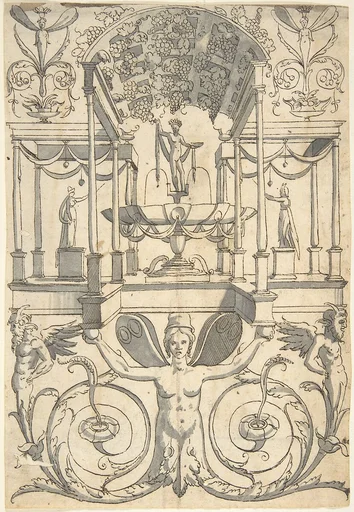
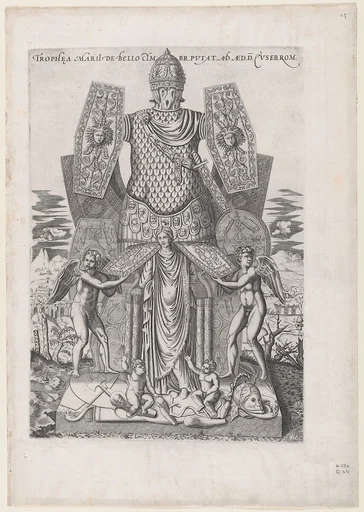
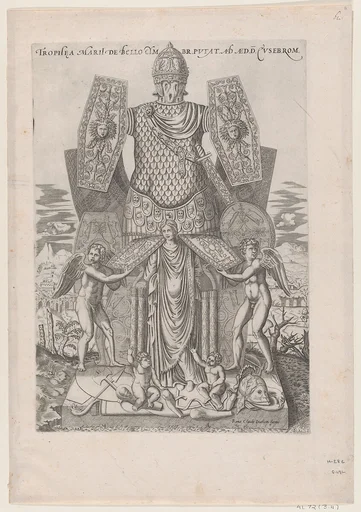
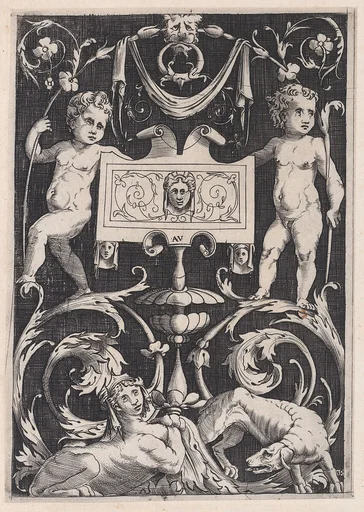
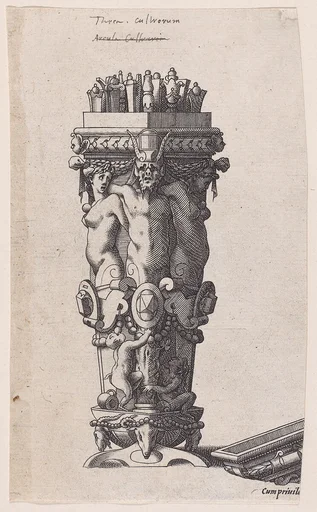
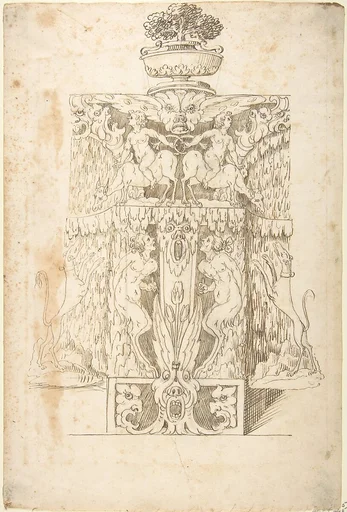
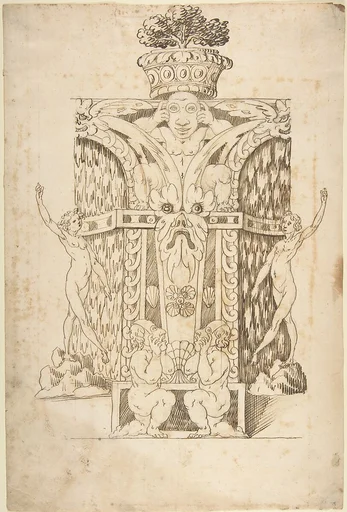
In the 1480s, artists discovered an ancient style of wall painting at Emperor Nero’s Domus Aurea, which had been buried underneath Rome’s Oppian Hill. They were called grotesques, or grotteschi, due to their subterranean, grottolike location. Raphael and Giovanni da Udine famously adapted the fantastical figures, bands of foliage, and stalklike candelabra in their fresco decorations for the Vatican Palace, combining this imagery with motifs derived from ancient sculpture and figures from classical myths. Veneziano, a printmaker working in the circle of Marcantonio Raimondi in Rome, engraved prints after these works. Due to prolific, business-minded printmakers like Veneziano, designs based on the Vatican grotesques rapidly spread throughout Europe and served as sources of inspiration for other artists.
- Artist
- Agostino Veneziano (Agostino dei Musi)|Raphael (Raffaello Sanzio or Santi)|Giovanni da Udine (Giovanni dei Ricamatori)
- Date
- ca. 1514–36
- Medium
- Engraving
- Department
- Drawings and Prints
- Credit line
- Harris Brisbane Dick Fund, 1924