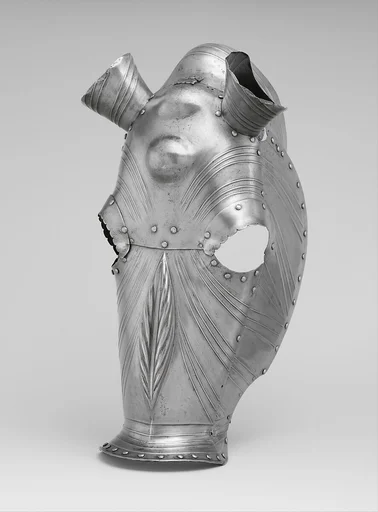
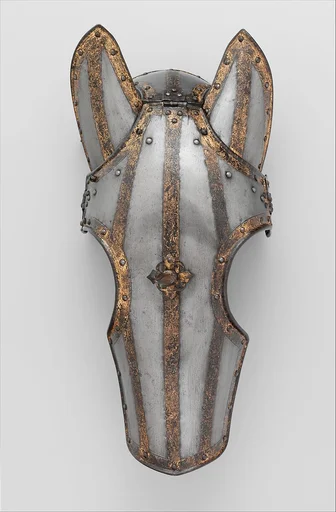
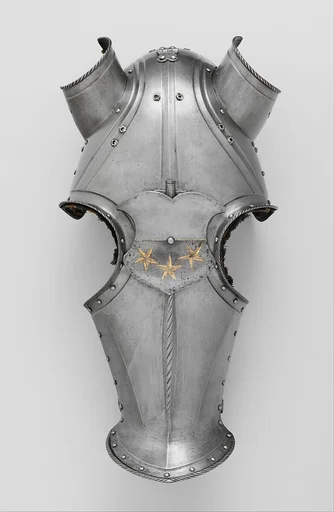
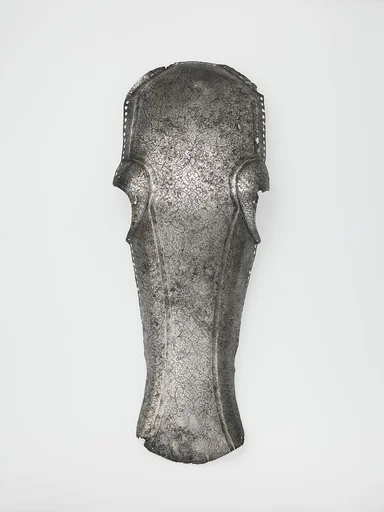
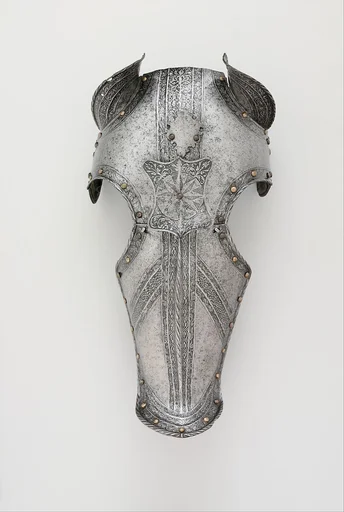
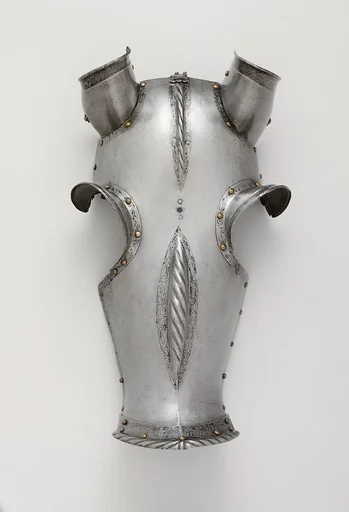
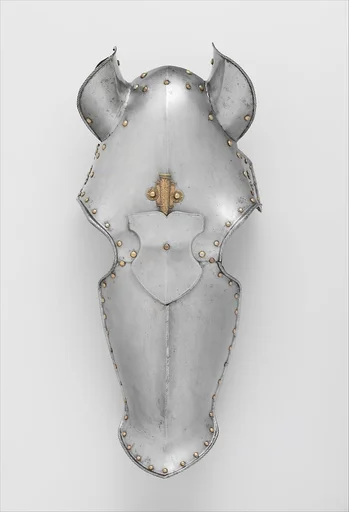
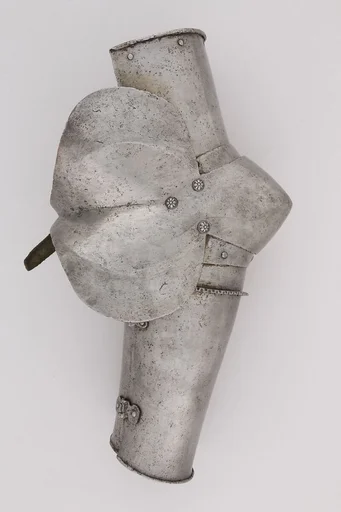
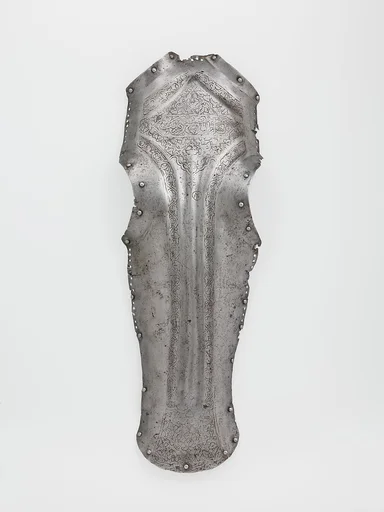
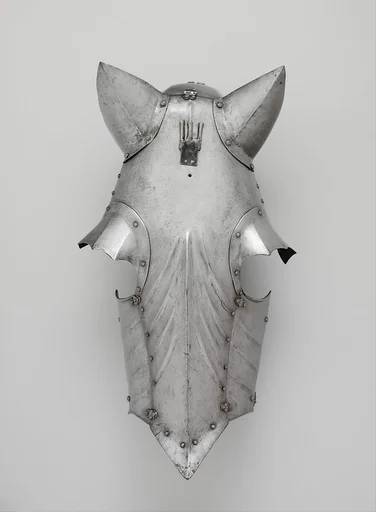
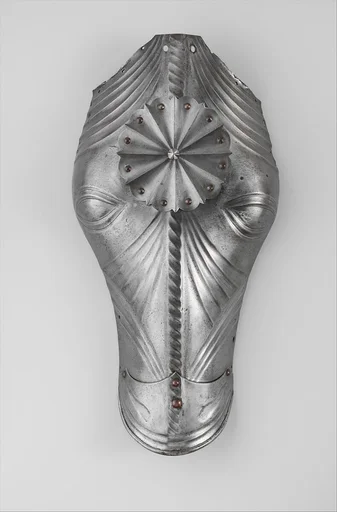
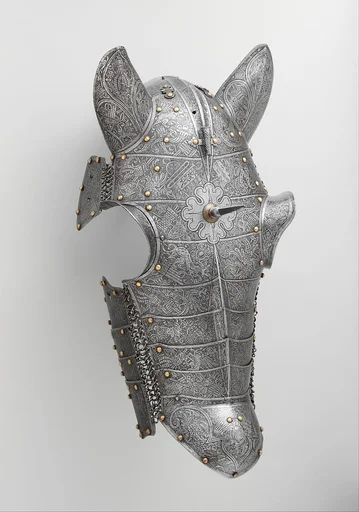
Composed Armor for Man and Horse
Missaglia workshop|Ambrogio de Osma
ca. 1450–1525 and later · Steel, brass, leather, textile (velvet, wool), iron · Arms and Armor
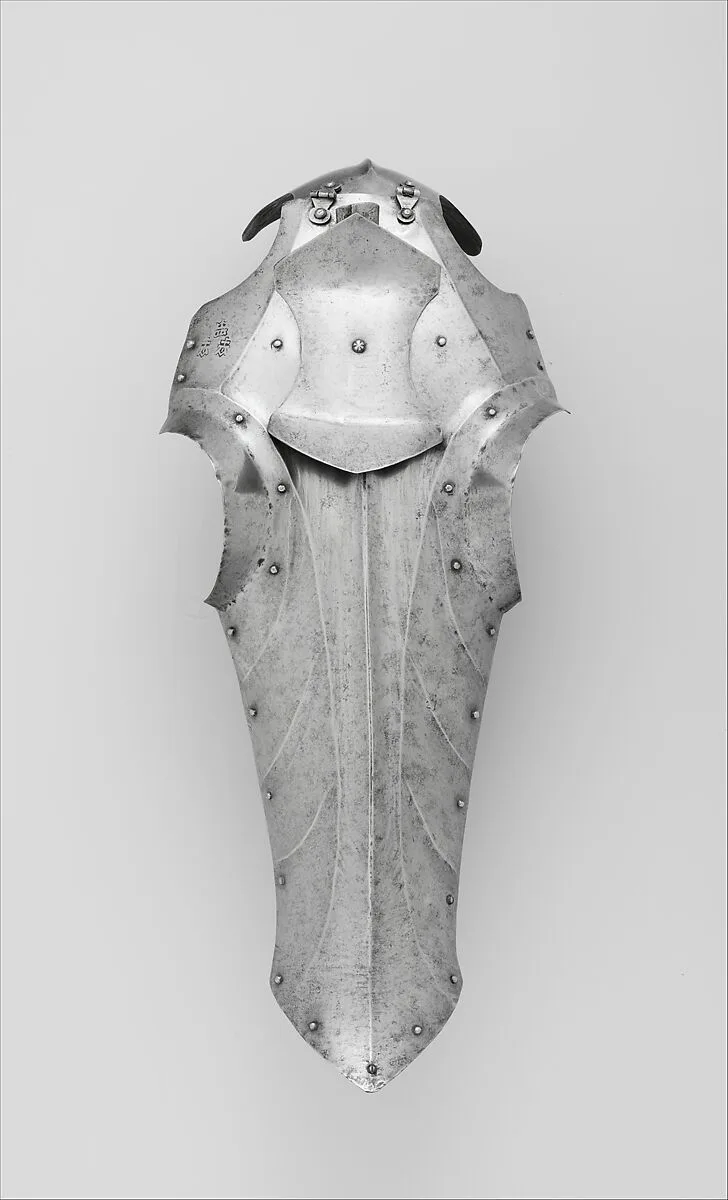
By the end of the thirteenth century, the armor-producing cities of northern Italy had gained an international reputation and were exporting arms and armor throughout Europe. Milan was preeminent through the sixteenth century, followed by Brescia. The greatest Milanese armorers were members of the Missaglia family, a dynasty of merchant-armorers active from the late fourteenth to the early sixteenth century. During the fifteenth century, the Italians perfected complete armor of plate. Probably developed in Milan around 1400, it covered the wearer from head to foot. The advanced technical and stylistic features of Milanese armor influenced local craftsmen wherever it was exported. Thus, in the fifteenth century, armors worn across western Europe from Spain to Flanders displayed Italian characteristics. Thriving local centers of armor-making were found at Burgos and Calatayud in Spain; Paris, Tours, and Lyons in France; and Arbois in Burgundy.
- Artist
- Missaglia workshop|Ambrogio de Osma
- Date
- ca. 1450–1525 and later
- Medium
- Steel, brass, leather, textile (velvet, wool), iron
- Culture
- European, Italy, Spain, Flanders and England
- Department
- Arms and Armor
- Credit line
- Bashford Dean Memorial Collection, Bequest of Bashford Dean, 1928