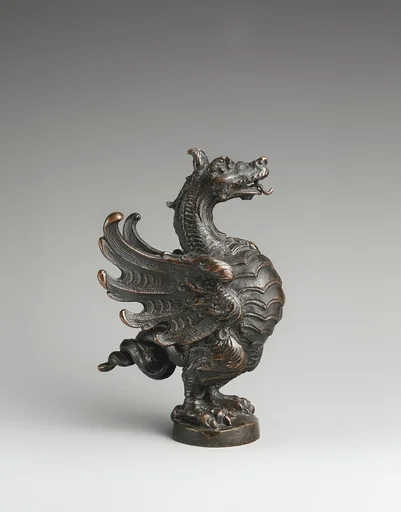
Helmet Crest for the Burgonet of Sforza Pallavicino (1519–1585)
Unknown
ca. 1560 · Iron, gold · Arms and Armor
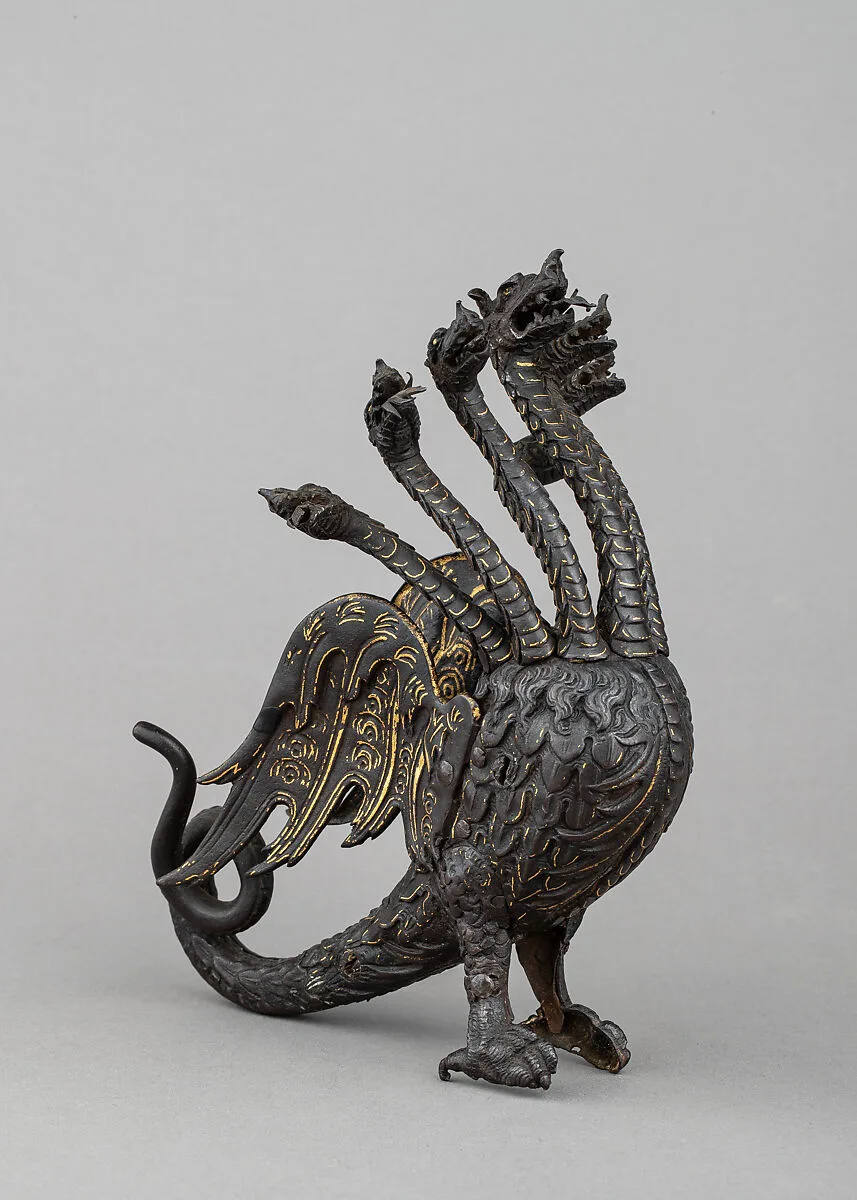
The helmet crest as a badge of identity became a necessity in the thirteenth century, when European knights began to wear helmets that covered their faces. By the sixteenth century the use of crests tended to be limited to tournaments and funerary decorations in churches. For practical reasons most crests were fashioned from lightweight materials, such as gessoed and painted leather or wood, whereas this rare example is of gold-damascened iron. The seven-headed Hydra was the personal device of Sforza Pallavicino (ca. 1510–1585), a soldier who served in the imperial, papal, and Venetian armies. This crest, which is 7 5/8 inches in height, was intended to surmount a richly embossed and damascened helmet (now in the State Hermitage Museum, Saint Petersburg) that bears the same Hydra emblem. (The rear portion of the tail appears to be an inaccurate restoration.)
- Artist
- Unknown
- Date
- ca. 1560
- Medium
- Iron, gold
- Culture
- Italian, Milan
- Department
- Arms and Armor
- Credit line
- Gift of Mrs. George Henry Warren, in memory of her husband, 1972