Roncone
Unknown
ca. 1500 · Steel, wood (ash) · Arms and Armor
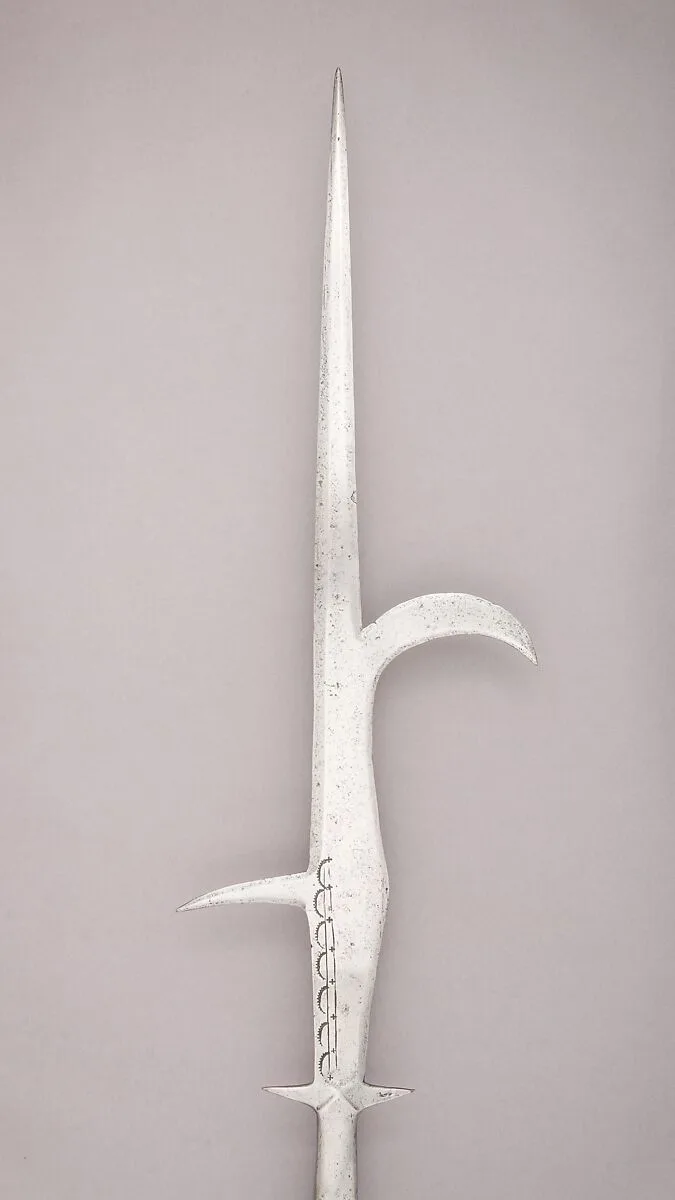
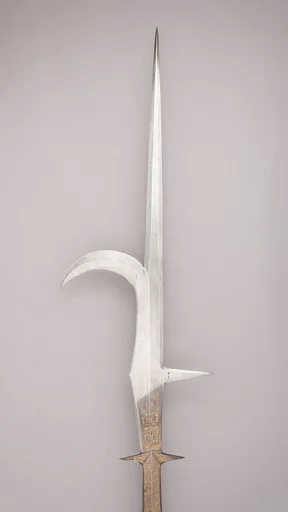
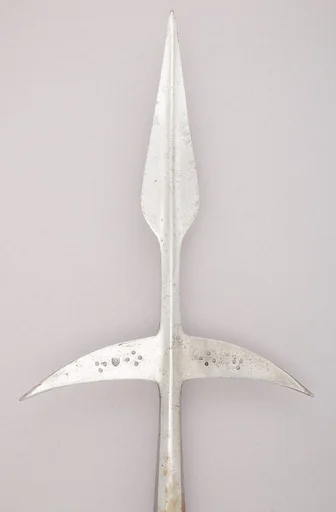
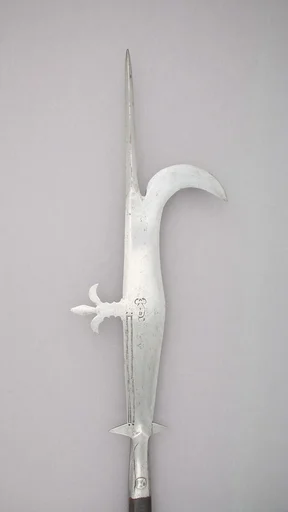
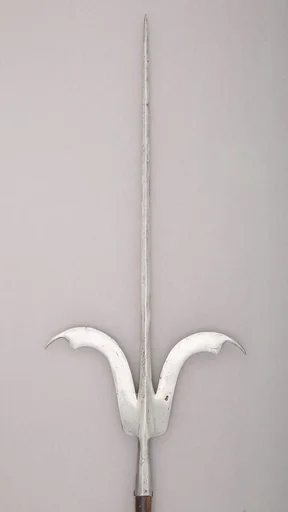
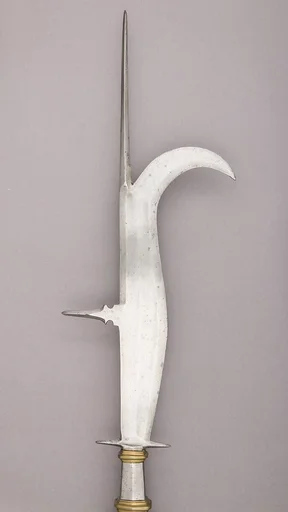
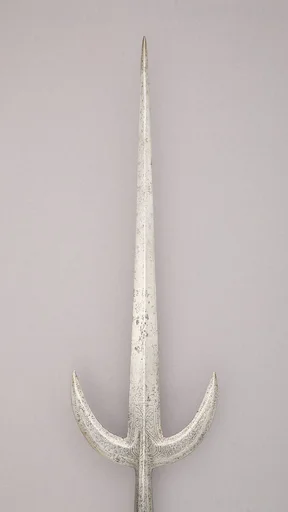
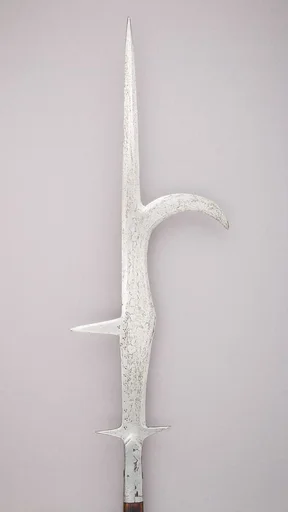
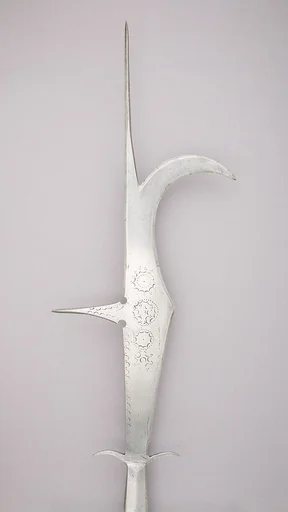
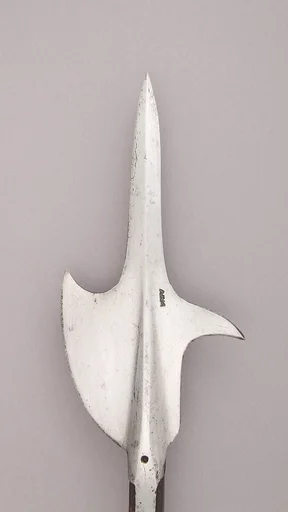
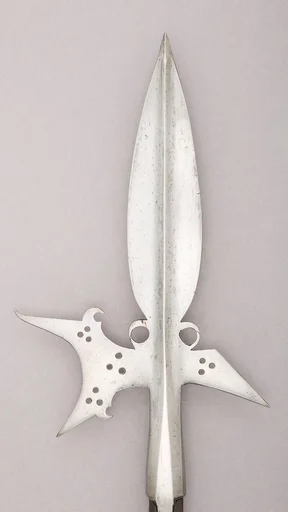
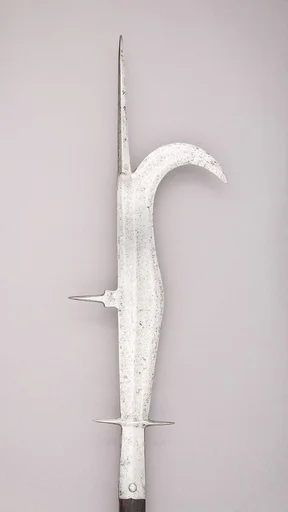
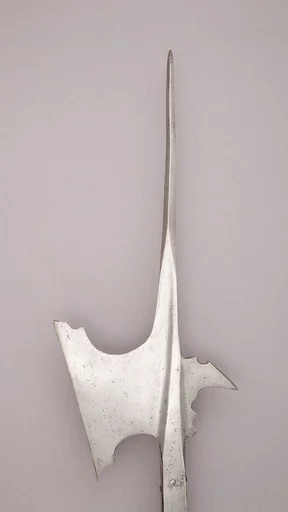
The extraordinarily large head of the bill consists of a long, double-edged thrusting blade emerging from a body, which has on one side a cutting edge changing into a strongly curved hook, and on its back a sharp spike standing out at right angles. Two short spikes at the base of the blade serve as a guard. A simple ornament of dots and crescent lines is stamped along the back. The bill is a weapon developed from an agricultural tool, the pruning hook, with which a farmer would lop off unwanted branches on his fruit tress. It was particularly popular in western European countries, where it was one of the equivalents of the halberd in central Europe. In England the call to arms was "Bills and Bows," for spearmen and archers. It seems to have been one of the few types of polearms that the Spanish conquistadores and the early English colonists used in the New World.
- Artist
- Unknown
- Date
- ca. 1500
- Medium
- Steel, wood (ash)
- Culture
- Italian
- Department
- Arms and Armor
- Credit line
- Gift of William H. Riggs, 1913